


doi: 10.1186/1750-1164-7-4.
Gastroduodenal artery aneurysm, diagnosis, clinical presentation and management: a concise review
Affiliations
- PMID: 23587203
- PMCID: PMC3637616
- DOI: 10.1186/1750-1164-7-4
Item in Clipboard
Gastroduodenal artery aneurysm, diagnosis, clinical presentation and management: a concise review
Ann Surg Innov Res.
.
Abstract
Gastroduodenal artery (GDA) aneurysms are rare but a potentially fatal condition if rupture occurs. They represent about 1.5% of all visceral artery (VAA) aneurysms and are divided into true and pseudoaneurysms depending on the etiologic factors underlying their development. Atherosclerosis and pancreatitis are the two most common risk factors. Making the diagnosis can be complex and often requires the use of Computed Tomography and angiography. The later adds the advantage of being a therapeutic option to prevent or stop bleeding. If this fails, surgery is still regarded as the standard for accomplishing a definite treatment.
Figures
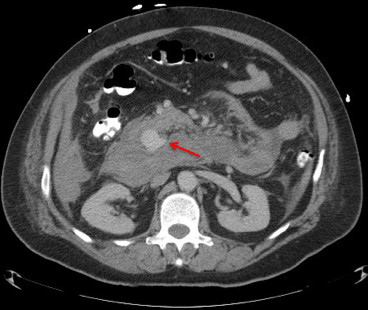
Abdominal contrast enhanced computed tomography reveals retroperitoneal aneurysm (arrow) that is suspected to be arising from the gastroduodenal artery or one of its branches.
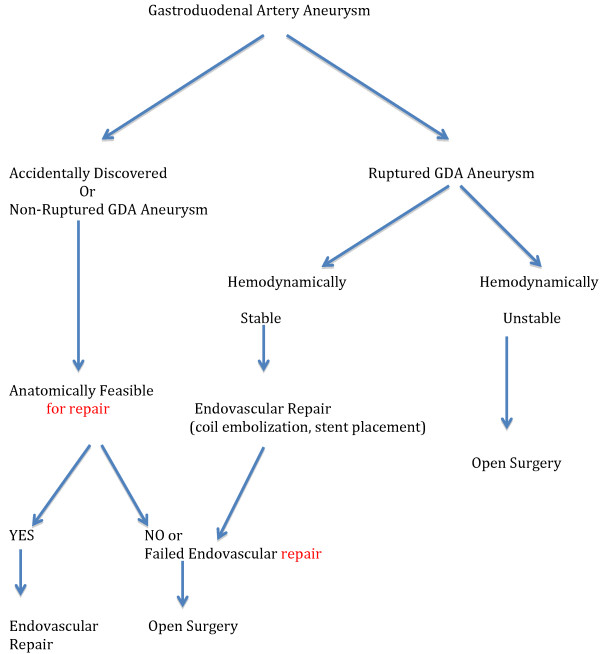
Treatment algorithm of GDA aneurysms.
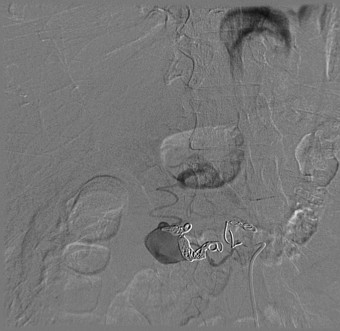
Post embolization angiography showing insignificant residual filling of the gastroduodenal artery aneurysm.
References
-
- Chong WW, Tan SG, Htoo MM. Endovascular treatment of gastroduodenal artery aneurysm. Asian Cardiovasc Thorac Ann. 2008;16(1):68–72. Epub 2008/02/05. - PubMed
-
- Morita Y, Kawamura N, Saito H, Shinohara M, Irie G, Okushiba S. [Diagnosis and embolotherapy of aneurysm of the gastroduodenal artery] Rinsho Hoshasen Clin Radiography. 1988;33(5):555–561. Epub 1988/05/01. - PubMed
LinkOut - more resources
Full Text Sources
Other Literature Sources
