


Tissue sampling methods and standards for vertebrate genomics
- PMID: 23587255
- PMCID: PMC3626508
- DOI: 10.1186/2047-217X-1-8
Tissue sampling methods and standards for vertebrate genomics
Abstract
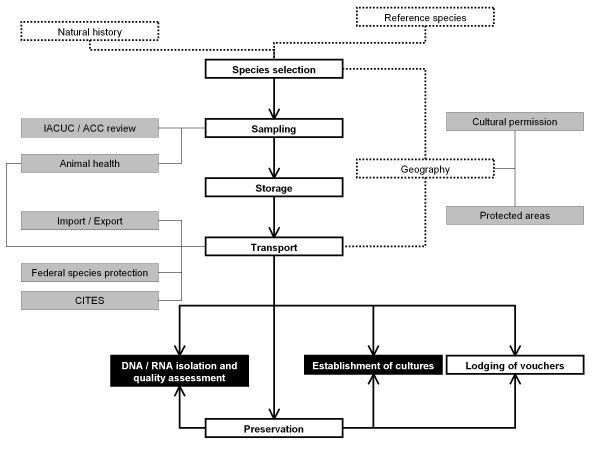
The recent rise in speed and efficiency of new sequencing technologies have facilitated high-throughput sequencing, assembly and analyses of genomes, advancing ongoing efforts to analyze genetic sequences across major vertebrate groups. Standardized procedures in acquiring high quality DNA and RNA and establishing cell lines from target species will facilitate these initiatives. We provide a legal and methodological guide according to four standards of acquiring and storing tissue for the Genome 10K Project and similar initiatives as follows: four-star (banked tissue/cell cultures, RNA from multiple types of tissue for transcriptomes, and sufficient flash-frozen tissue for 1 mg of DNA, all from a single individual); three-star (RNA as above and frozen tissue for 1 mg of DNA); two-star (frozen tissue for at least 700 μg of DNA); and one-star (ethanol-preserved tissue for 700 μg of DNA or less of mixed quality). At a minimum, all tissues collected for the Genome 10K and other genomic projects should consider each species' natural history and follow institutional and legal requirements. Associated documentation should detail as much information as possible about provenance to ensure representative sampling and subsequent sequencing. Hopefully, the procedures outlined here will not only encourage success in the Genome 10K Project but also inspire the adaptation of standards by other genomic projects, including those involving other biota.
Figures
References
-
- Schwartz MK, Luikart G, McKelvey KS, Cushman SA. In: Spatial complexity, informatics, and wildlife conservation. Cushman SA, Huettmann F, editor. Springer, New York; 2009. Landscape genomics: a brief perspective; pp. 165–174.
