


Chronic nicotine exposure stimulates biliary growth and fibrosis in normal rats
- PMID: 23587498
- PMCID: PMC3800482
- DOI: 10.1016/j.dld.2013.02.023
Chronic nicotine exposure stimulates biliary growth and fibrosis in normal rats
Abstract
Background: Epidemiological studies have indicated smoking to be a risk factor for the progression of liver diseases. Nicotine is the chief addictive substance in cigarette smoke and has powerful biological properties throughout the body. Nicotine has been implicated in a number of disease processes, including increased cell proliferation and fibrosis in several organ systems.
Aims: The aim of this study was to evaluate the effects of chronic administration of nicotine on biliary proliferation and fibrosis in normal rats.
Methods: In vivo, rats were treated with nicotine by osmotic minipumps for two weeks. Proliferation, α7-nicotinic receptor and profibrotic expression were evaluated in liver tissue, cholangiocytes and a polarized cholangiocyte cell line (normal rat intrahepatic cholangiocyte). Nicotine-dependent activation of the Ca(2+)/IP3/ERK 1/2 intracellular signalling pathway was also evaluated in normal rat intrahepatic cholangiocyte.
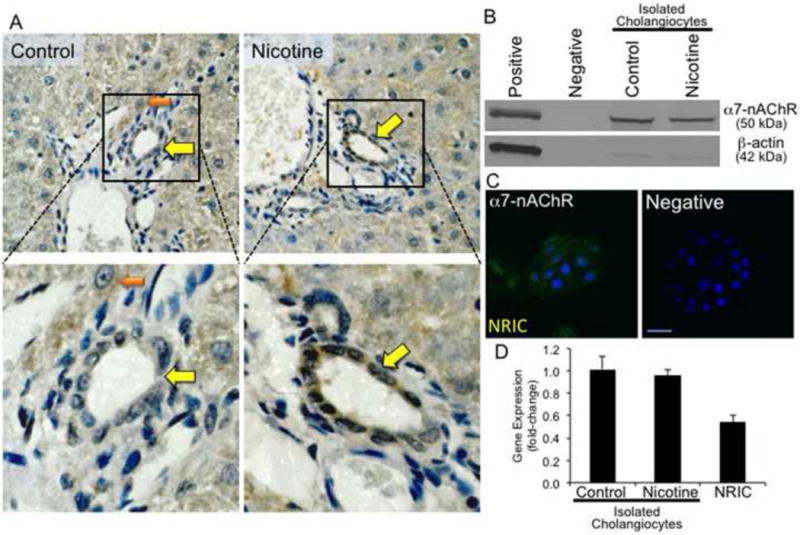
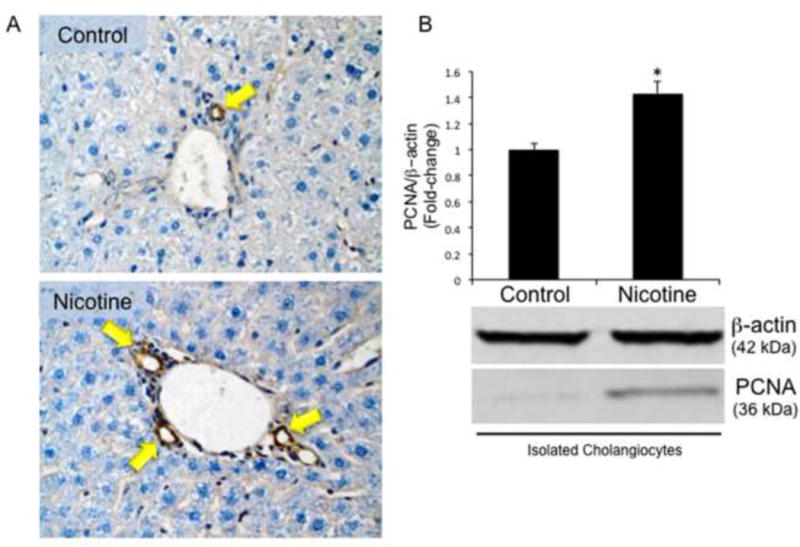
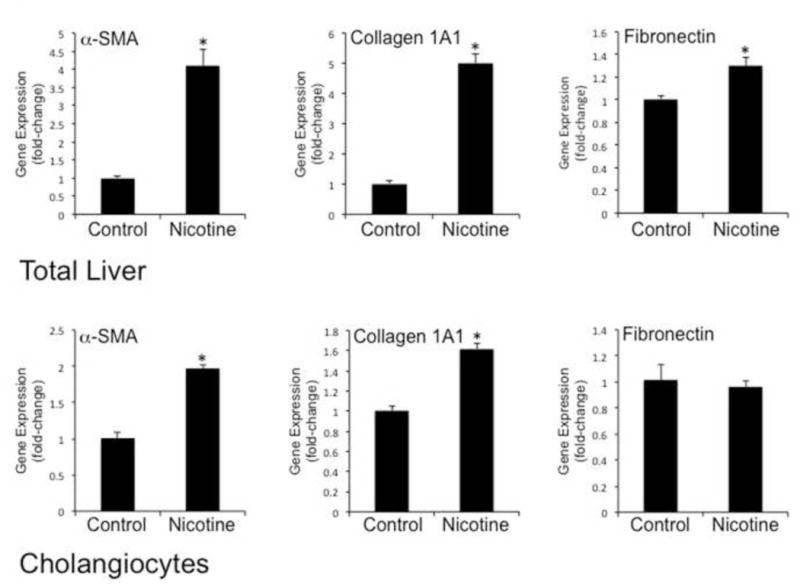
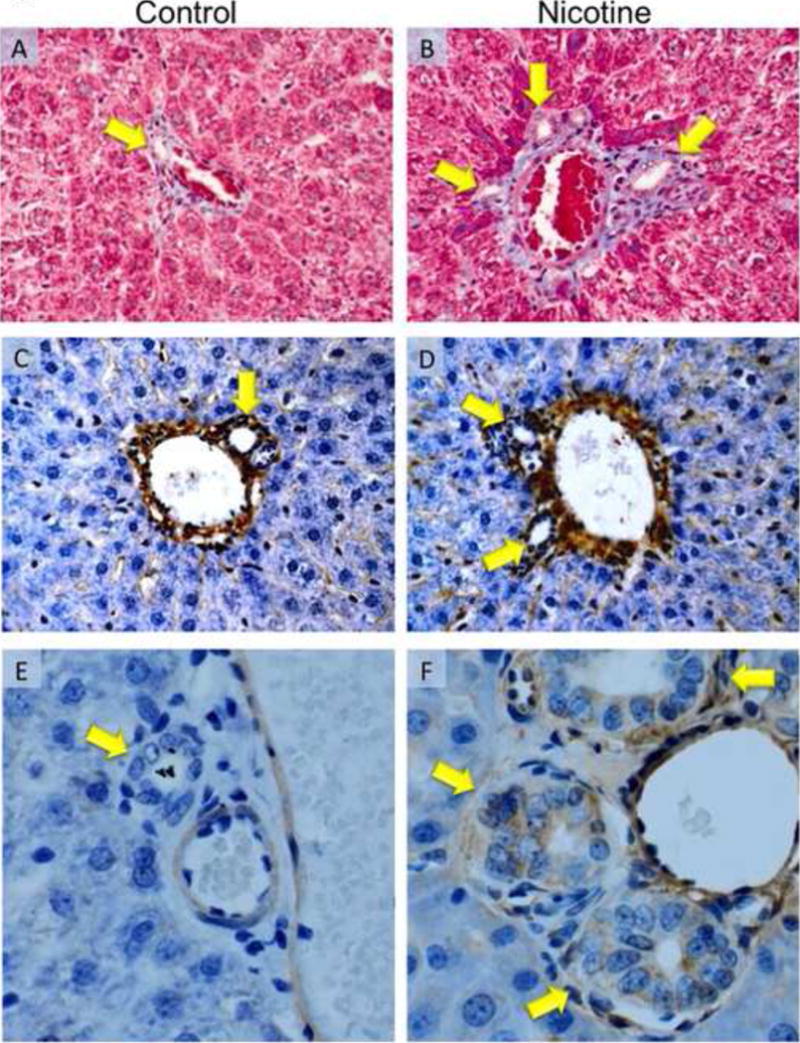
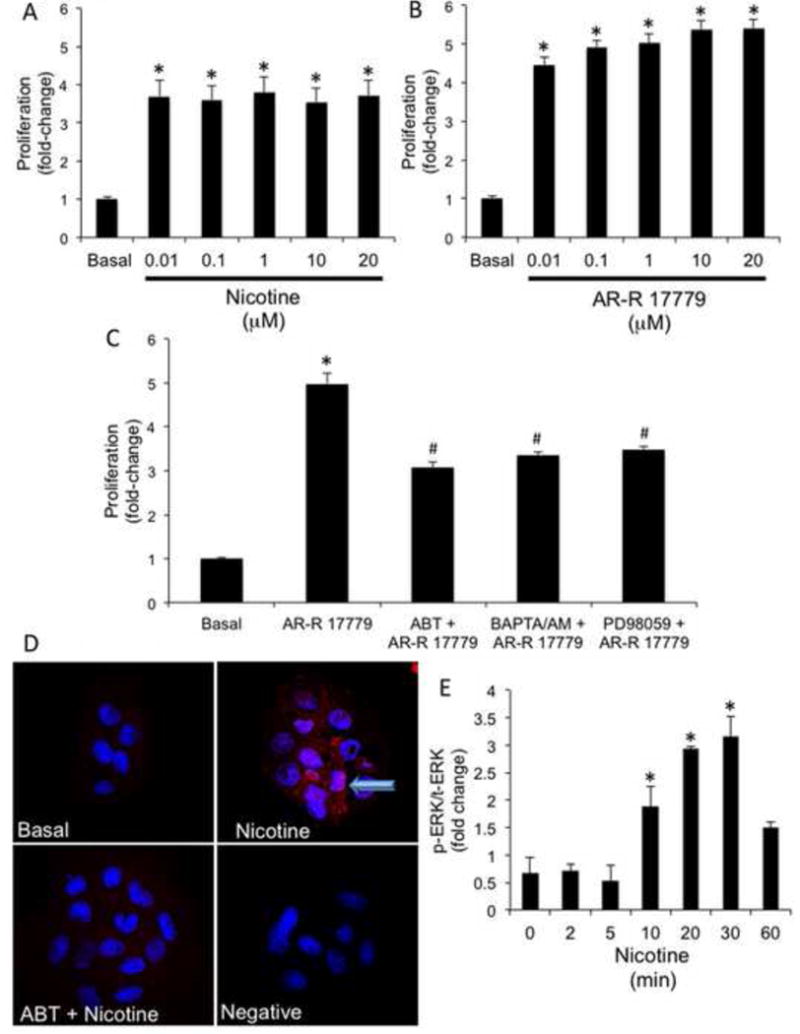
Results: Cholangiocytes express α7-nicotinic receptor. Chronic administration of nicotine to normal rats stimulated biliary proliferation and profibrotic gene and protein expression such as alpha-smooth muscle actin and fibronectin 1. Activation of α7-nicotinic receptor stimulated Ca(2+)/ERK1/2-dependent cholangiocyte proliferation.
Conclusion: Chronic exposure to nicotine contributes to biliary fibrosis by activation of cholangiocyte proliferation and expression of profibrotic genes. Modulation of α7-nicotinic receptor signalling axis may be useful for the management of biliary proliferation and fibrosis during cholangiopathies.
Keywords: Biliary epithelia; Cholangiocytes; Fibrosis; Nicotinic receptors; Proliferation.
Published by Elsevier Ltd.
Figures
References
-
- LeSage G, Benedetti A, Glaser S, et al. Acute carbon tetrachloride feeding selectively damages large, but not small, cholangiocytes from normal rat liver. Hepatology. 1999;29:307–319. - PubMed
-
- LeSage G, Glaser S, Gubba S, et al. Regrowth of the rat biliary tree after 70% partial hepatectomy is coupled to increased secretin-induced ductal secretion. Gastroenterology. 1996;111:1633–1644. - PubMed
-
- Alpini G, Prall RT, LaRusso NF. The pathobiology of biliary epithelia. In: Arias IM, Boyer JL, Chisari FV, Fausto N, Jakoby W, Schachter D, Shafritz DA, editors. The Liver; Biology & Pathobiology, 4E. Philadelphia, PA: Lippincott Williams & Wilkins; 2001. pp. 421–435.
-
- Alpini G, McGill JM, Larusso NF. The pathobiology of biliary epithelia. Hepatology. 2002;35:1256–1268. - PubMed
Publication types
MeSH terms
Substances
Grants and funding
LinkOut - more resources
Full Text Sources
Other Literature Sources
Medical
Miscellaneous
