


Urothelial signaling
- PMID: 23589830
- PMCID: PMC3768101
- DOI: 10.1152/physrev.00030.2012
Urothelial signaling
Abstract
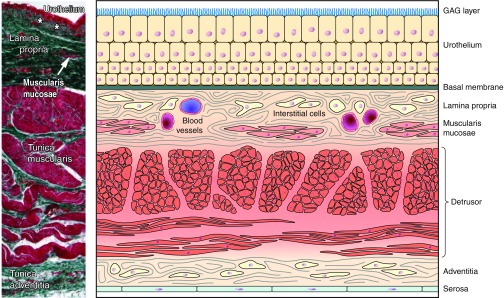
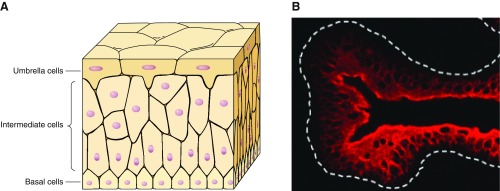
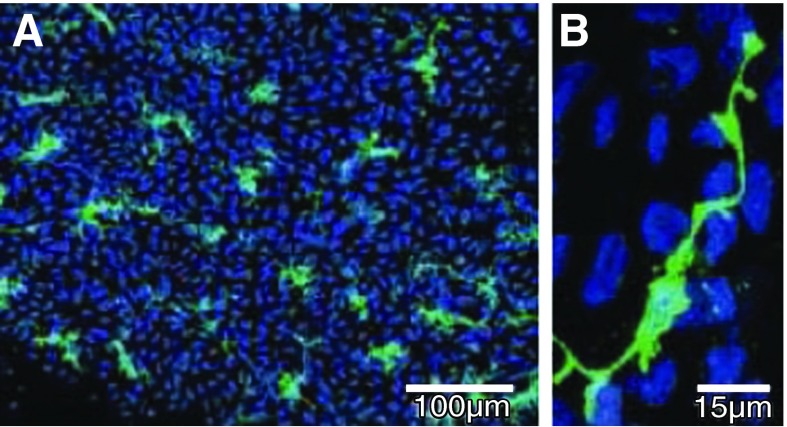
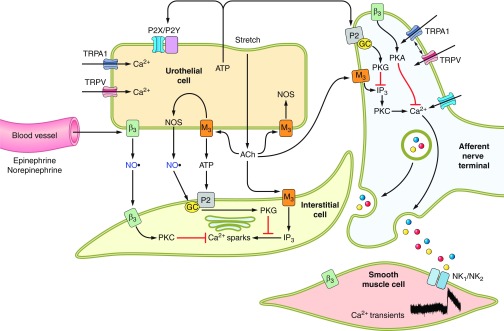
The urothelium, which lines the inner surface of the renal pelvis, the ureters, and the urinary bladder, not only forms a high-resistance barrier to ion, solute and water flux, and pathogens, but also functions as an integral part of a sensory web which receives, amplifies, and transmits information about its external milieu. Urothelial cells have the ability to sense changes in their extracellular environment, and respond to chemical, mechanical and thermal stimuli by releasing various factors such as ATP, nitric oxide, and acetylcholine. They express a variety of receptors and ion channels, including P2X3 purinergic receptors, nicotinic and muscarinic receptors, and TRP channels, which all have been implicated in urothelial-neuronal interactions, and involved in signals that via components in the underlying lamina propria, such as interstitial cells, can be amplified and conveyed to nerves, detrusor muscle cells, and ultimately the central nervous system. The specialized anatomy of the urothelium and underlying structures, and the possible communication mechanisms from urothelial cells to various cell types within the bladder wall are described. Changes in the urothelium/lamina propria ("mucosa") produced by different bladder disorders are discussed, as well as the mucosa as a target for therapeutic interventions.
Figures
Comment in
-
Re: Urothelial signaling.J Urol. 2013 Dec;190(6):2307-8. doi: 10.1016/j.juro.2013.08.108. Epub 2013 Sep 5. J Urol. 2013. PMID: 24209573 No abstract available.
References
-
- Abraham P, Rabi S, Selvakumar D. Protective effect of aminoguanidine against oxidative stress and bladder injury in cyclophosphamide-induced hemorrhagic cystitis in rat. Cell Biochem Funct 27: 56–62, 2009 - PubMed
-
- Abrams P, Amarenco G, Haab F. Urinary prostaglandin E2 levels are elevated in patients with overactive bladder and painful bladder syndrome and correlate with bladder diary symptoms. EAU Abstr 783: 2010
-
- Acharya P, Beckel J, Ruiz WG, Wang E, Rojas R, Birder L, Apodaca G. Distribution of the tight junction proteins ZO-1, occludin, and claudin-4, -8, and -12 in bladder epithelium. Am J Physiol Renal Physiol 287: F305–F318, 2004 - PubMed
-
- Aitken KJ, Bagli DJ. The bladder extracellular matrix. Part I: architecture, development and disease. Nat Rev Urol 6: 596–611, 2009 - PubMed
-
- Aizawa N, Igawa Y, Nishizawa O, Wyndaele JJ. Effects of CL316,243, a beta 3 adrenoceptor agonist, and intravesical prostaglandin E2 on the primary bladder afferent activity of the rat. Neurourol Urodyn 29: 771–776, 2010 - PubMed
Publication types
MeSH terms
Substances
Grants and funding
LinkOut - more resources
Full Text Sources
Other Literature Sources
Medical
