


Emergency and critical care services in Tanzania: a survey of ten hospitals
- PMID: 23590288
- PMCID: PMC3639070
- DOI: 10.1186/1472-6963-13-140
Emergency and critical care services in Tanzania: a survey of ten hospitals
Abstract
Background: While there is a need for good quality care for patients with serious reversible disease in all countries in the world, Emergency and Critical Care tends to be one of the weakest parts of health systems in low-income countries. We assessed the structure and availability of resources for Emergency and Critical Care in Tanzania in order to identify the priorities for improving care in this neglected specialty.
Methods: Ten hospitals in four regions of Tanzania were assessed using a structured data collection tool. Quality was evaluated with standards developed from the literature and expert opinion.
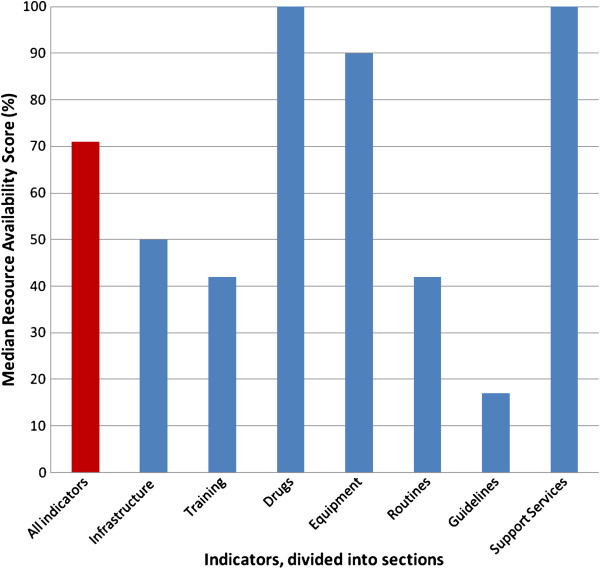
Results: Important deficits were identified in infrastructure, routines and training. Only 30% of the hospitals had an emergency room for adult and paediatric patients. None of the seven district and regional hospitals had a triage area or intensive care unit for adults. Only 40% of the hospitals had formal systems for adult triage and in less than one third were critically ill patients seen by clinicians more than once daily. In 80% of the hospitals there were no staff trained in adult triage or critical care. In contrast, a majority of equipment and drugs necessary for emergency and critical care were available in the hospitals (median 90% and 100% respectively. The referral/private hospitals tended to have a greater overall availability of resources (median 89.7%) than district/regional hospitals (median 70.6).
Conclusions: Many of the structures necessary for Emergency and Critical Care are lacking in hospitals in Tanzania. Particular weaknesses are infrastructure, routines and training, whereas the availability of drugs and equipment is generally good. Policies to improve hospital systems for the care of emergency and critically ill patients should be prioritised.
Figures
References
Publication types
MeSH terms
LinkOut - more resources
Full Text Sources
Other Literature Sources
Medical
