


Genetic diversity of Japanese encephalitis virus isolates obtained from the Indonesian archipelago between 1974 and 1987
- PMID: 23590316
- PMCID: PMC3700436
- DOI: 10.1089/vbz.2011.0870
Genetic diversity of Japanese encephalitis virus isolates obtained from the Indonesian archipelago between 1974 and 1987
Abstract
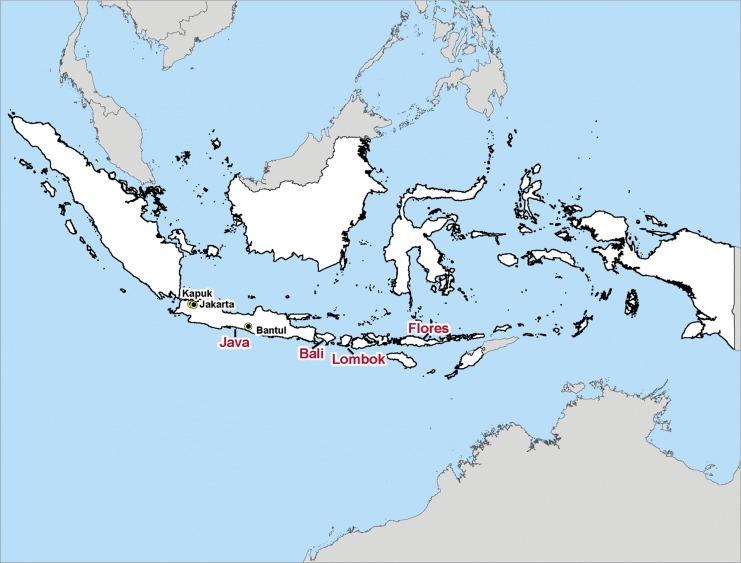
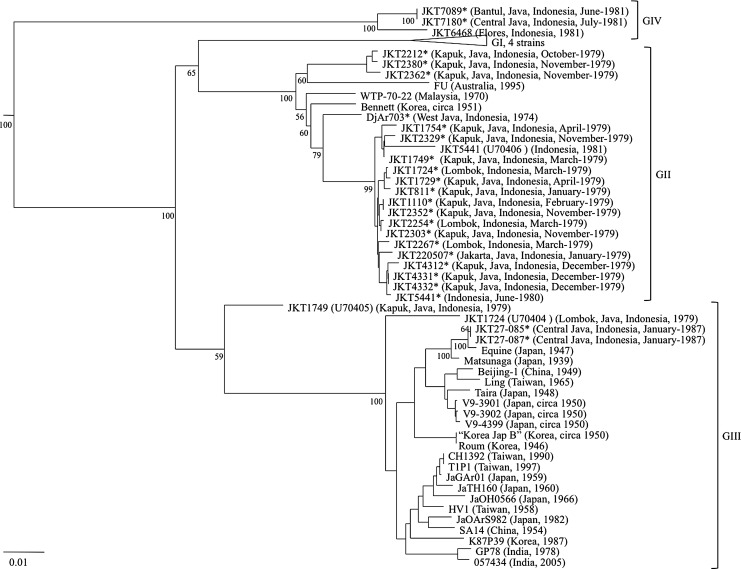
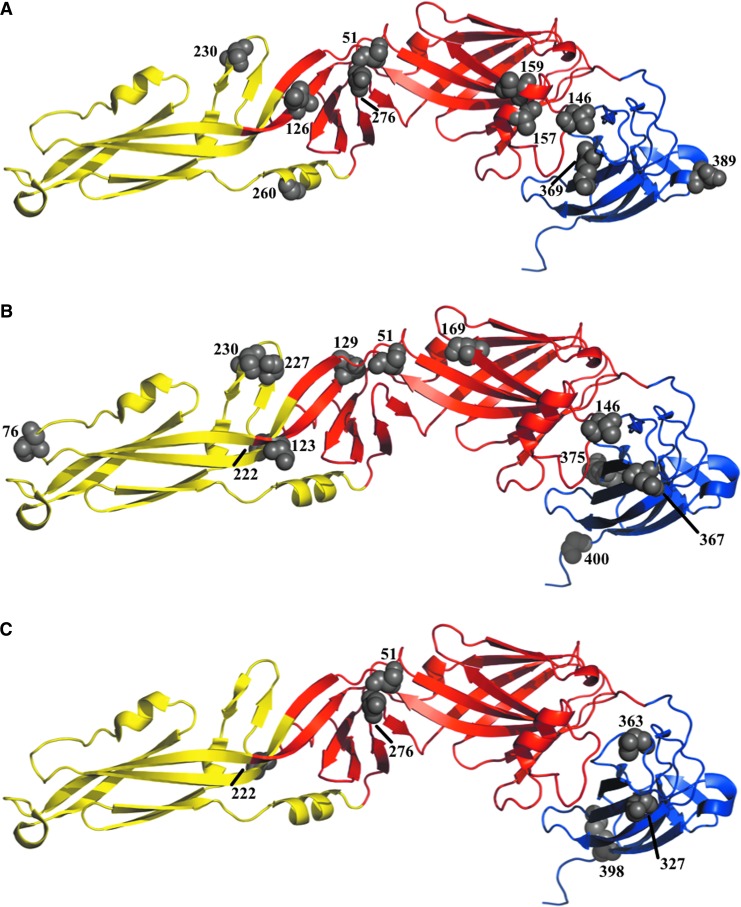
Five genotypes (GI-V) of Japanese encephalitis virus (JEV) have been identified, all of which have distinct geographical distributions and epidemiologies. It is thought that JEV originated in the Indonesia-Malaysia region from an ancestral virus. From that ancestral virus GV diverged, followed by GIV, GIII, GII, and GI. Genotype IV appears to be confined to the Indonesia-Malaysia region, as GIV has been isolated in Indonesia from mosquitoes only, while GV has been isolated on three occasions only from a human in Malaysia and mosquitoes in China and South Korea. In contrast, GI-III viruses have been isolated throughout Asia and Australasia from a variety of hosts. Prior to this study only 13 JEV isolates collected from the Indonesian archipelago had been studied genetically. Therefore the sequences of the envelope (E) gene of 24 additional Indonesian JEV isolates, collected throughout the archipelago between 1974 and 1987, were determined and a series of molecular adaptation analyses were performed. Phylogenetic analysis indicated that over a 14-year time span three genotypes of JEV circulated throughout Indonesia, and a statistically significant association between the year of virus collection and genotype was revealed: isolates collected between 1974 and 1980 belonged to GII, isolates collected between 1980 and 1981 belonged to GIV, and isolates collected in 1987 belonged to GIII. Interestingly, three of the GII Indonesian isolates grouped with an isolate that was collected during the JE outbreak that occurred in Australia in 1995, two of the GIII Indonesian isolates were closely related to a Japanese isolate collected 40 years previously, and two Javanese GIV isolates possessed six amino acid substitutions within the E protein when compared to a previously sequenced GIV isolate collected in Flores. Several amino acids within the E protein of the Indonesian isolates were found to be under directional evolution and/or co-evolution. Conceivably, the tropical climate of the Indonesia/Malaysia region, together with its plethora of distinct fauna and flora, may have driven the emergence and evolution of JEV. This is consistent with the extensive genetic diversity seen among the JEV isolates observed in this study, and further substantiates the hypothesis that JEV originated in the Indonesia-Malaysia region.
Figures
References
-
- Chambers TJ. Hahn CS. Galler R, et al. Flavivirus genome organization, expression, and replication. Annu Rev Microbiol. 1990;44:649–688. - PubMed
-
- Chen WR. Rico-Hesse R. Tesh RB. A new genotype of Japanese encephalitis virus from Indonesia. Am J Trop Med Hyg. 1992;47:61–69. - PubMed
-
- Dirk Van Peenen PF. Joseph PL. Atmosoedjono S, et al. Japanese encephalitis virus from pigs and mosquitoes in Jakarta, Indonesia. Trans R Soc Trop Med Hyg. 1975;69:477–479. - PubMed
-
- Environmental Research Systems Institute I. ArcView GIS. 9.1. Redlands; California: 2004.
-
- Felsenstein J. PHYLIP—phylogeny inference package (version 3.2) Cladistics. 1989;5:164–166.
Publication types
MeSH terms
Substances
Grants and funding
LinkOut - more resources
Full Text Sources
Other Literature Sources
Medical
Molecular Biology Databases
