


A sequence-based variation map of zebrafish
- PMID: 23590399
- PMCID: PMC3629779
- DOI: 10.1089/zeb.2012.0848
A sequence-based variation map of zebrafish
Abstract
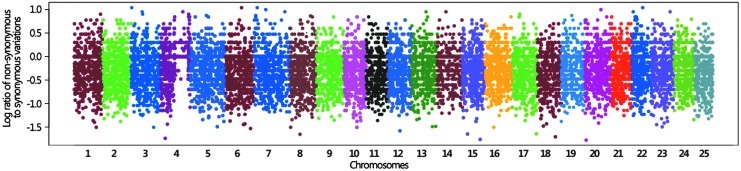
Zebrafish (Danio rerio) is a popular vertebrate model organism largely deployed using outbred laboratory animals. The nonisogenic nature of the zebrafish as a model system offers the opportunity to understand natural variations and their effect in modulating phenotype. In an effort to better characterize the range of natural variation in this model system and to complement the zebrafish reference genome project, the whole genome sequence of a wild zebrafish at 39-fold genome coverage was determined. Comparative analysis with the zebrafish reference genome revealed approximately 5.2 million single nucleotide variations and over 1.6 million insertion-deletion variations. This dataset thus represents a new catalog of genetic variations in the zebrafish genome. Further analysis revealed selective enrichment for variations in genes involved in immune function and response to the environment, suggesting genome-level adaptations to environmental niches. We also show that human disease gene orthologs in the sequenced wild zebrafish genome show a lower ratio of nonsynonymous to synonymous single nucleotide variations.
Figures
References
-
- Beck JA. Lloyd S. Hafezparast M. Lennon-Pierce M. Eppig JT. Festing MF, et al. Genealogies of mouse inbred strains. Nat Genet. 2000;24:23–25. - PubMed
-
- Festing MF. Fisher EM. Mighty mice. Nature. 2000;404:815. - PubMed
-
- The International HapMap Consortium. The International HapMap Project. Nature. 2003;426:789–796. - PubMed
-
- Indian Genome Variation Consortium. Genetic landscape of the people of India: a canvas for disease gene exploration. J Genet. 2008;87:3–20. - PubMed
-
- Hayden EC. International genome project launched. Nature. 2008;451:378–379. - PubMed
Publication types
MeSH terms
Grants and funding
LinkOut - more resources
Full Text Sources
Other Literature Sources
