


The glutathione reductase GSR-1 determines stress tolerance and longevity in Caenorhabditis elegans
- PMID: 23593298
- PMCID: PMC3620388
- DOI: 10.1371/journal.pone.0060731
The glutathione reductase GSR-1 determines stress tolerance and longevity in Caenorhabditis elegans
Abstract
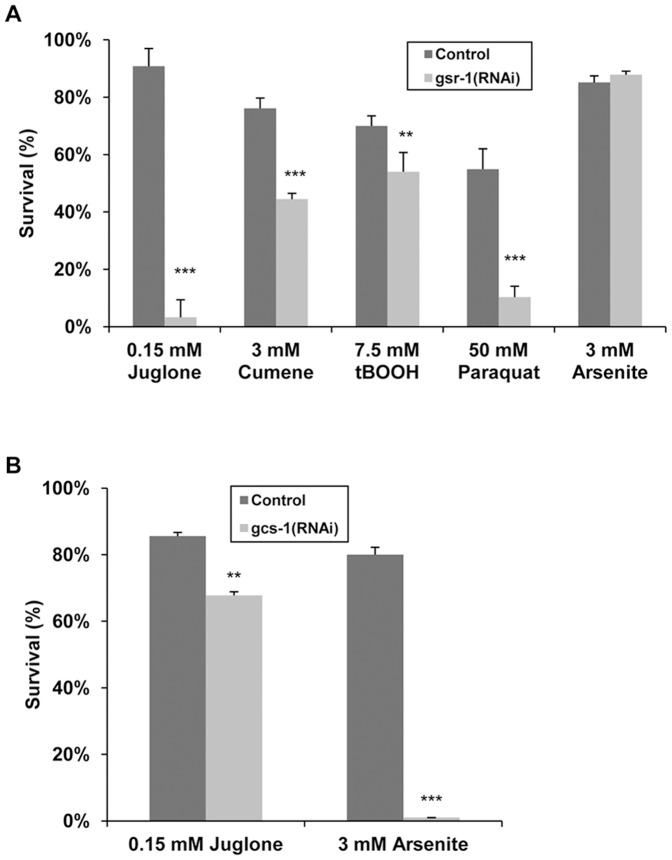
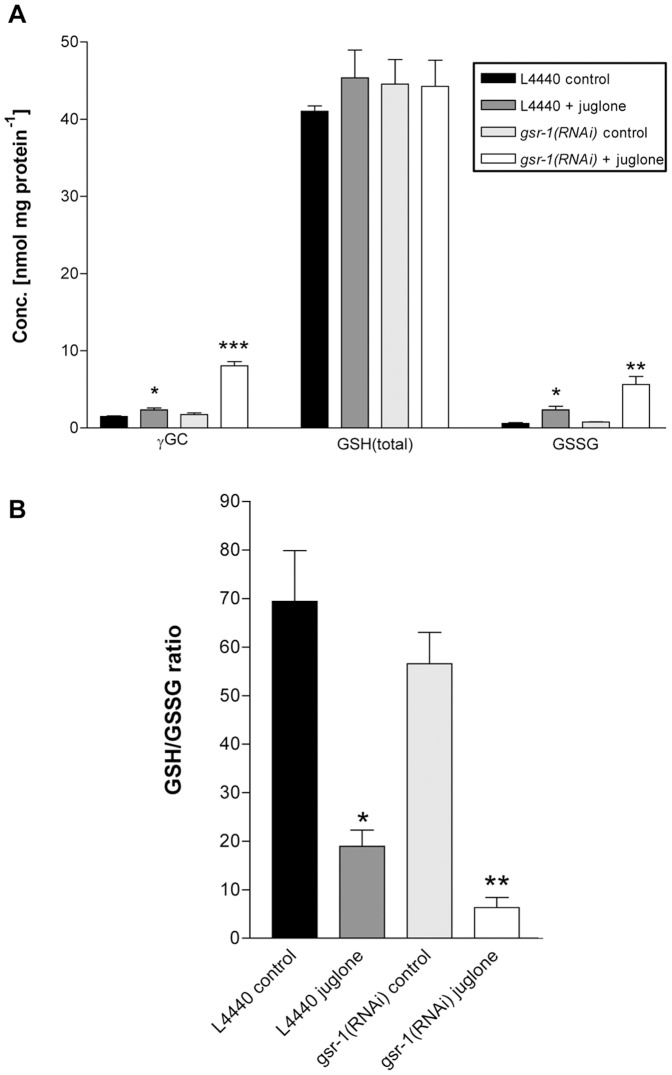
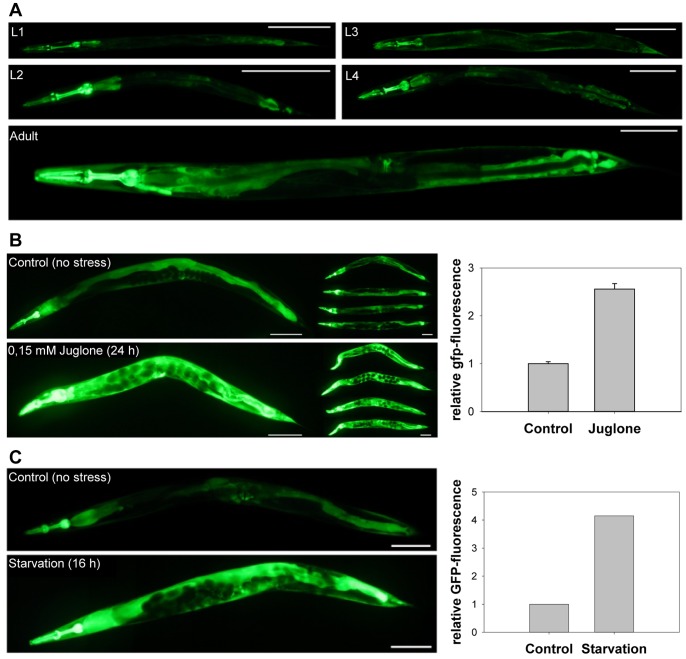
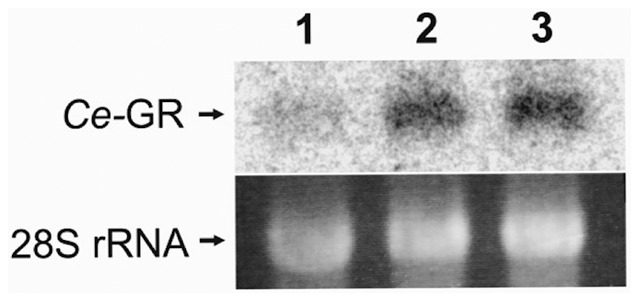
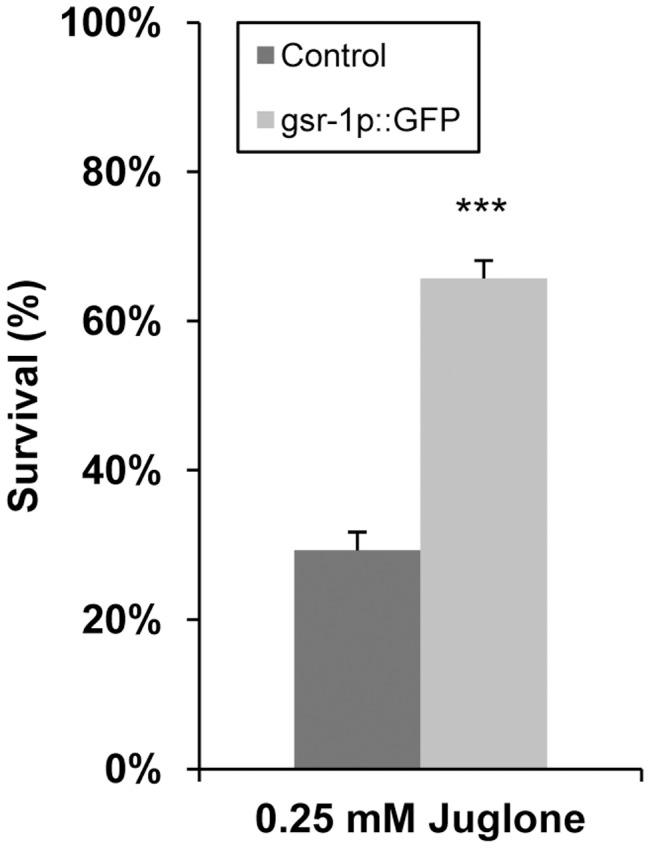
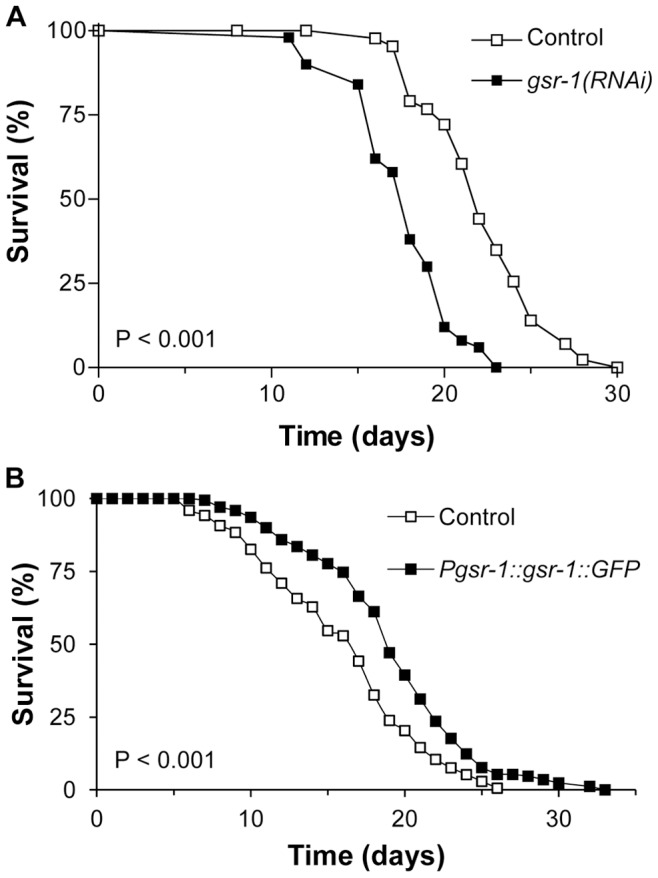
Glutathione (GSH) and GSH-dependent enzymes play a key role in cellular detoxification processes that enable organism to cope with various internal and environmental stressors. However, it is often not clear, which components of the complex GSH-metabolism are required for tolerance towards a certain stressor. To address this question, a small scale RNAi-screen was carried out in Caenorhabditis elegans where GSH-related genes were systematically knocked down and worms were subsequently analysed for their survival rate under sub-lethal concentrations of arsenite and the redox cycler juglone. While the knockdown of γ-glutamylcysteine synthetase led to a diminished survival rate under arsenite stress conditions, GSR-1 (glutathione reductase) was shown to be essential for survival under juglone stress conditions. gsr-1 is the sole GSR encoding gene found in C. elegans. Knockdown of GSR-1 hardly affected total glutathione levels nor reduced glutathione/glutathione disulphide (GSH/GSSG) ratio under normal laboratory conditions. Nevertheless, when GSSG recycling was impaired by gsr-1(RNAi), GSH synthesis was induced, but not vice versa. Moreover, the impact of GSSG recycling was potentiated under oxidative stress conditions, explaining the enormous effect gsr-1(RNAi) knockdown had on juglone tolerance. Accordingly, overexpression of GSR-1 was capable of increasing stress tolerance. Furthermore, expression levels of SKN-1-regulated GSR-1 also affected life span of C. elegans, emphasising the crucial role the GSH redox state plays in both processes.
Conflict of interest statement
Figures
References
-
- Sies H (1993) Strategies of antioxidant defense. Eur J Biochem 215: 213–219. - PubMed
-
- Davies KJ (2000) Oxidative stress, antioxidant defenses, and damage removal, repair, and replacement systems. IUBMB Life 50: 279–289. - PubMed
-
- Valko M, Leibfritz D, Moncol J, Cronin MT, Mazur M, et al. (2007) Free radicals and antioxidants in normal physiological functions and human disease. Int J Biochem Cell Biol 39: 44–84. - PubMed
-
- Limon-Pacheco J, Gonsebatt ME (2009) The role of antioxidants and antioxidant-related enzymes in protective responses to environmentally induced oxidative stress. Mutat Res 674: 137–147. - PubMed
-
- Harman D (1956) Aging: a theory based on free radical and radiation chemistry. J Gerontol 11: 298–300. - PubMed
Publication types
MeSH terms
Substances
LinkOut - more resources
Full Text Sources
Other Literature Sources
Molecular Biology Databases
Research Materials
