


Autistic traits in neurotypical adults: correlates of graph theoretical functional network topology and white matter anisotropy patterns
- PMID: 23593367
- PMCID: PMC3618514
- DOI: 10.1371/journal.pone.0060982
Autistic traits in neurotypical adults: correlates of graph theoretical functional network topology and white matter anisotropy patterns
Abstract
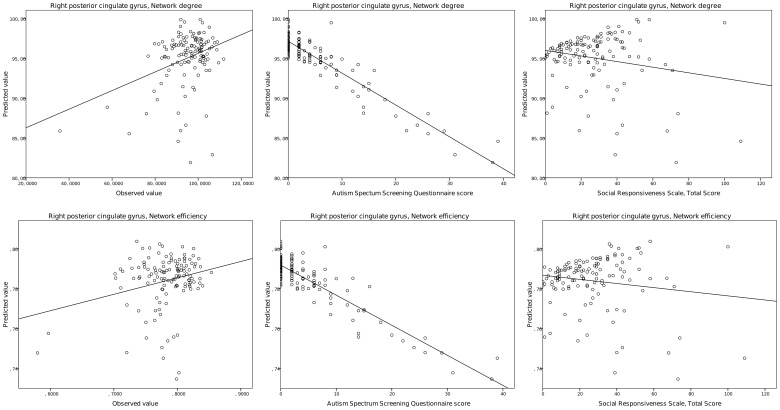
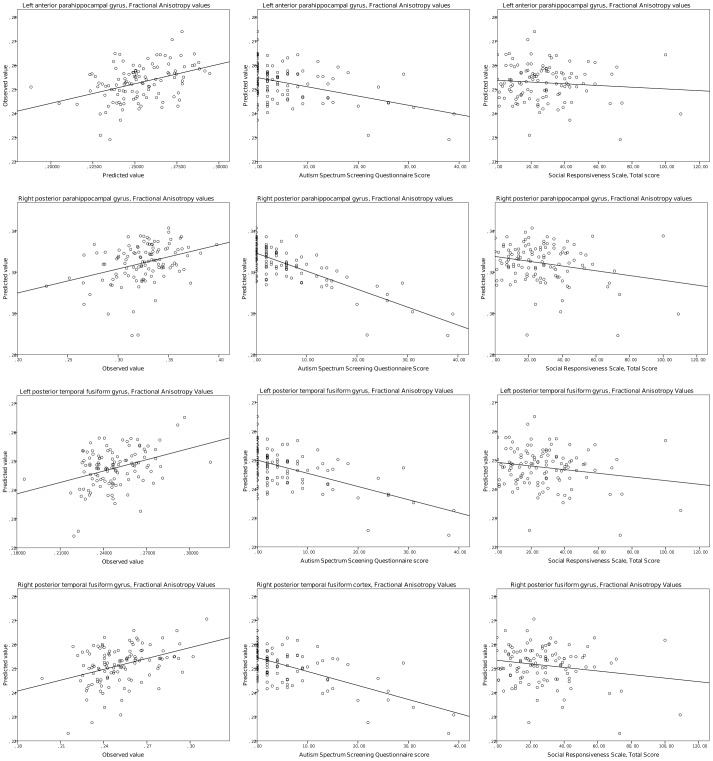
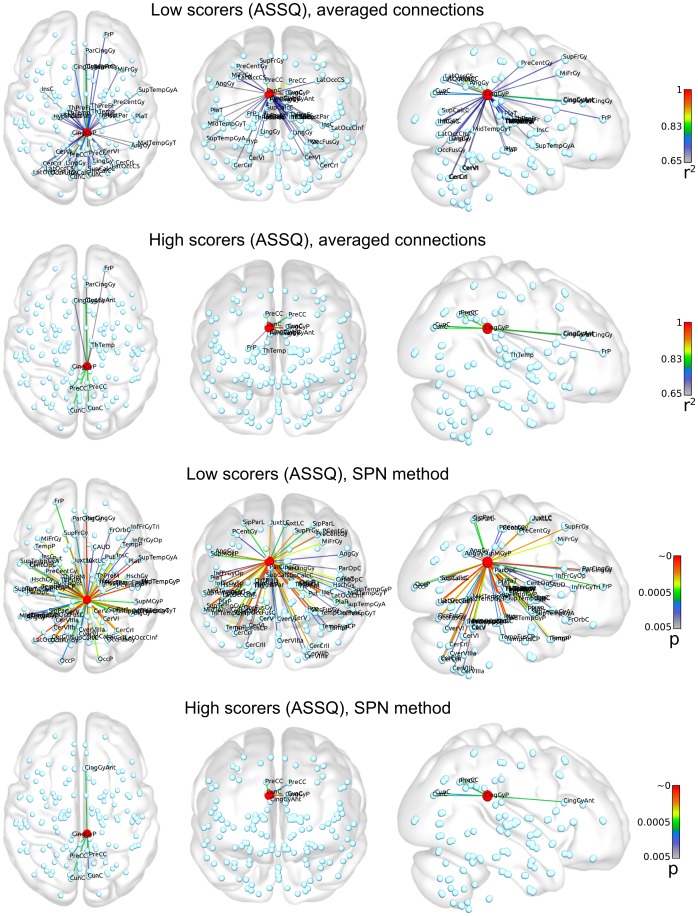
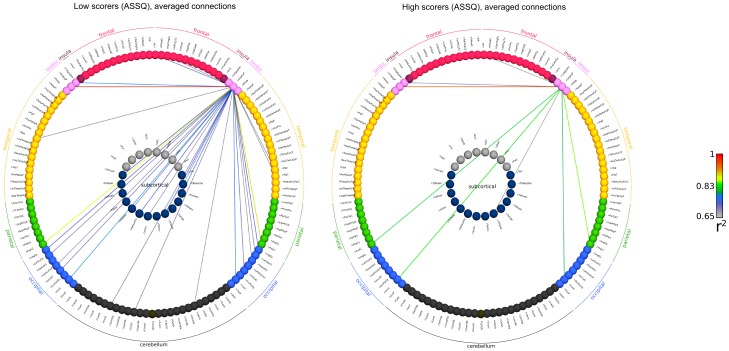
Attempts to explicate the neural abnormalities behind autism spectrum disorders frequently revealed impaired brain connectivity, yet our knowledge is limited about the alterations linked with autistic traits in the non-clinical population. In our study, we aimed at exploring the neural correlates of dimensional autistic traits using a dual approach of diffusion tensor imaging (DTI) and graph theoretical analysis of resting state functional MRI data. Subjects were sampled from a public neuroimaging dataset of healthy volunteers. Inclusion criteria were adult age (age: 18-65), availability of DTI and resting state functional acquisitions and psychological evaluation including the Social Responsiveness Scale (SRS) and Autistic Spectrum Screening Questionnaire (ASSQ). The final subject cohort consisted of 127 neurotypicals. Global brain network structure was described by graph theoretical parameters: global and average local efficiency. Regional topology was characterized by degree and efficiency. We provided measurements for diffusion anisotropy. The association between autistic traits and the neuroimaging findings was studied using a general linear model analysis, controlling for the effects of age, gender and IQ profile. Significant negative correlation was found between the degree and efficiency of the right posterior cingulate cortex and autistic traits, measured by the combination of ASSQ and SRS scores. Autistic phenotype was associated with the decrease of whole-brain local efficiency. Reduction of diffusion anisotropy was found bilaterally in the temporal fusiform and parahippocampal gyri. Numerous models describe the autistic brain connectome to be dominated by reduced long-range connections and excessive short-range fibers. Our finding of decreased efficiency supports this hypothesis although the only prominent effect was seen in the posterior limbic lobe, which is known to act as a connector hub. The neural correlates of the autistic trait in neurotypicals showed only limited similarities to the reported findings in clinical populations with low functioning autism.
Conflict of interest statement
Figures
References
-
- APA (2007) Diagnostic and Statistical Manual of Mental Disorders, Fourth Edition, Text Revision. Washington DC: American Psychiatric Association.
-
- Baron-Cohen S, Jolliffe T, Mortimore C, Robertson M (1997) Another advanced test of theory of mind: evidence from very high functioning adults with autism or Asperger Syndrome. J Child Psychol Psychiatry 38: 813–822. - PubMed
-
- Bauman ML, Kemper TL (2005) Neuroanatomic observations of the brain in autism: a review and future directions. Int J Dev Neurosci 23: 183–187. - PubMed
-
- Aylward EH, Minshew NJ, Field K, Sparks BF, Singh N (2002) Effects of age on brain volume and head circumference in autism. Neurology 59: 175–183. - PubMed
-
- Courchesne E, Pierce K, Schumann CM, Redcay E, Buckwalter JA, et al. (2007) Mapping early brain development in autism. Neuron 56: 399–413. - PubMed
Publication types
MeSH terms
Grants and funding
LinkOut - more resources
Full Text Sources
Other Literature Sources
