


Virus-specific differences in rates of disease during the 2010 Dengue epidemic in Puerto Rico
- PMID: 23593526
- PMCID: PMC3617145
- DOI: 10.1371/journal.pntd.0002159
Virus-specific differences in rates of disease during the 2010 Dengue epidemic in Puerto Rico
Abstract
Background: Dengue is a potentially fatal acute febrile illness (AFI) caused by four mosquito-transmitted dengue viruses (DENV-1-4) that are endemic in Puerto Rico. In January 2010, the number of suspected dengue cases reported to the passive dengue surveillance system exceeded the epidemic threshold and an epidemic was declared soon after.
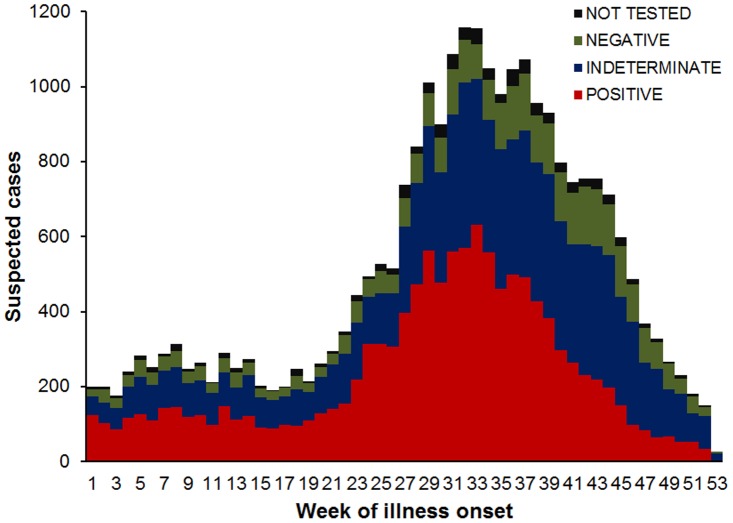
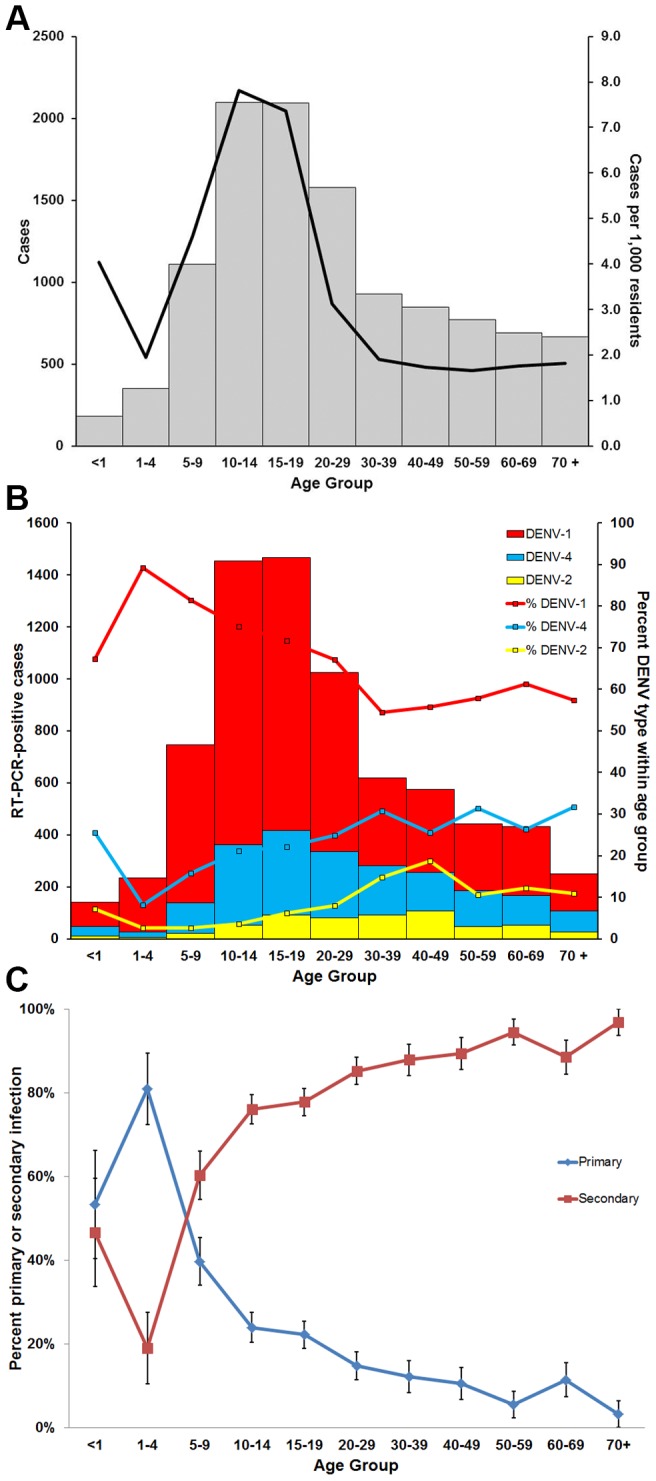
Methodology/principal findings: To characterize the epidemic, surveillance and laboratory diagnostic data were compiled. A suspected case was a dengue-like AFI in a person reported by a health care provider with or without a specimen submitted for diagnostic testing. Laboratory-positive cases had: (i) DENV nucleic acid detected by reverse transcriptase-polymerase chain reaction (RT-PCR) in an acute serum specimen; (ii) anti-DENV IgM antibody detected by ELISA in any serum specimen; or (iii) DENV antigen or nucleic acid detected in an autopsy-tissue specimen. In 2010, a total of 26,766 suspected dengue cases (7.2 per 1,000 residents) were identified, of which 46.6% were laboratory-positive. Of 7,426 RT-PCR-positive specimens, DENV-1 (69.0%) and DENV-4 (23.6%) were detected more frequently than DENV-2 (7.3%) and DENV-3 (<0.1%). Nearly half (47.1%) of all laboratory-positive cases were adults, 49.7% had dengue with warning signs, 11.1% had severe dengue, and 40 died. Approximately 21% of cases were primary DENV infections, and 1-4 year olds were the only age group for which primary infection was more common than secondary. Individuals infected with DENV-1 were 4.2 (95% confidence interval [CI]: 1.7-9.8) and 4.0 (95% CI: 2.4-6.5) times more likely to have primary infection than those infected with DENV-2 or -4, respectively.
Conclusions/significance: This epidemic was long in duration and yielded the highest incidence of reported dengue cases and deaths since surveillance began in Puerto Rico in the late 1960's. This epidemic re-emphasizes the need for more effective primary prevention interventions to reduce the morbidity and mortality of dengue.
Conflict of interest statement
The authors have declared that no competing interests exist.
Figures


References
-
- Gubler DJ (2002) Epidemic dengue/dengue hemorrhagic fever as a public health, social and economic problem in the 21st century. Trends Microbiol 10: 100–103. - PubMed
-
- World Health Organization (2009) Dengue: Guidelines for Diagnosis, Treatment, Prevention and Control. First edition. Geneva: WHO. http://whqlibdoc.who.int/publications/2009/9789241547871_eng.pdf. - PubMed
-
- World Health Organization (1997) Dengue haemorrhagic fever: diagnosis, treatment, prevention and control. Second edition. Geneva: WHO. http://www.who.int/csr/resources/publications/dengue/Denguepublication/en/.
-
- Rodhain R, Rosen L., editor (1997) Dengue and dengue hemorrhagic fever. New York: CAB International. 45–60 p.
Publication types
MeSH terms
LinkOut - more resources
Full Text Sources
Other Literature Sources
Medical
