Phylogeographical studies of Ascaris spp. based on ribosomal and mitochondrial DNA sequences
- PMID: 23593529
- PMCID: PMC3623706
- DOI: 10.1371/journal.pntd.0002170
Phylogeographical studies of Ascaris spp. based on ribosomal and mitochondrial DNA sequences
Abstract
Background: The taxonomic distinctiveness of Ascaris lumbricoides and A. suum, two of the world's most significant nematodes, still represents a much-debated scientific issue. Previous studies have described two different scenarios in transmission patterns, explained by two hypotheses: (1) separated host-specific transmission cycles in highly endemic regions, (2) a single pool of infection shared by humans and pigs in non-endemic regions. Recently, A. suum has been suggested as an important cause of human ascariasis in endemic areas such as China, where cross-infections and hybridization have also been reported. The main aims of the present study were to investigate the molecular epidemiology of human and pig Ascaris from non-endemic regions and, with reference to existing data, to infer the phylogenetic and phylogeographic relationships among the samples.
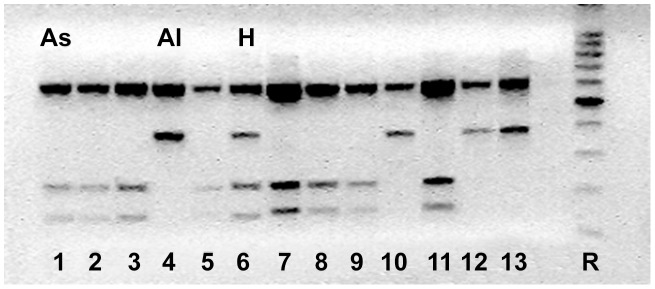
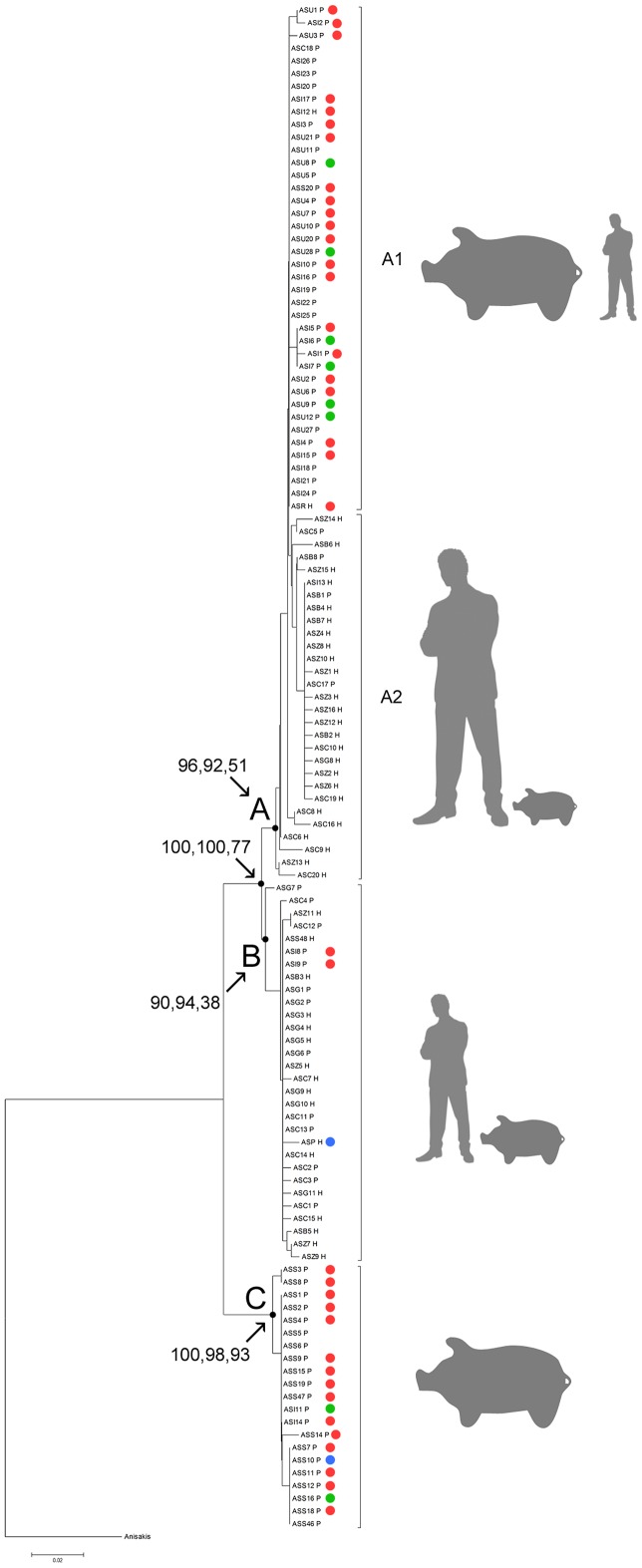
Methodology: 151 Ascaris worms from pigs and humans were characterized using PCR-RFLP on nuclear ITS rDNA. Representative geographical sub-samples were also analysed by sequencing a portion of the mitochondrial cox1 gene, to infer the extent of variability at population level. Sequence data were compared to GenBank sequences from endemic and non-endemic regions.
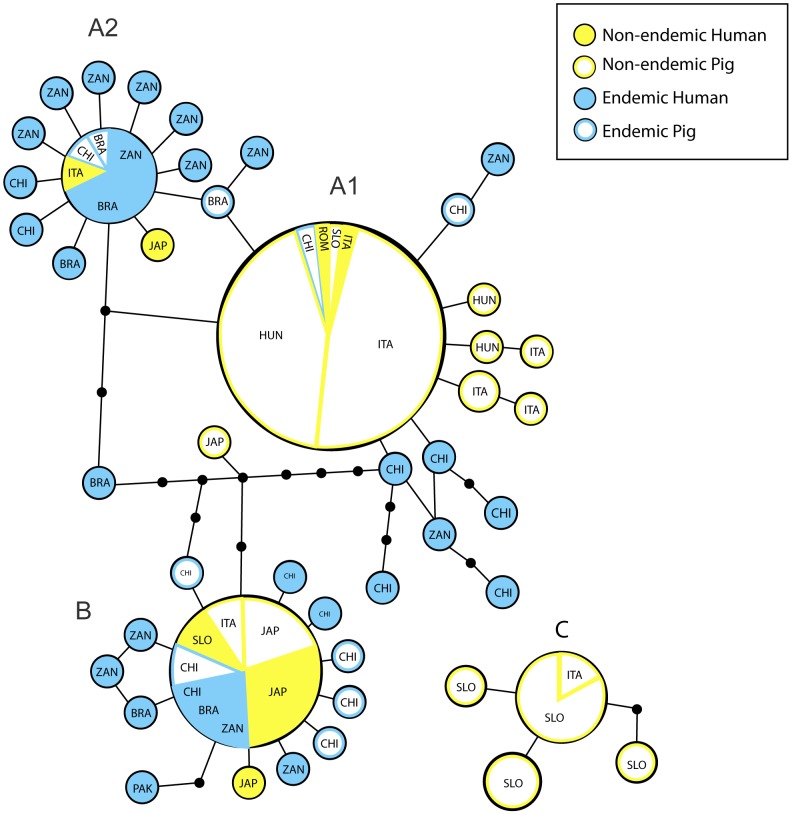
Principal findings: No fixed differences between human and pig Ascaris were evident, with the exception of the Slovak population, which displays significant genetic differentiation. The RFLP analysis confirmed pig as a source of human infection in non-endemic regions and as a corridor for the promulgation of hybrid genotypes. Epidemiology and host-affiliation seem not to be relevant in shaping molecular variance. Phylogenetic and phylogeographical analyses described a complex scenario, involving multiple hosts, sporadic contact between forms and an ancestral taxon referable to A. suum.
Conclusions/significance: These results suggest the existence of homogenizing gene flow between the two taxa, which appear to be variants of a single polytypic species. This conclusion has implications on the systematics, transmission and control programs relating to ascariasis.
Conflict of interest statement
The authors have declared that no competing interests exist.
Figures
References
-
- Dold C, Holland CV (2011) Ascaris and ascariasis. Microbes Infect 13: 632–637. - PubMed
-
- Skallerup P, Nejsum P, Jørgensen CB, Göring HH, Karlskov-Mortensen P, et al. (2012) Detection of a quantitative trait locus associated with resistance to Ascaris suum infection in pigs. Int J Parasitol 42: 383–391. - PubMed
-
- Anderson TJ, Romero-Abal ME, Jaenike J (1993) Genetic structure and epidemiology of Ascaris populations: patterns of host affiliation in Guatemala. Parasitology 107: 319–334. - PubMed
-
- Peng W, Anderson TJC, Zhou X, Kennedy MW (1998) Genetic variation in sympatric Ascaris populations from humans and pigs in China. Parasitology 17: 355–361. - PubMed
Publication types
MeSH terms
Substances
LinkOut - more resources
Full Text Sources
Other Literature Sources
Miscellaneous