A study of hepatitis B virus reactivation associated with rituximab therapy in real-world clinical practice: a single-center experience
- PMID: 23593610
- PMCID: PMC3622856
- DOI: 10.3350/cmh.2013.19.1.51
A study of hepatitis B virus reactivation associated with rituximab therapy in real-world clinical practice: a single-center experience
Abstract
Background/aims: The widespread use of cytotoxic chemotherapy and immunosuppressants has resulted in reactivation of hepatitis B virus (HBV) recently becoming an issue. Although rituximab (an anti-CD20 monoclonal antibody) has revolutionized the treatment of lymphoma, recent reports have suggested that rituximab therapy increases the risk of viral-mediated complications, and particularly HBV reactivation. This study analyzed real clinical practice data for rituximab-related HBV reactivation.
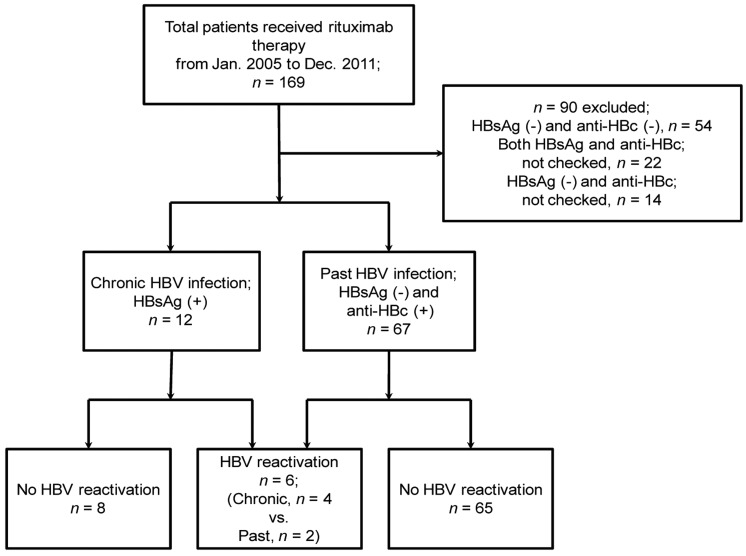
Methods: Between January 2005 and December 2011, 169 patients received treatment with rituximab. Screening status of the HBV infection and frequency of preemptive therapy were determined in these patients, and the clinical features of HBV reactivation were analyzed.
Results: Seventy-nine of the 169 patients with chronic or past HBV infection were selected for evaluation of HBV reactivation. Of the 90 patients who were excluded, 22 (13.0%) were not assessed for HBsAg and anti-HBc, and 14 (8.3%) were not assessed for anti-HBc due to seronegativity for HBsAg. The selected patients were divided into those with chronic HBV infection (n=12) and those with past HBV infection (n=67); six patients (7.6%) experienced HBV reactivation. Eight patients received preemptive therapy, but three patients (37.5%) underwent HBV reactivation. Although HBsAg seropositivity was an independent risk factor for HBV reactivation (P=0.038), of the six patients with HBV reactivation, two (33.3%) had past HBV infection and three (50%) died of liver failure.
Conclusions: The findings of this study demonstrate that adherence to guidelines for screening and preemptive therapy for HBV reactivation was negligent among the included cohort. Attention should be paid to HBV reactivation in patients with past as well as chronic HBV infection during and after rituximab therapy.
Keywords: Hepatitis B virus; Immunosuppressant; Rituximab.
Conflict of interest statement
The authors have no conflicts to disclose.
Figures
References
-
- Lai CL, Yuen MF. Chronic hepatitis B--new goals, new treatment. N Engl J Med. 2008;359:2488–2491. - PubMed
-
- Gürcan HM, Keskin DB, Stern JN, Nitzberg MA, Shekhani H, Ahmed AR. A review of the current use of rituximab in autoimmune diseases. Int Immunopharmacol. 2009;9:10–25. - PubMed
-
- Yeo W, Johnson PJ. Diagnosis, prevention and management of hepatitis B virus reactivation during anticancer therapy. Hepatology. 2006;43:209–220. - PubMed
-
- Watanabe M, Shibuya A, Tsunoda Y, Danbara M, Ishii R, Ohsaka M, et al. Re-appearance of hepatitis B virus following therapy with rituximab for lymphoma is not rare in Japanese patients with past hepatitis B virus infection. Liver Int. 2011;31:340–347. - PubMed
MeSH terms
Substances
LinkOut - more resources
Full Text Sources
Other Literature Sources
Medical
Miscellaneous