


Supply and demand analysis of the current and future US neurology workforce
- PMID: 23596071
- PMCID: PMC3776531
- DOI: 10.1212/WNL.0b013e318294b1cf
Supply and demand analysis of the current and future US neurology workforce
Abstract
Objective: This study estimates current and projects future neurologist supply and demand under alternative scenarios nationally and by state from 2012 through 2025.
Methods: A microsimulation supply model simulates likely career choices of individual neurologists, taking into account the number of new neurologists trained each year and changing demographics of the neurology workforce. A microsimulation demand model simulates utilization of neurology services for each individual in a representative sample of the population in each state and for the United States as a whole. Demand projections reflect increased prevalence of neurologic conditions associated with population growth and aging, and expanded coverage under health care reform.
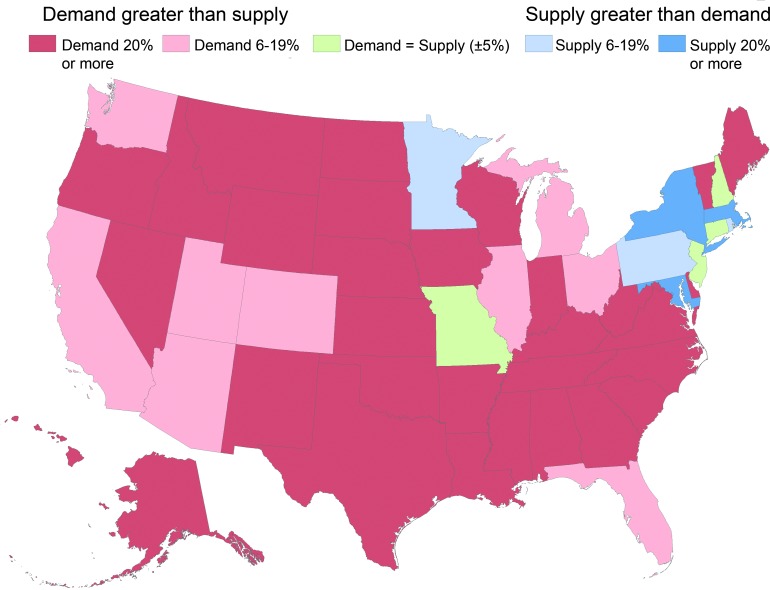
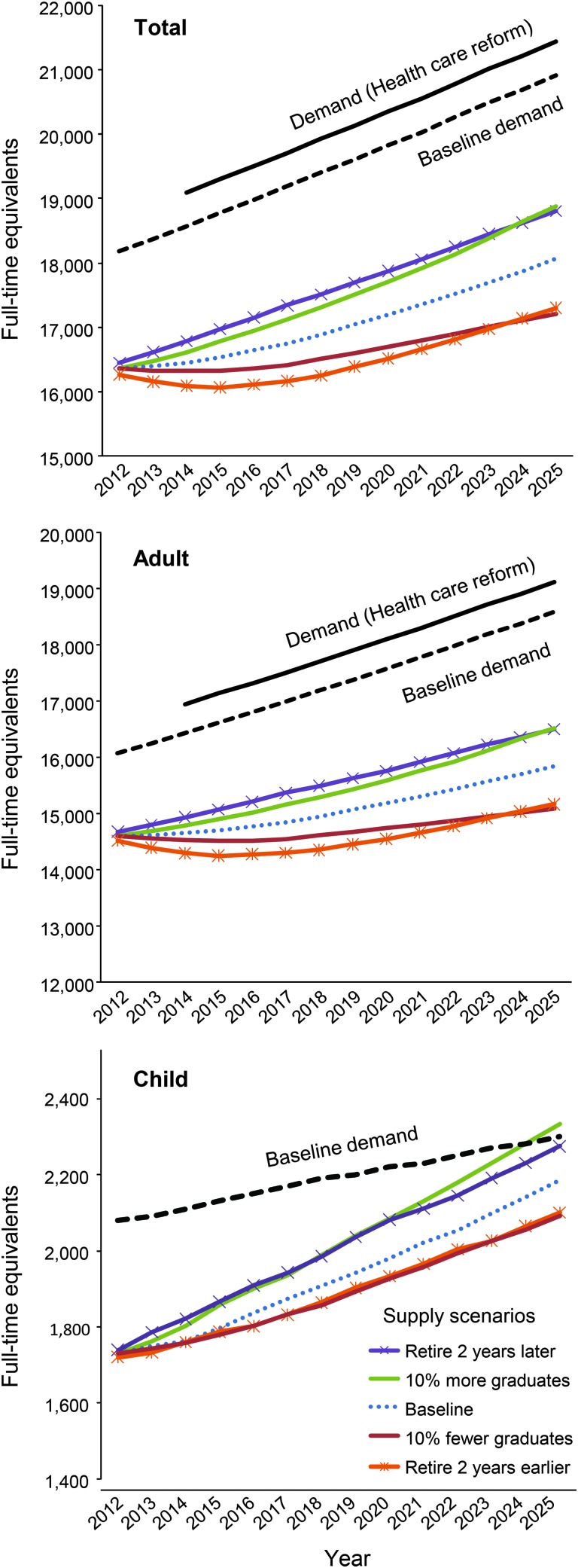
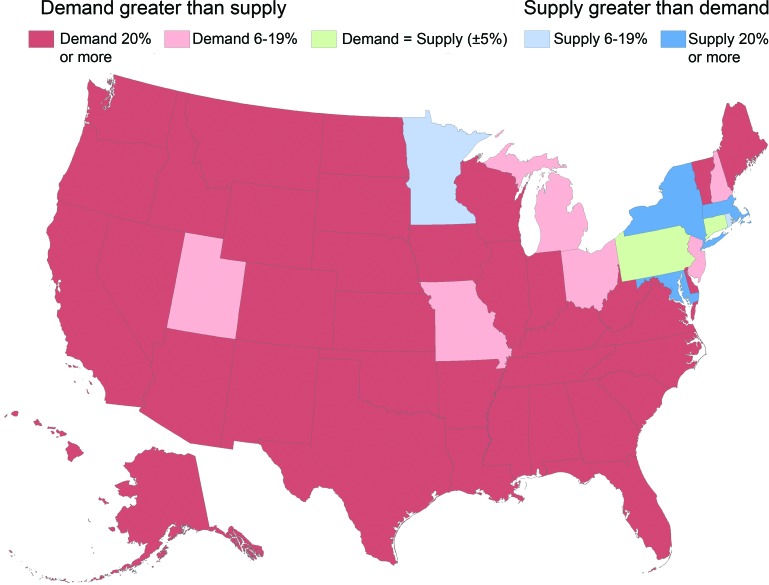
Results: The estimated active supply of 16,366 neurologists in 2012 is projected to increase to 18,060 by 2025. Long wait times for patients to see a neurologist, difficulty hiring new neurologists, and large numbers of neurologists who do not accept new Medicaid patients are consistent with a current national shortfall of neurologists. Demand for neurologists is projected to increase from ∼18,180 in 2012 (11% shortfall) to 21,440 by 2025 (19% shortfall). This includes an increased demand of 520 full-time equivalent neurologists starting in 2014 from expanded medical insurance coverage associated with the Patient Protection and Affordable Care Act.
Conclusions: In the absence of efforts to increase the number of neurology professionals and retain the existing workforce, current national and geographic shortfalls of neurologists are likely to worsen, exacerbating long wait times and reducing access to care for Medicaid beneficiaries. Current geographic differences in adequacy of supply likely will persist into the future.
Figures
Comment in
-
The Workforce Task Force Report: clinical implications for neurology.Neurology. 2014 Mar 4;82(9):818. doi: 10.1212/WNL.0000000000000161. Neurology. 2014. PMID: 24590248 No abstract available.
-
Author response.Neurology. 2014 Mar 4;82(9):818. Neurology. 2014. PMID: 24734286 No abstract available.
-
Supply and demand analysis of the current and future US neurology workforce.Neurology. 2014 Jun 17;82(24):2254-5. doi: 10.1212/WNL.0000000000000509. Neurology. 2014. PMID: 24935638 No abstract available.
References
-
- American Academy of Neurology 2012 Practice and Payment Trends Survey: Final Report. Minneapolis: American Academy of Neurology; 2012
-
- American Academy of Neurology 2010 Medical Economics Issues Survey: Final Report. St. Paul: American Academy of Neurology; 2010
-
- Merritt Hawkins and Associates Survey for Physician Appointment Wait Times. 2009. Available at: www.merritthawkins.com/pdf/mha2009waittimesurvey.pdf. Accessed August 1, 2012
-
- American Association of Neurological Surgeons Survey on Medicare Participation Among Neurosurgeons. 2010. Available at: www.aans.org/~/media/Files/Legislative%20Activities/MedicareSurveyReport.... Accessed August 1, 2012
-
- Children's Hospital Association Pediatric Specialist Physician Shortages Affect Access to Care. 2012. Available at: http://www.childrenshospitals.net/AM/Template.cfm?Section=Surveys&;Templ.... Accessed December 22, 2012
Publication types
MeSH terms
LinkOut - more resources
Full Text Sources
Other Literature Sources
Medical
