


Differential expression of plasma miR-146a in sepsis patients compared with non-sepsis-SIRS patients
- PMID: 23596477
- PMCID: PMC3627686
- DOI: 10.3892/etm.2013.937
Differential expression of plasma miR-146a in sepsis patients compared with non-sepsis-SIRS patients
Abstract
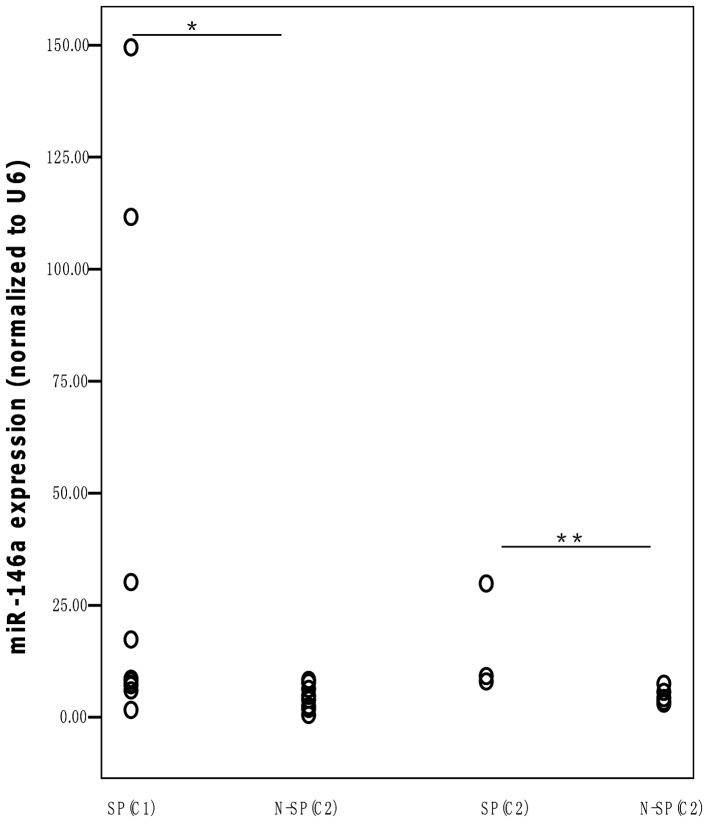
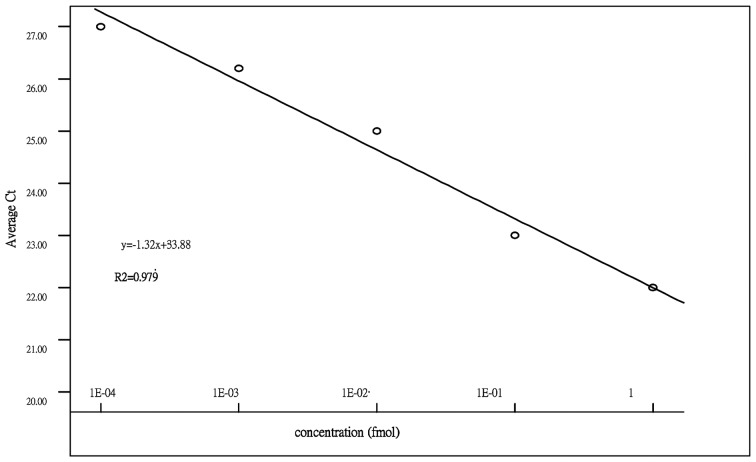
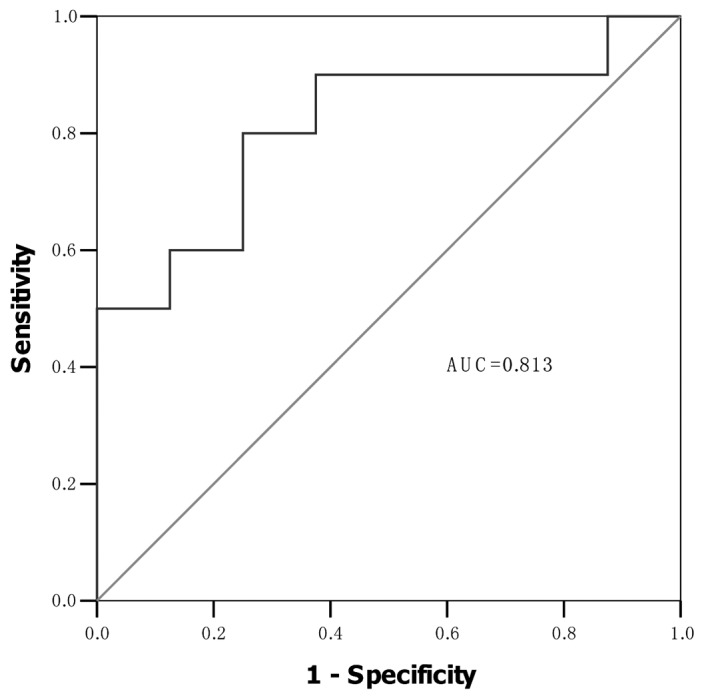
Sepsis is a subtype of systemic inflammatory response syndrome (SIRS), which is characterized by infection. Circulating microRNAs (miRNAs), including miR-150, miR-146a and miR-223, are potential biomarkers of sepsis. In this study, we demonstrated that measuring the relative expression of miR-146a/U6 in plasma, using the 2-ΔΔCt method, provides a method for differentiating between sepsis and non-sepsis-SIRS. We observed a significant increase in miR-146a expression in the initial cohort of 6 non-sepsis-SIRS patients compared to the 4 sepsis patients (P=0.01) and in the second cohort of 8 non-sepsis-SIRS patients compared to the 10 sepsis patients (P=0.027). Additionally, we identified that sodium citrate and ethylenediaminetetraacetic acid (EDTA) K2 may be used as anticoagulant reagents. Generation of a standard curve is not necessary in these diagnostic tests, unless the standard of normalization is carefully selected. Thus we provide more detailed guidance for the clinical use of circulating miRNA biomarkers.
Keywords: diagnosis; miR-146a; sepsis.
Figures
References
-
- Simon L, Gauvin F, Amre DK, Saint-Louis P, Lacroix J. Serum procalcitonin and C-reactive protein levels as markers of bacterial infection: a systematic review and meta-analysis. Clin Infect Dis. 2004;39:206–217. - PubMed
-
- Tang BM, Eslick GD, Craig JC, McLean AS. Accuracy of procalcitonin for sepsis diagnosis in critically ill patients: systematic review and meta-analysis. Lancet Infect Dis. 2007;7:210–217. - PubMed
-
- Young L. Gram-negative sepsis. In: Mandell GL, Douglas RG, Bennett JE, editors. Principles and Practice of Infectious Diseases. Churchill Livingstone; New York: 1990. pp. 611–636.
-
- Chen X, Ba Y, Ma L, et al. Characterization of microRNAs in serum: a novel class of biomarkers for diagnosis of cancer and other diseases. Cell Res. 2008;18:997–1006. - PubMed
LinkOut - more resources
Full Text Sources
Other Literature Sources