


Crassulacean acid metabolism-cycling in Euphorbia milii
- PMID: 23596548
- PMCID: PMC3628315
- DOI: 10.1093/aobpla/plt014
Crassulacean acid metabolism-cycling in Euphorbia milii
Abstract
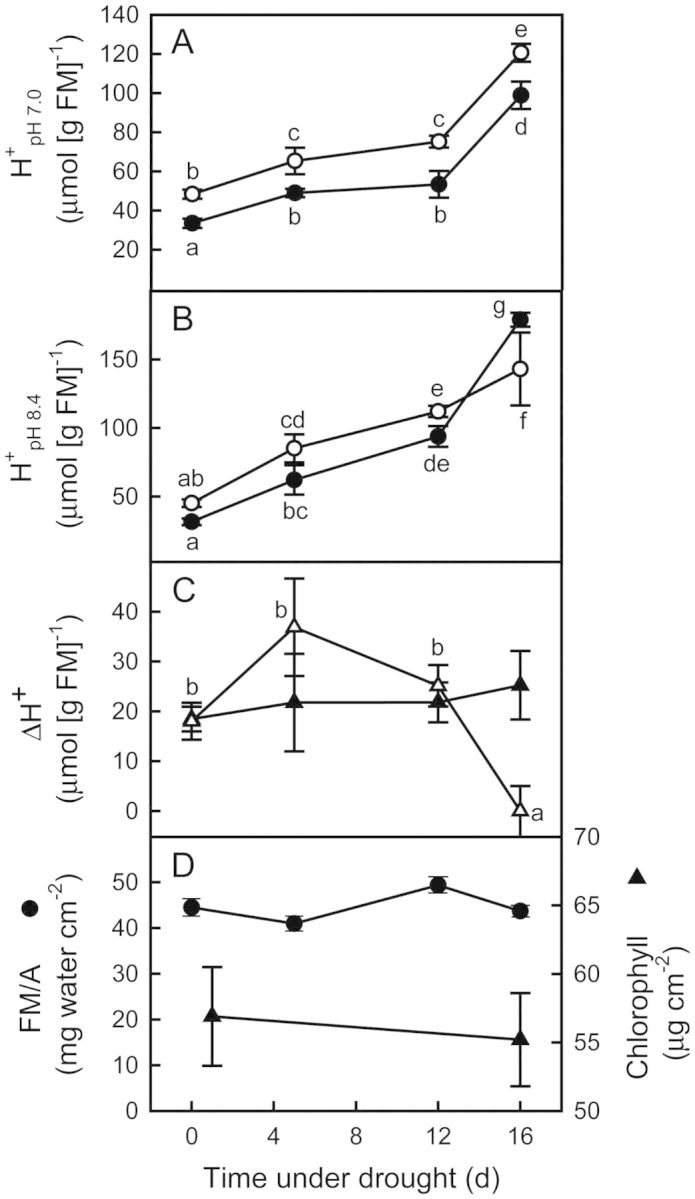
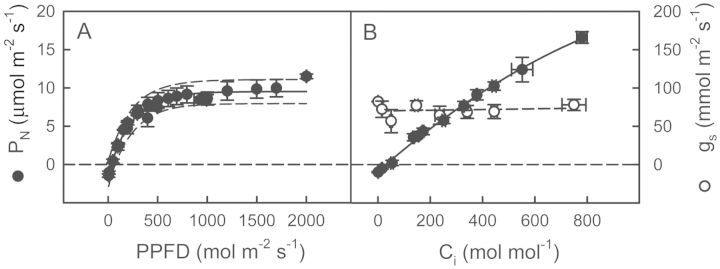
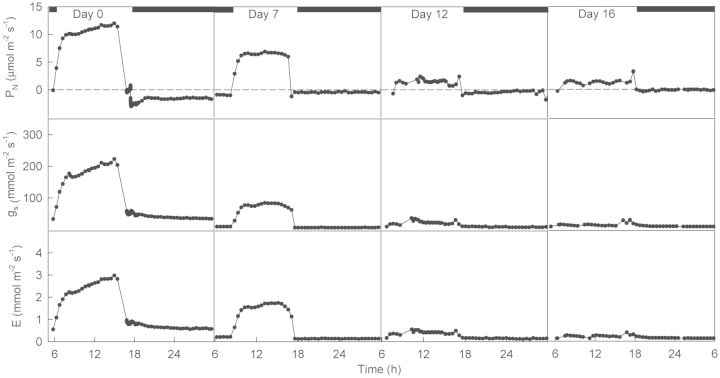
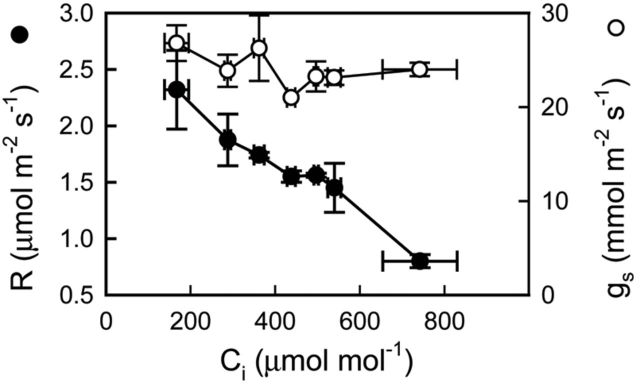
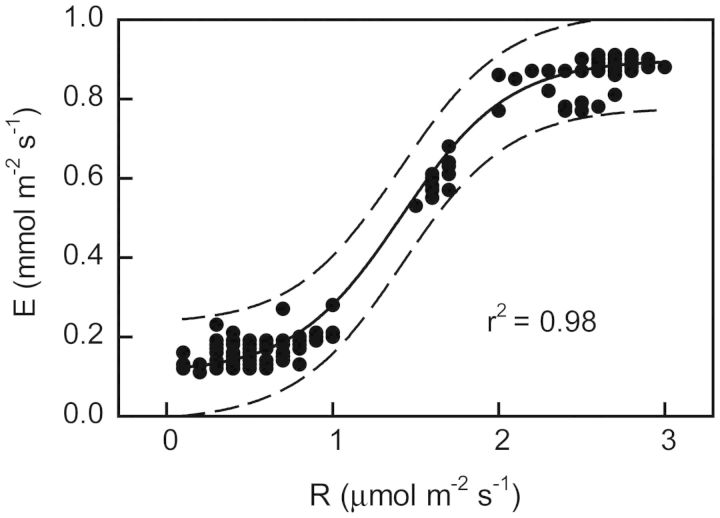
Crassulacean acid metabolism (CAM) occurs in many Euphorbiaceae, particularly Euphorbia, a genus with C3 and C4 species as well. With the aim of contributing to our knowledge of the evolution of CAM in this genus, this study examined the possible occurrence of CAM in Euphorbia milii, a species with leaf succulence and drought tolerance suggestive of this carbon fixation pathway. Leaf anatomy consisted of a palisade parenchyma, a spongy parenchyma and a bundle sheath with chloroplasts, which indicates the possible functioning of C2 photosynthesis. No evidence of nocturnal CO2 fixation was found in plants of E. milii either watered or under drought; watered plants had a low nocturnal respiration rate (R). After 12 days without watering, the photosynthetic rate (P N) decreased 85 % and nocturnal R was nearly zero. Nocturnal H(+) accumulation (ΔH(+)) in watered plants was 18 ± 2 (corresponding to malate) and 18 ± 4 (citrate) μmol H(+) (g fresh mass)(-1). Respiratory CO2 recycling through acid synthesis contributed to a night-time water saving of 2 and 86 % in watered plants and plants under drought, respectively. Carbon isotopic composition (δ(13)C) was -25.2 ± 0.7 ‰ in leaves and -24.7 ± 0.1 ‰ in stems. Evidence was found for the operation of weak CAM in E. milii, with statistically significant ΔH(+), no nocturnal CO2 uptake and values of δ(13)C intermediate between C3 and constitutive CAM plants; ΔH(+) was apparently attributable to both malate and citrate. The results suggest that daily malate accumulation results from recycling of part of the nocturnal respiratory CO2, which helps explain the occurrence of an intermediate value of leaf δ(13)C. Euphorbia milii can be considered as a CAM-cycling species. The significance of the operation of CAM-cycling in E. milii lies in water conservation, rather than carbon acquisition. The possible occurrence of C2 photosynthesis merits research.
Keywords: CAM-cycling; citrate; transpiration; water saving; water-use efficiency.
Figures

References
-
- Batanouny KH, Stichler W, Ziegler H. Photosynthetic pathways and ecological distribution of Euphorbia species in Egypt. Oecologia. 1991;87:565–569. - PubMed
-
- Borland AM, Griffiths H, Maxwell C, Broadmeadow MSJ, Griffiths NM, Barnes JD. On the ecophysiology of the Clusiaceae in Trinidad: expression of CAM in Clusia minor L. during the transition from wet to dry season and characterization of tree endemic species. New Phytologist. 1992;122:349–357. - PubMed
-
- Bruinsma JB. The quantitative analysis of chlorophylls a and b in plant extracts. Photochemistry and Photobiology. 1963;2:241–249.
-
- Busch FA, Sage TL, Cousins AB, Sage RF. C3 plants enhance rates of photosynthesis by reassimilating photorespired and respired CO2. Plant, Cell and Environment. 2013;36:200–212. - PubMed
LinkOut - more resources
Full Text Sources
Other Literature Sources
Miscellaneous
