


Considerations on a mutation in the NOTCH3 gene sparing a cysteine residue: a rare polymorphism rather than a CADASIL variant
- PMID: 23597439
- PMCID: PMC3861349
Considerations on a mutation in the NOTCH3 gene sparing a cysteine residue: a rare polymorphism rather than a CADASIL variant
Abstract
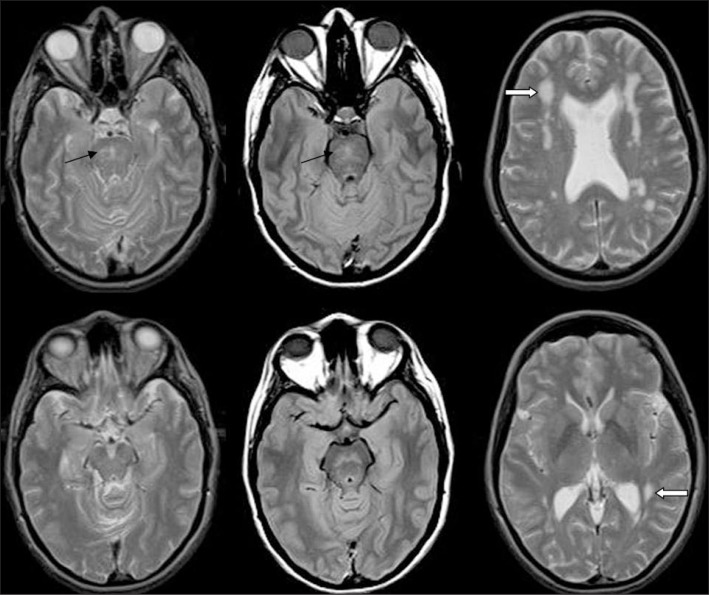
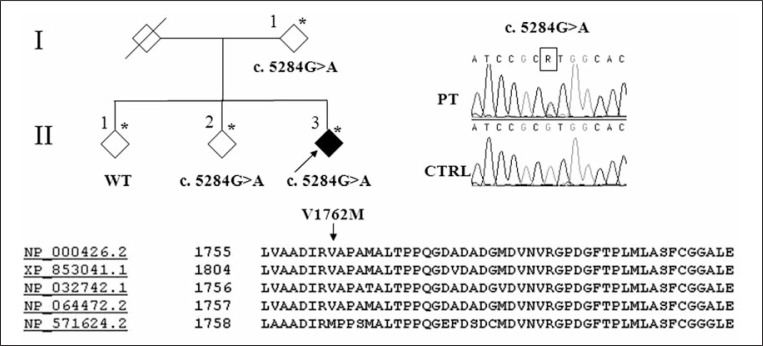
Some missense mutations and small deletions in the NOTCH3 gene, not involving cysteine residues, have been described in patients considered to be affected by paucisymptomatic CADASIL. However, the significance of such molecular variants is still unclear. We describe a 49-year-old woman with a CADASIL-like phenotype, carrying a novel cysteine-sparing mutation in exon 29 of the NOTCH3 gene, and discuss the possible pathogenetic role of this molecular variant. Even though atypical clinical and MRI findings make a diagnosis of CADASIL unlikely in this patient, our report nevertheless underlines the intriguing genotype-phenotype relationship in NOTCH3 mutations and the importance of functional investigation to ascertain the role of new NOTCH3 mutations in CADASIL pathogenesis.
Figures
References
-
- Adib-Samii P, Brice G, Martin RJ, et al. Clinical spectrum of CADASIL and the effect of cardiovascular risk factors on phenotype: study in 200 consecutively recruited individuals. Stroke. 2010;41:630–634. - PubMed
-
- Artavanis-Tsakonas S, Matsuno K, Fortini ME. Notch signaling. Science. 1995;268:225–232. - PubMed
-
- Chabriat H, Levy C, Taillia H, et al. Patterns of MRI lesions in CADASIL. Neurology. 1998;51:452–457. - PubMed
-
- Dichgans M, Mayer M, Uttner I, et al. The phenotypic spectrum of CADASIL: clinical findings in 102 cases. Ann Neurol. 1998;44:731–739. - PubMed
-
- Dichgans M, Ludwig H, Müller-Höcker J, et al. Small inframe deletions and missense mutations in CADASIL: 3D models predict misfolding of Notch3 EGF-like repeat domains. Eur J Hum Genet. 2000;8:280–285. - PubMed
Publication types
MeSH terms
Substances
LinkOut - more resources
Full Text Sources
Miscellaneous