


Expression of the IAP protein family acts cooperatively to predict prognosis in human bladder cancer patients
- PMID: 23599779
- PMCID: PMC3629114
- DOI: 10.3892/ol.2013.1150
Expression of the IAP protein family acts cooperatively to predict prognosis in human bladder cancer patients
Abstract
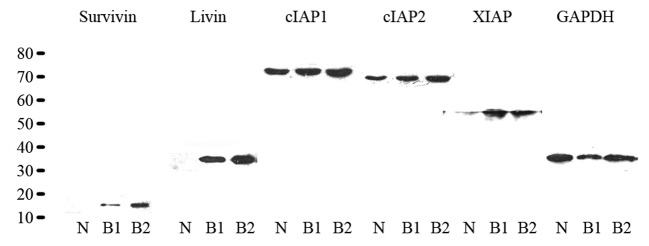
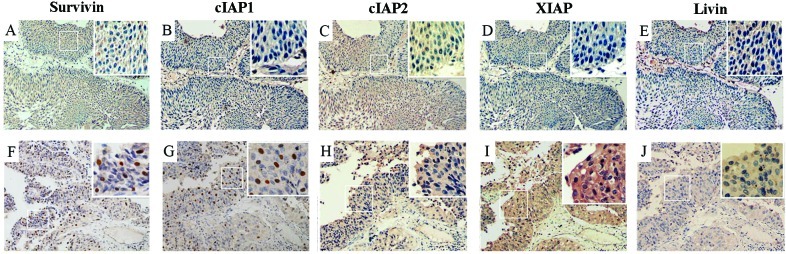
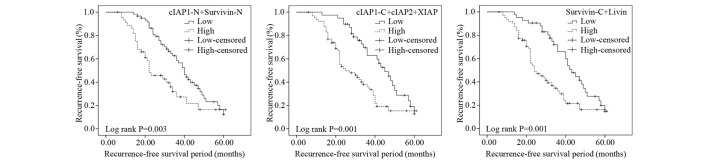
The inhibitors of apoptosis (IAPs) are a group of anti-apoptotic factors in the apoptotic pathway that render cancer cells insensitive to apoptotic stimulation. Recently, several members of the IAP family have been investigated in the context of bladder cancer, and some of these have been associated with specific clinical and pathological tumor features, and with prognosis. These data suggested that the expression of an individual nuclear IAP has an important relationship with the progression of bladder cancer. To date, there are no studies concerning the overall tendencies of IAPs and their comparative therapeutic values in bladder cancer. In this study, we investigated the overall expression trends of the five tumor-related proteins, Survivin, cIAP1, cIAP2, XIAP and Livin, in normal bladder tissues and bladder cancer tissues. We classified and compared the gene expression data of these IAPs with the corresponding clinical and pathological tumor features, and with prognosis, in the development and progression of bladder cancer. The differences in IAP expression levels between archival bladder specimens from 36 normal controls and 105 patients who underwent surgery at our facility were examined using western blot analysis. The localization and expression level of each protein in low- and high-grade bladder cancer tissues were examined through immunohistochemistry. The cytoplasmic expression levels of each protein were scored as 0 (negative), +1 (weak), +2 (medium) or +3 (strong). The nuclear expression levels of cIAP1 and Survivin were scored as 0 (0%), +1 (1-25%), +2 (26-50%) or +3 (>50%). The results demonstrated that the expression of IAPs acted cooperatively to predict prognosis in human bladder cancer patients.
Keywords: bladder cancer; cooperatively; inhibitors of apoptosis; prognosis.
Figures
References
-
- Sylvester RJ, van der Meijden AP, Oosterlinck W, et al. Predicting recurrence and progression in individual patients with stage Ta T1 bladder cancer using EORTC risk tables: A combined analysis of 2596 patients from seven EORTC trials. Eur Urol. 2006;49:466–475. - PubMed
-
- Vaux DL, Silke J. Mammalian mitochondrial IAP binding proteins. Biochem Biophys Res Commun. 2003;304:499–504. - PubMed
-
- Wei Y, Fan T, Yu M. Inhibitor of apoptosis proteins and apoptosis. Acta Biochim Biophys Sin (Shanghai) 2008;40:278–288. - PubMed
-
- Dubrez-Daloz L, Dupoux A, Cartier J. IAPs: more than just inhibitors of apoptosis proteins. Cell Cycle. 2008;7:1036–1046. - PubMed
LinkOut - more resources
Full Text Sources
Other Literature Sources
Research Materials