


HY-1 induces G(2)/M cell cycle arrest in human colon cancer cells through the ATR-Chk1-Cdc25C and Weel pathways
- PMID: 23600770
- PMCID: PMC7657130
- DOI: 10.1111/cas.12182
HY-1 induces G(2)/M cell cycle arrest in human colon cancer cells through the ATR-Chk1-Cdc25C and Weel pathways
Abstract
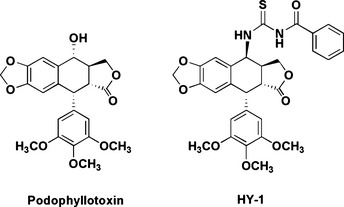
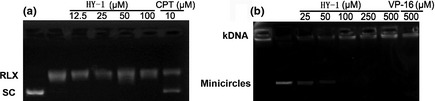
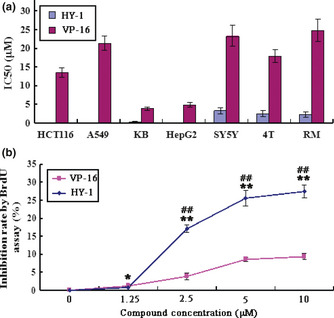
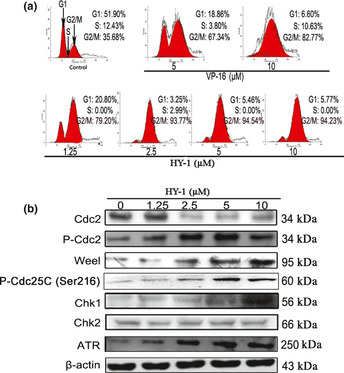
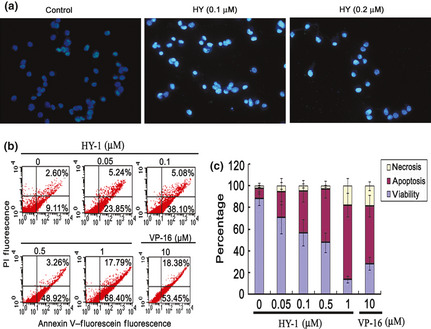
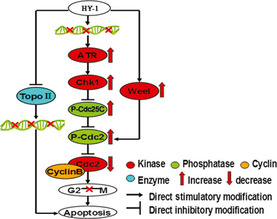
The novel aroylthiourea analogue of podophyllotoxin HY-1 (4β-[benzoyl-thioureido]-4-deoxypodophyllotoxin) was synthesized in our laboratory with the aim of developing multitargeted DNA topoisomerase II inhibitors. The compound showed significant antiproliferative effects on seven cancer cell lines and induced G2 /M phase arrest in HCT116 cells. Moreover, HY-1 showed a potent inhibitory effect on topoisomerase II-mediated kinetoplast DNA decatenation in a dose-dependent manner. Our results showed that cdc2 phosphorylation and decreased cdc2 kinase acitivity through the ATR-Chk1-Cdc25C and Weel pathways were the central mechanisms for G2 /M phase arrest in human colon cancer cells.
© 2013 Japanese Cancer Association.
Figures
References
-
- Schrecker AW, Hartwell JL. Communications‐components of podophyllin. XX. The absolute configuration of podophyllotoxin and related lignans. J Org Chem 1956; 21: 381–2.
-
- Hande KR. Etoposide: four decades of development of a topoisomerase II inhibitor. Eur J Cancer 1998; 34: 1514–21. - PubMed
-
- Zhao Y, Wang CN, Wu ZH, Fang JH, Zhu L. Synthesis and antitumor activity of novel aroylthiourea derivatives of podophyllotoxin. Invest New Drugs 2012; 30: 17–24. - PubMed
-
- Dai XJ, Yamasaki KS, Yang LJ et al Keratinocyte G2/M growth arrest by 1,25‐dihydroxyvitamin D3 Is caused by Cdc2 phosphorylation through Wee1 and Myt1 regulation. J Invest Dermatol 2004; 122: 1356–64. - PubMed
Publication types
MeSH terms
Substances
LinkOut - more resources
Full Text Sources
Other Literature Sources
Research Materials
Miscellaneous
