The protocadherin 11X/Y (PCDH11X/Y) gene pair as determinant of cerebral asymmetry in modern Homo sapiens
- PMID: 23600975
- PMCID: PMC3752934
- DOI: 10.1111/nyas.12042
The protocadherin 11X/Y (PCDH11X/Y) gene pair as determinant of cerebral asymmetry in modern Homo sapiens
Abstract
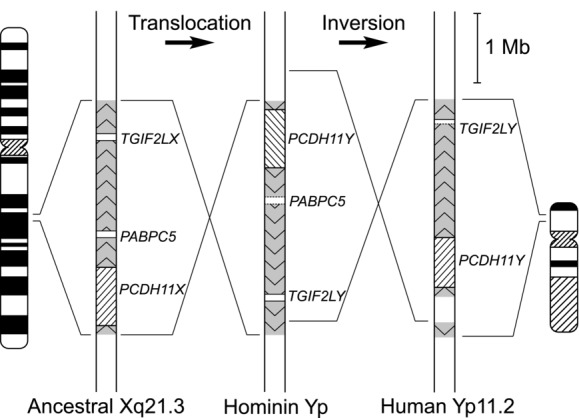
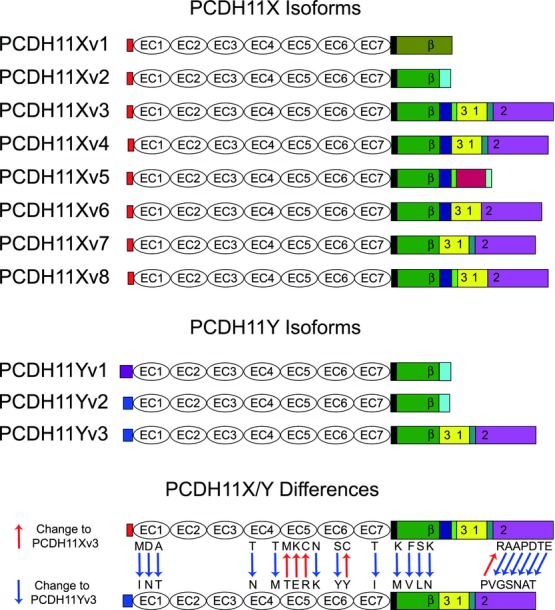
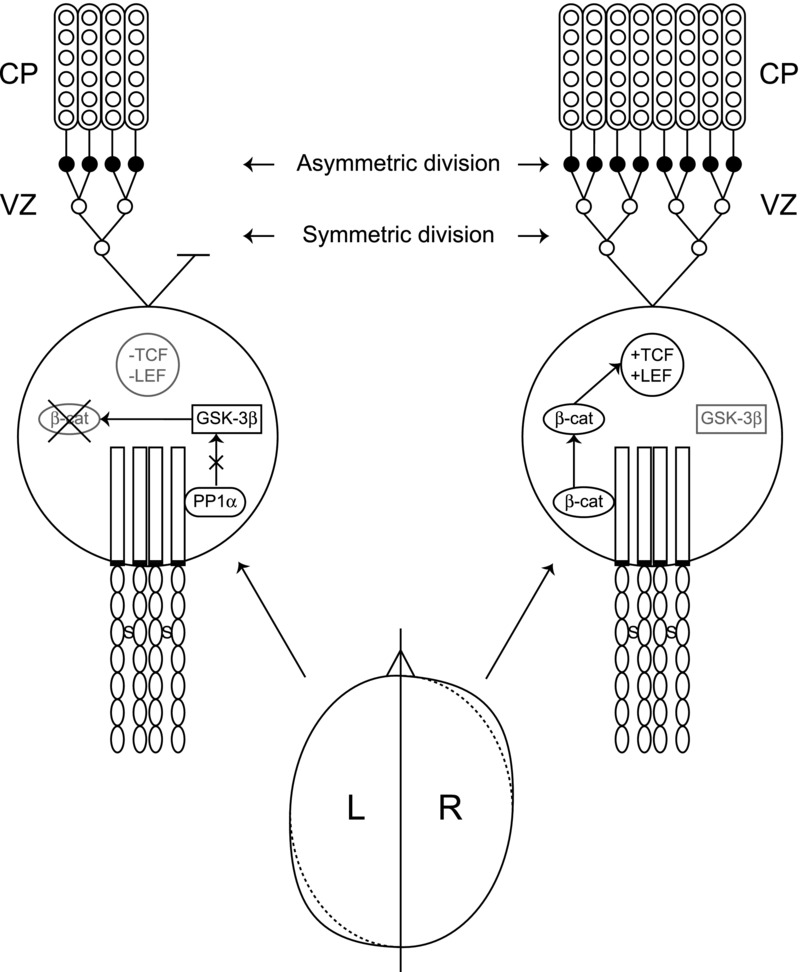
Annett's right-shift theory proposes that human cerebral dominance (the functional and anatomical asymmetry or torque along the antero-posterior axis) and handedness are determined by a single "right-shift" gene. Familial transmission of handedness and specific deviations of cerebral dominance in sex chromosome aneuploidies implicate a locus within an X-Y homologous region of the sex chromosomes. The Xq21.3/Yp11.2 human-specific region of homology includes the protocadherin 11X/Y (PCDH11X/Y) gene pair, which encode cell adhesion molecules subject to accelerated evolution following the separation of the human and chimpanzee lineages six million years ago. PCDH11X and PCDH11Y, differentially regulated by retinoic acid, are highly expressed in the ventricular zone, subplate, and cortical plate of the developing cerebral cortex. Both proteins interact with β-catenin, a protein that plays a role in determining axis formation and regulating cortical size. In this way, the PCDH11X/Y gene pair determines cerebral asymmetry by initiating the right shift in Homo sapiens.
© 2013 New York Academy of Sciences.
Figures
References
-
- Owen CM, Howard A, Binder DK. Hippocampus minor, calcar avis, and the Huxley-Owen debate. Neurosurgery. 2009;65:1098–1105. - PubMed
-
- Broca P. Rapport sur un memoire de M. Armand de Fleury intitulé: de l'inegalité dynamique des deux hemisphères cerébraux. Bulletins de l’Academie de Medicine. 1877;6:528–539.
-
- Gratiolet P. Anatomie Compare du Systeme Nerveux, Considere Dans ses Rapports avec L'intelligence. Paris: J.B. Bailliere et Fils; 1839.
-
- Yakovlev PI, Rakic P. Patterns of decussation of bulbar pyramids and distribution of pyramidal tracts on two sides of the spinal cord. Trans. Am. Neurol. Assoc. 1966;91:366–367.
MeSH terms
Substances
LinkOut - more resources
Full Text Sources
Other Literature Sources
Molecular Biology Databases