


Constant or fluctuating hyperglycemias increases cytomembrane stiffness of human umbilical vein endothelial cells in culture: roles of cytoskeletal rearrangement and nitric oxide synthesis
- PMID: 23601245
- PMCID: PMC3651398
- DOI: 10.1186/1471-2121-14-22
Constant or fluctuating hyperglycemias increases cytomembrane stiffness of human umbilical vein endothelial cells in culture: roles of cytoskeletal rearrangement and nitric oxide synthesis
Abstract
Background: Previous studies have implicated continuous or intermittent hyperglycemia in altered endothelium-derived nitric oxide (NO) synthesis. NO can regulate both the F-actin cytoskeleton and endothelial cell membrane stiffness. Atomic force microscopy (AFM) is a powerful tool that can be used to study plasma membrane deformability at the single cell level. As membrane stiffness is partially dependent on filamentous F-actin, the interdependence of these parameters can be studied through the combined approaches of AFM and laser scanning confocal microscopy (LSCM). In the present study, we evaluated the effects of constant or fluctuating hyperglycemia on endothelial-derived NO synthesis, the cytoskeletal contribution and endothelial cell membrane stiffness.
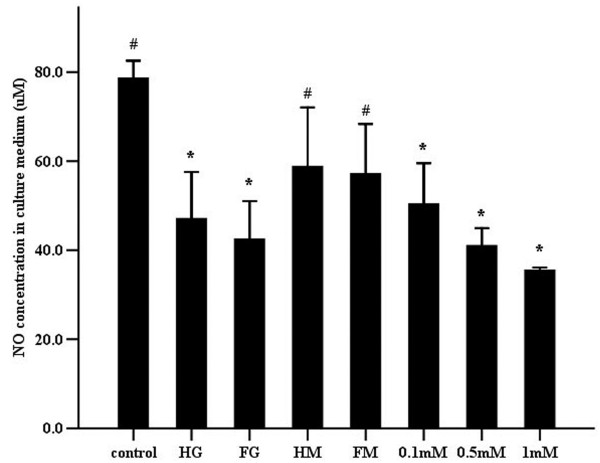
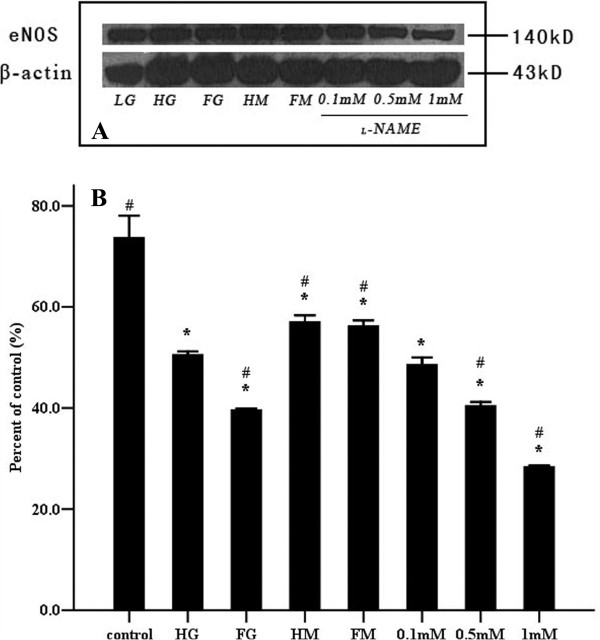
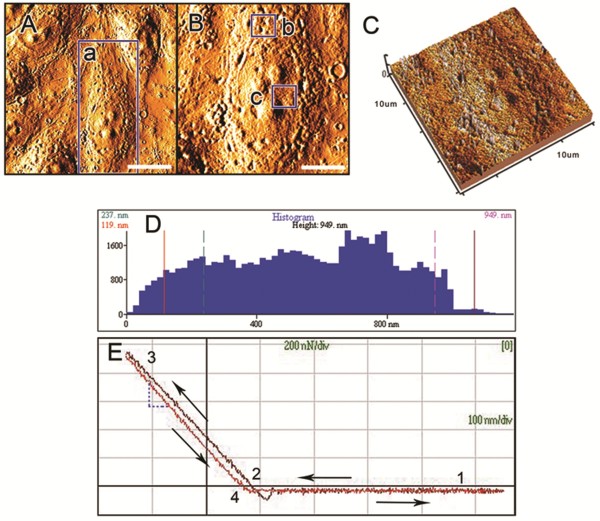
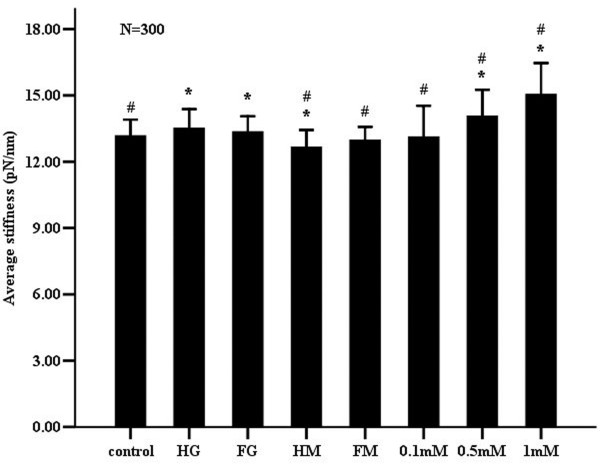
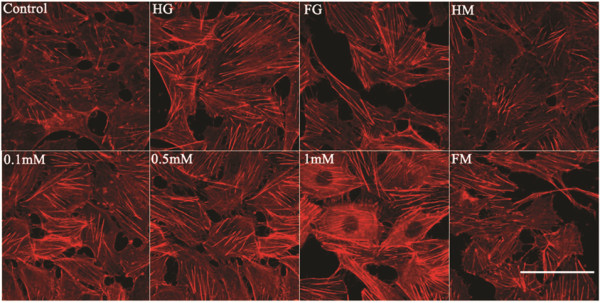
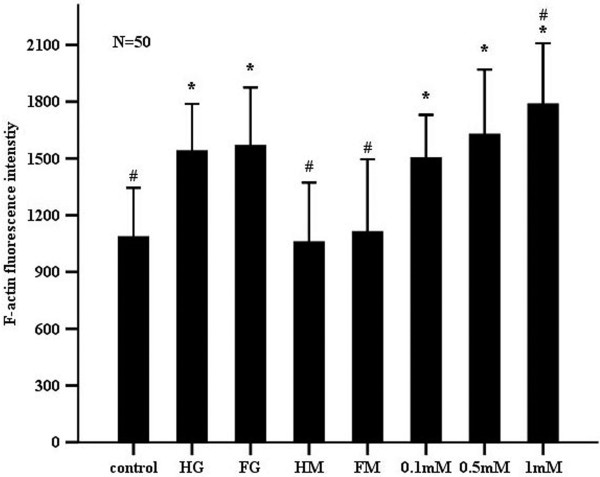
Results: Compared to control cells cultured in low glucose (5 mM), constant (25 mM) or fluctuating (25/5 mM) high glucose significantly decreased NO release along with stiffening of endothelial cell membranes and F-actin rearrangement. The non-selective nitric oxide synthase (NOS) inhibitor, N(G)-nitro-(L)-arginine methyl ester ((L)-NAME) exerted similar effects on endothelial cells. Increasing concentrations of (L)-NAME (from 0.1 to 1 mM) exacerbated these effects in a concentration-dependent manner.
Conclusions: Result from the present study suggest that stiffening endothelial cell membranes are associated with decreased NO synthesis, which was established through the F-actin cytoskeletal redistribution. The precise mechanisms of hyperglycemia-induced endothelial dysfunction require further investigation.
Figures
References
-
- UK Prospective Diabetes Study (UKPDS) Group. Intensive blood-glucose control with sulphonylureas or insulin compared with conventional treatment and risk of complications in patients with type 2 diabetes (UKPDS 33) Lancet. 1998;352:837–853. - PubMed
-
- Piconi L, Quagliaro L, Da RR, Assaloni R, Giugliano D, Esposito K, Szabo C, Ceriello A. Intermittent high glucose enhances ICAM-1, VICAM-1, E-selectin and interleukin-6 expression in human umbilical enclothelial cells in culture: the role of poly(ADP-ribose) polymerase. J Thromb Haemost. 2004;2:1453–1459. doi: 10.1111/j.1538-7836.2004.00835.x. - DOI - PubMed
-
- Quagliaro L, Piconi L, Assaloni R, Da RR, Maier A, Zuodar G, Ceriello A. Intermittent high glucose enhances ICAM-1, VCAM-1 and E-selectin expression in human umbilical vein endothelial cells in culture: the distinct role of protein kinase C and mitochondrial superoxide production. Atherosclerosis. 2005;183:259–267. doi: 10.1016/j.atherosclerosis.2005.03.015. - DOI - PubMed
-
- Pricci F, Leto G, Amadio L, Iacobini C, Cordone S, Catalano S, Zicari A, Sorcini M, Di MU, Pugliese G. Oxidative stress in diabetes-induced endothelial dysfunction involvement of nitric oxide and protein kinase C. Free Radic Biol Med. 2003;35:683–694. doi: 10.1016/S0891-5849(03)00401-5. - DOI - PubMed
Publication types
MeSH terms
Substances
LinkOut - more resources
Full Text Sources
Other Literature Sources
Medical
Research Materials
Miscellaneous
