. 2014 Apr 3;33(14):1818-27.
doi: 10.1038/onc.2013.133. Epub 2013 Apr 22.

RRP1B is a metastasis modifier that regulates the expression of alternative mRNA isoforms through interactions with SRSF1

Affiliations

RRP1B is a metastasis modifier that regulates the expression of alternative mRNA isoforms through interactions with SRSF1

M Lee et al. Oncogene. .

Abstract

RRP1B (ribosomal RNA processing 1 homolog B) was first identified as a metastasis susceptibility gene in breast cancer through its ability to modulate gene expression in a manner that can be used to accurately predict prognosis in breast cancer. However, the mechanism(s) by which RRP1B modulates gene expression is currently unclear. Many RRP1B binding candidates are involved in alternative splicing, a mechanism of gene expression regulation that is increasingly recognized to be involved in cancer progression and metastasis. One such target is SRSF1 (serine/arginine-rich splicing factor 1) (SF2/ASF, splicing factor 2/alternative splicing factor), an essential splicing regulator that also functions as an oncoprotein. Earlier studies demonstrated that splicing and transcription occur concurrently and are coupled processes. Given that RRP1B regulates transcriptional activity, we hypothesized that RRP1B also regulates the expression of alternative mRNA isoforms through its interaction with SRSF1. Interaction between RRP1B and SRSF1 was verified by coimmunoprecipitation and coimmunofluorescence. Treatment of cells with transcriptional inhibitors significantly increased this interaction, demonstrating that the association of these two proteins is transcriptionally regulated. To assess the role of RRP1B in the regulation of alternative isoform expression, RNA-sequencing data were generated from control and Rrp1b-knockdown cells. Knockdown of Rrp1b induced a significant change in isoform expression in over 600 genes compared with control cell lines. This was verified by quantitative reverse-transcription PCR using isoform-specific primers. Pathway enrichment analyses identified cell cycle and checkpoint regulation to be those most affected by Rrp1b knockdown. These data suggest that RRP1B suppresses metastatic progression by altering the transcriptome through its interaction with splicing regulators such as SRSF1.


Conflict of interest statement

Conflict of Interest

The authors declare no conflict of interest.

Figures
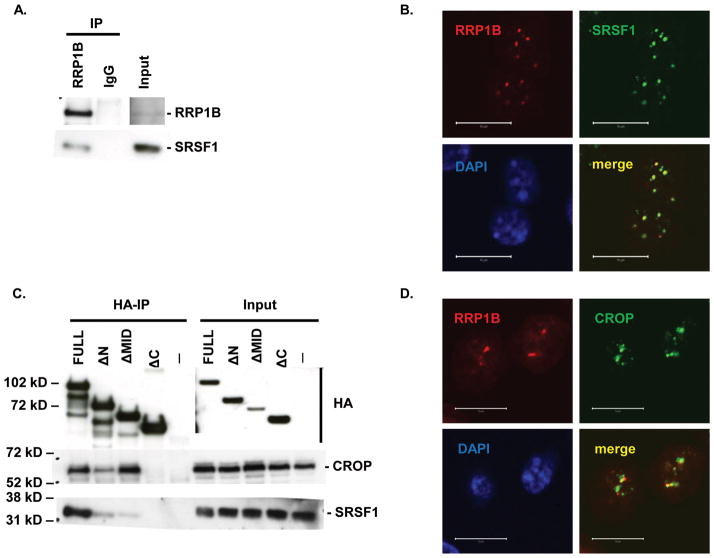
Figure 1
Figure 1. Co-immunoprecipitation and co-localization of RRP1B with SRSF1 and CROP
A. Western blot analysis of co-immunoprecipitation of endogenous RRP1B and SRSF1. B. Co-immunofluorescence of full-length HA-tagged RRP1B and endogenous SRSF1. Scale bar measures 10 μM. C. Co-immunoprecipitation of HA-tagged RRP1B constructs with endogenous SRSF1 and CROP. Lysates from 293T cells transfected with HA-tagged RRP1B were incubated with anti-HA for immunoprecipitation and blotted with anti-SRSF1 or anti-CROP. D. Co-immunofluorescence of full-length HA-tagged RRP1B and endogenous CROP. Scale bar measures 10 μM.
Figure 2
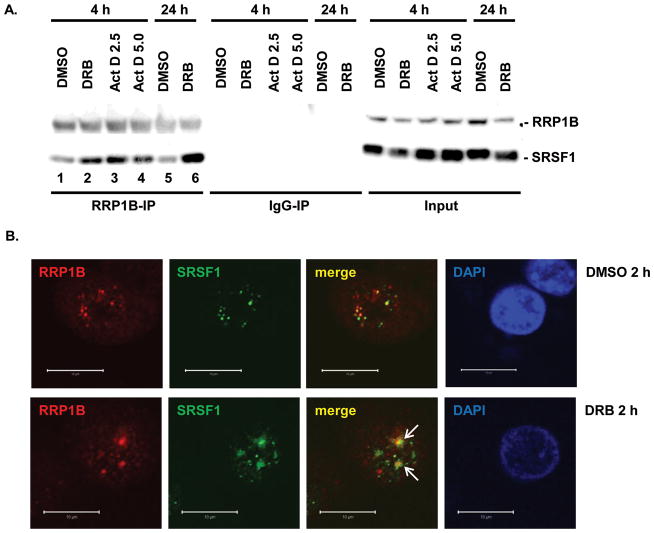
Figure 2. Inhibition of transcription enhances the interaction between RRP1B and SRSF1
A. Co-immunoprecipitation of RRP1B and SRSF1 with DRB or Act D treatment. 293T cells treated with DMSO, 25 μg/mL DRB, or 2.5 μg/mL and 5 μg/mL Act D as indicated were used for immunoprecipitation with anti-RRP1B. Normal rabbit IgG was used as a negative control. B. Co-immunofluorescence of RRP1B and SRSF1 after DMSO or 25 μg/mL DRB treatment. 293T cells were treated with 2 h DMSO or DRB and collected for immunofluorescence. Co-localization was confirmed using confocal fluorescence microscopy. Scale bar measures 10 μM.
Figure 3
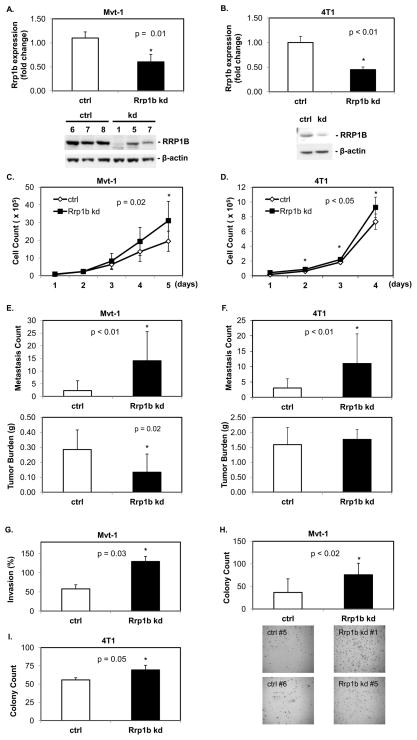
Figure 3. Knockdown of Rrp1b increases cell proliferation and invasiveness in vitro, and metastasis in vivo
A, B. RRP1B expression in stable knockdown cell lines. A shRNA targeting mouse Rrp1b was transfected to stably knockdown RRP1B expression in the highly metastatic Mvt-1 and 4T1 cell line. Expression of mRNA was confirmed by qRT-PCR and Western blot. In the Western blot for Mvt-1, numbers indicate different clones for each stable cell line. C, D. Stable knockdown of RRP1B increased cell growth rate. Cells were plated at 2.5 × 10⁴ cells per 12-well in duplicate and counted each day as indicated. * and ** indicate p = 0.03 and p = 0.02, respectively. E, F. Knockdown of RRP1B increased metastasis in vivo. After 4 weeks of injection, lungs were collected for examination of surface metastasis sites (ctrl, n = 20; Rrp1b kd, n = 20 for each cell line). G. Matrigel invasion assay with Mvt-1 stable cell lines. Each cell line was plated in triplicate. H, I. Soft agar assay.
Figure 4
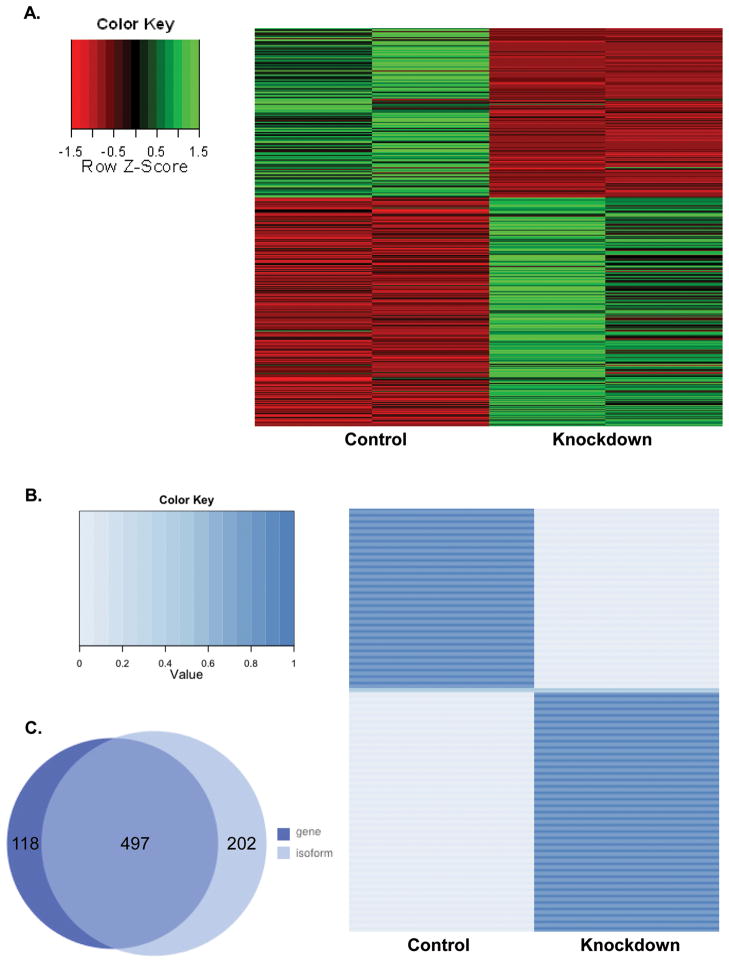
Figure 4. Rrp1b knockdown causes a significant change in global gene and isoform expression
A. A heatmap of differentially expressed genes from RNA-seq data in control and Rrp1b-knockdown stable cell lines. B. Differential isoform expression in control and Rrp1b-knockdown stable cell lines. A heat map was generated to display the ratio of isoforms that were up-regulated in the control and/or up-regulated in the knockdown cell lines for each gene. Note the middle section, shown in a light blue color across both sets, has a ratio of 0.5 for the control and the knockdown cell lines, indicating a complete switch in isoform expression. C. A total of 497 genes overlapped between the differential gene expression analysis and differential isoform expression analysis.
Figure 5
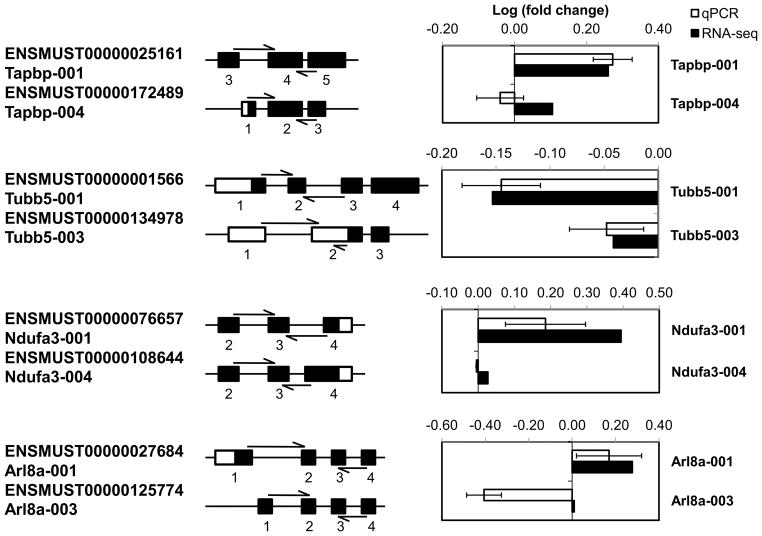
Figure 5. Validation of isoform-specific regulation by RRP1B via qRT-PCR
RNA from control and Rrp1b-knockdown stable Mvt-1 cell lines was used for qRT-PCR. Isoform-specific regions were selected for target genes identified through RNA-seq analysis. For each gene, the top isoform was identified by RNA-seq to have a significant fold-change in expression with Rrp1b knockdown. Primers were designed so that at least one primer extended across an exon junction. Exons are depicted in relation to their genomic location.
Figure 6
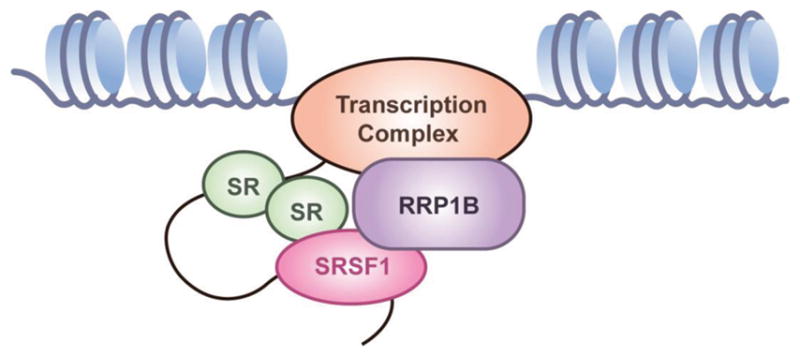
Figure 6. RRP1B acts as a mediator between chromatin-associated transcription factors and splicing regulators
Previous studies and our results shown here collectively suggest a role for RRP1B at the chromatin as a mediator between transcription and splicing factors to regulate mRNA expression.

References

    1. Crawford NP, Qian X, Ziogas A, Papageorge AG, Boersma BJ, Walker RC, et al. Rrp1b, a new candidate susceptibility gene for breast cancer progression and metastasis. PLoS Genet. 2007 Nov;3(11):e214. - PMC - PubMed
    1. Ramaswamy S, Ross KN, Lander ES, Golub TR. A molecular signature of metastasis in primary solid tumors. Nat Genet. 2003 Jan;33(1):49–54. - PubMed
    1. van de Vijver MJ, He YD, van’t Veer LJ, Dai H, Hart AA, Voskuil DW, et al. A gene-expression signature as a predictor of survival in breast cancer. N Engl J Med. 2002 Dec 19;347(25):1999–2009. - PubMed
    1. Hsieh SM, Look MP, Sieuwerts AM, Foekens JA, Hunter KW. Distinct inherited metastasis susceptibility exists for different breast cancer subtypes: a prognosis study. Breast Cancer Res. 2009;11(5):R75. - PMC - PubMed
    1. Crawford NP, Yang H, Mattaini KR, Hunter KW. The metastasis efficiency modifier ribosomal RNA processing 1 homolog B (RRP1B) is a chromatin-associated factor. J Biol Chem. 2009 Oct 16;284(42):28660–73. - PMC - PubMed

Publication types

MeSH terms