


Influence of age, past smoking, and disease severity on TLR2, neutrophilic inflammation, and MMP-9 levels in COPD
- PMID: 23606791
- PMCID: PMC3628212
- DOI: 10.1155/2013/462934
Influence of age, past smoking, and disease severity on TLR2, neutrophilic inflammation, and MMP-9 levels in COPD
Abstract
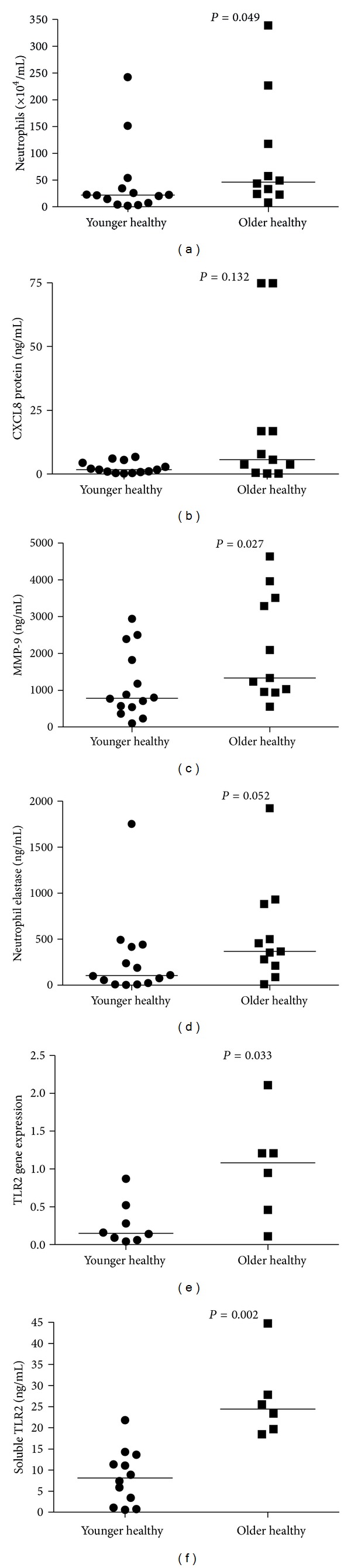
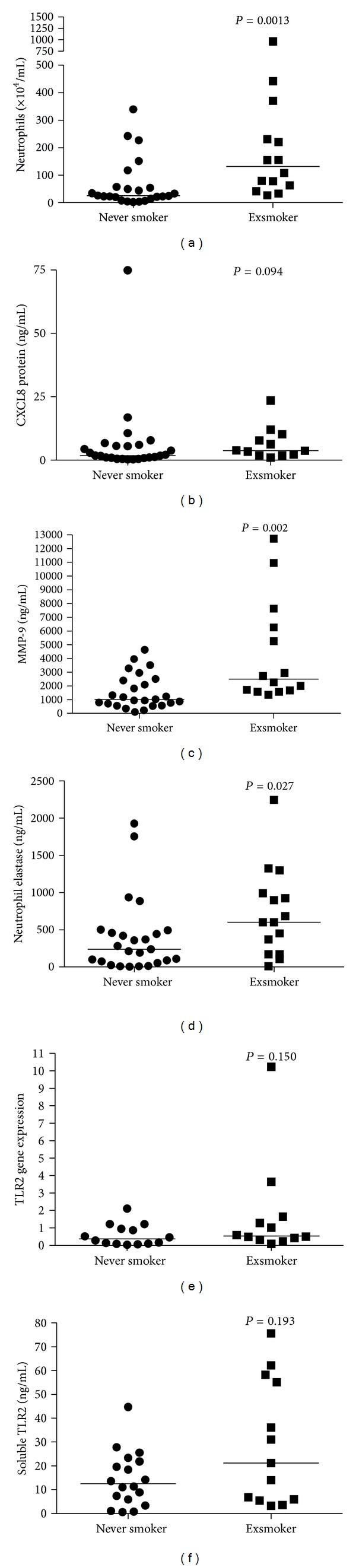
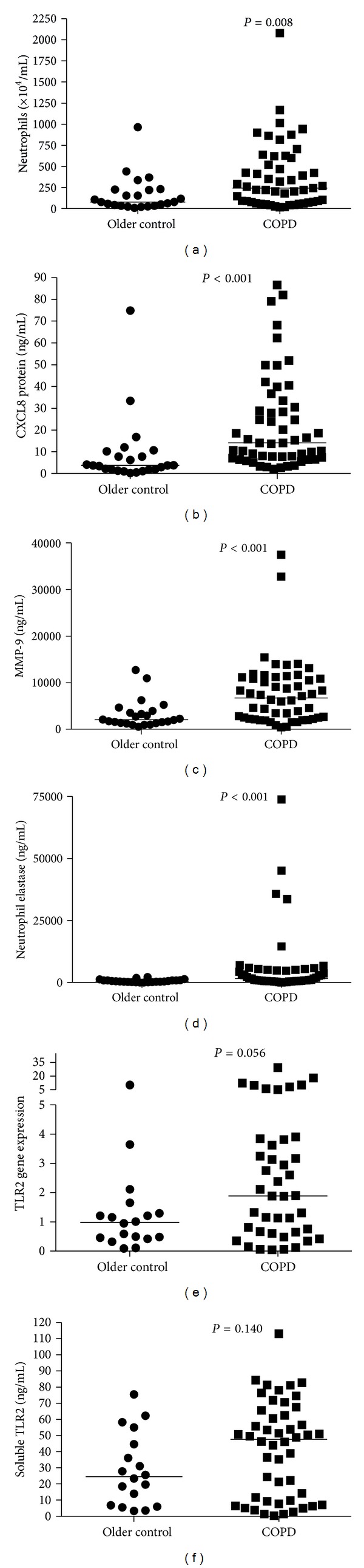
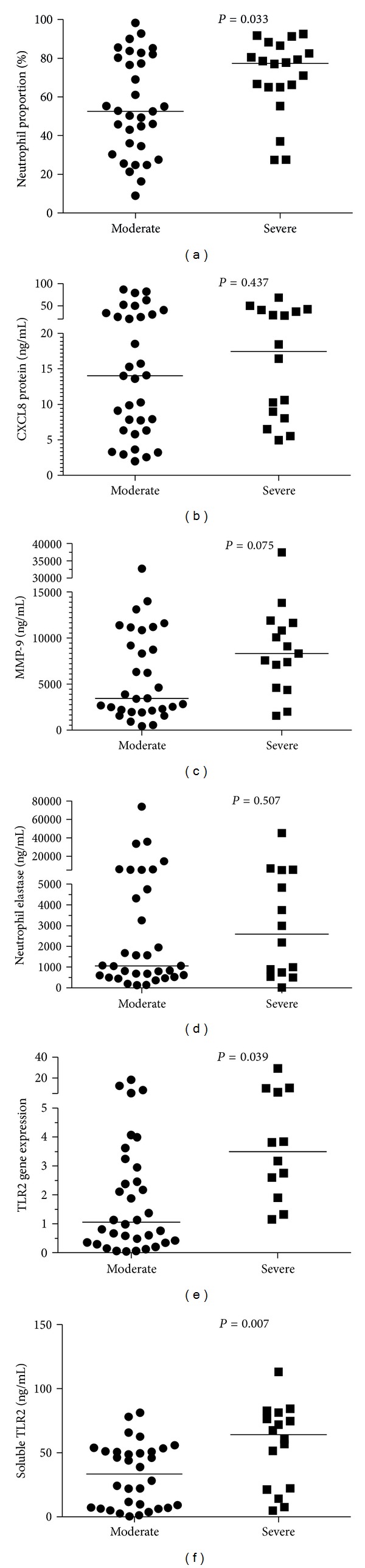
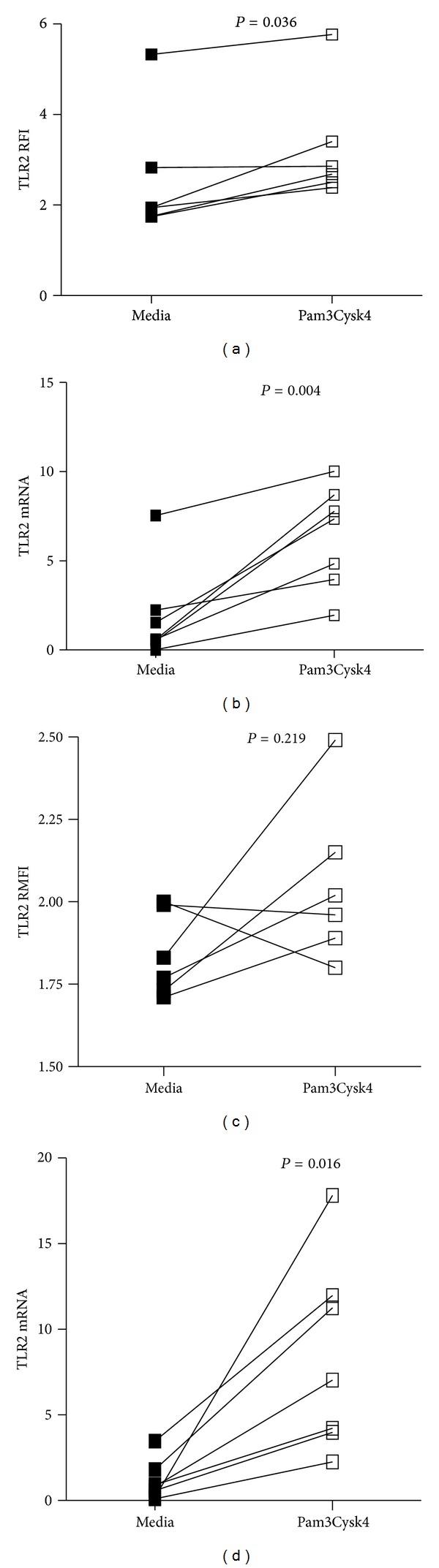
Chronic obstructive pulmonary disease (COPD) is a common and serious respiratory disease, particularly in older individuals, characterised by fixed airway obstruction and persistent airway neutrophilia. The mechanisms that lead to these features are not well established. We investigated the contribution of age, prior smoking, and fixed airflow obstruction on sputum neutrophils, TLR2 expression, and markers of neutrophilic inflammation. Induced sputum from adults with COPD (n = 69) and healthy controls (n = 51) was examined. A sputum portion was dispersed, total, differential cell count and viability recorded, and supernatant assayed for CXCL8, matrix metalloproteinase- (MMP-) 9, neutrophil elastase, and soluble TLR2. Peripheral blood cells (n = 7) were stimulated and TLR2 activation examined. TLR2 levels were increased with ageing, while sputum neutrophils and total sputum MMP-9 levels increased with age, previous smoking, and COPD. In multivariate regression, TLR2 gene expression and MMP-9 levels were significant independent contributors to the proportion of sputum neutrophils after adjustment for age, prior smoking, and the presence of airflow obstruction. TLR2 stimulation led to enhanced release of MMP-9 from peripheral blood granulocytes. TLR2 stimulation activates neutrophils for MMP-9 release. Efforts to understand the mechanisms of TLR2 signalling and subsequent MMP-9 production in COPD may assist in understanding neutrophilic inflammation in COPD.
Figures

References
-
- Buist AS, McBurnie MA, Vollmer WM, et al. International variation in the prevalence of COPD (The BOLD Study): a population-based prevalence study. The Lancet. 2007;370(9589):741–750. - PubMed
-
- Pauwels RA, Buist AS, Calverley PMA, Jenkins CR, Hurd SS. Global strategy for the diagnosis, management, and prevention of chronic obstructive pulmonary disease: NHLBI/WHO Global Initiative for Chronic Obstructive Lung Disease (GOLD) workshop summary. American Journal of Respiratory and Critical Care Medicine. 2001;163(5):1256–1276. - PubMed
-
- Agusti A, Barnes PJ. What the journal would like to publish on chronic obstructive pulmonary disease. American Journal of Respiratory and Critical Care Medicine. 2010;182(1):1–2. - PubMed
MeSH terms
Substances
LinkOut - more resources
Full Text Sources
Other Literature Sources
Medical
Miscellaneous
