


The antibacterial effect of ethanol extract of polish propolis on mutans streptococci and lactobacilli isolated from saliva
- PMID: 23606887
- PMCID: PMC3623395
- DOI: 10.1155/2013/681891
The antibacterial effect of ethanol extract of polish propolis on mutans streptococci and lactobacilli isolated from saliva
Abstract
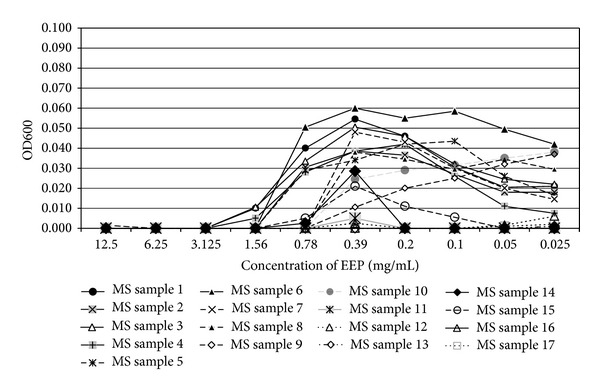
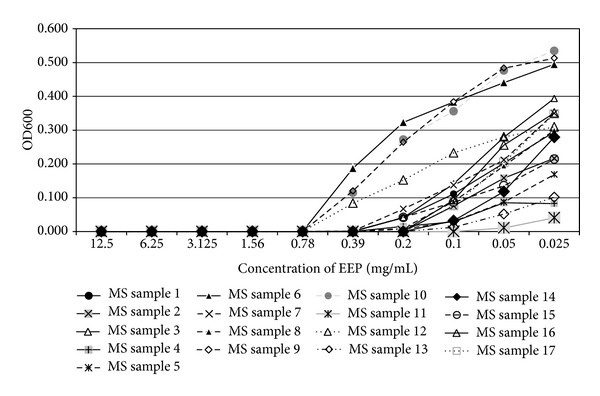
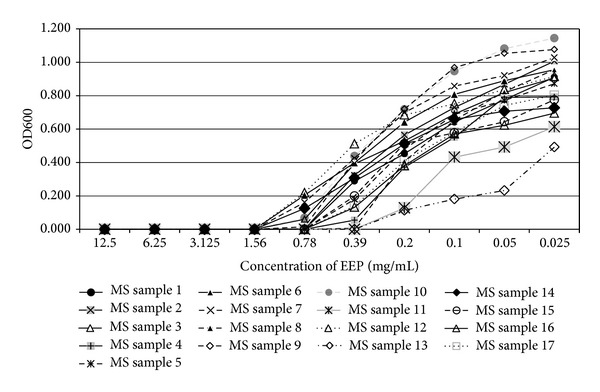
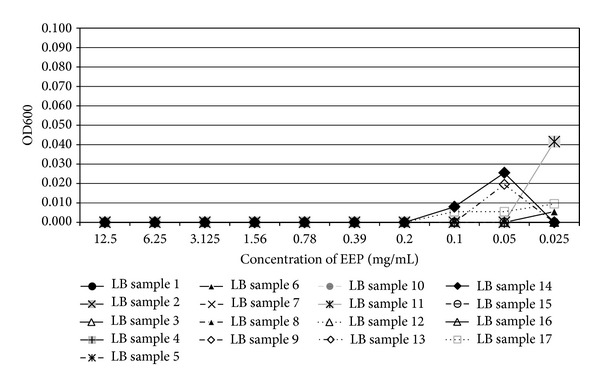
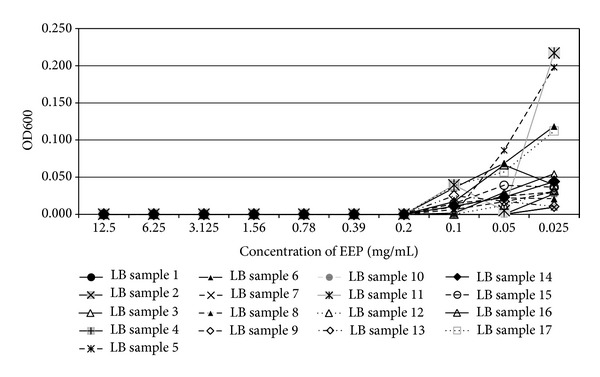
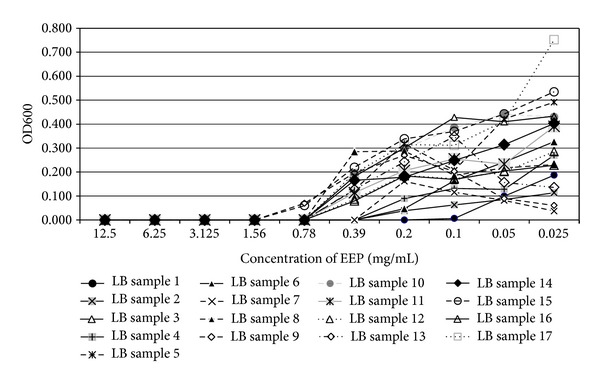
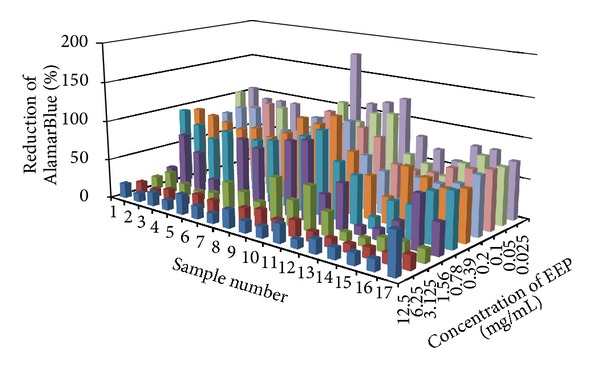
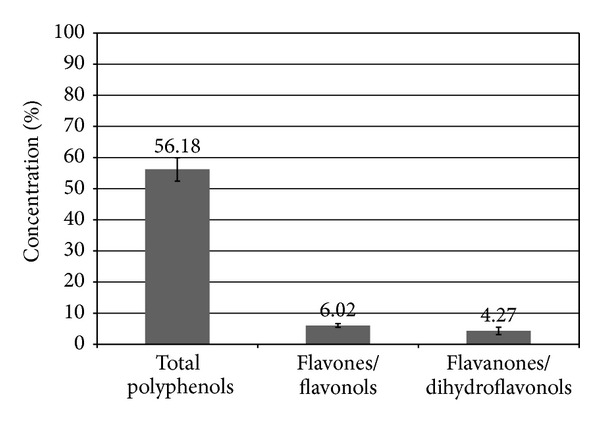
Dental caries occurrence is caused by the colonization of oral microorganisms and accumulation of extracellular polysaccharides synthesized by Streptococcus mutans with the synergistic influence of Lactobacillus spp. bacteria. The aim of this study was to determine ex vivo the antibacterial properties of ethanol extract of propolis (EEP), collected in Poland, against the main cariogenic bacteria: salivary mutans streptococci and lactobacilli. The isolation of mutans streptococci group bacteria (MS) and Lactobacillus spp. (LB) from stimulated saliva was performed by in-office CRT bacteria dip slide test. The broth diffusion method and AlamarBlue assay were used to evaluate the antimicrobial activity of EEP, with the estimation of its minimum inhibitory concentration (MIC) and minimum bactericidal concentration (MBC). The biochemical composition of propolis components was assessed. The mean MIC and MBC values of EEP, in concentrations ranging from 25 mg/mL to 0.025 mg/mL, for the MS and LB were found to be 1.10 mg/mL versus 0.7 mg/mL and 9.01 mg/mL versus 5.91 mg/mL, respectively. The exposure to an extract of Polish propolis affected mutans streptococci and Lactobacillus spp. viability, exhibiting an antibacterial efficacy on mutans streptococci group bacteria and lactobacilli saliva residents, while lactobacilli were more susceptible to EEP. Antibacterial measures containing propolis could be the local agents acting against cariogenic bacteria.
Figures
References
-
- Kumazawa S, Hamasaka T, Nakayama T. Antioxidant activity of propolis of various geographic origins. Food Chemistry. 2004;84(3):329–339.
-
- Kujumgiev A, Tsvetkova I, Serkedjieva Y, Bankova V, Christov R, Popov S. Antibacterial, antifungal and antiviral activity of propolis of different geographic origin. Journal of Ethnopharmacology. 1999;64(3):235–240. - PubMed
-
- Russo A, Cardile V, Sanchez F, Troncoso N, Vanella A, Garbarino JA. Chilean propolis: antioxidant activity and antiproliferative action in human tumor cell lines. Life Sciences. 2004;76(5):545–558. - PubMed
-
- Sawicka D, Car H, Borawska MH, Nikliński J. The anticancer activity of propolis. Folia Histochemica et Cytobiologica. 2012;50(1):25–37. - PubMed
LinkOut - more resources
Full Text Sources
Other Literature Sources
Molecular Biology Databases
Research Materials
Miscellaneous
