


Oral huangqi formulae for stable chronic obstructive pulmonary disease: a systematic review and meta-analysis
- PMID: 23606889
- PMCID: PMC3623121
- DOI: 10.1155/2013/705315
Oral huangqi formulae for stable chronic obstructive pulmonary disease: a systematic review and meta-analysis
Abstract
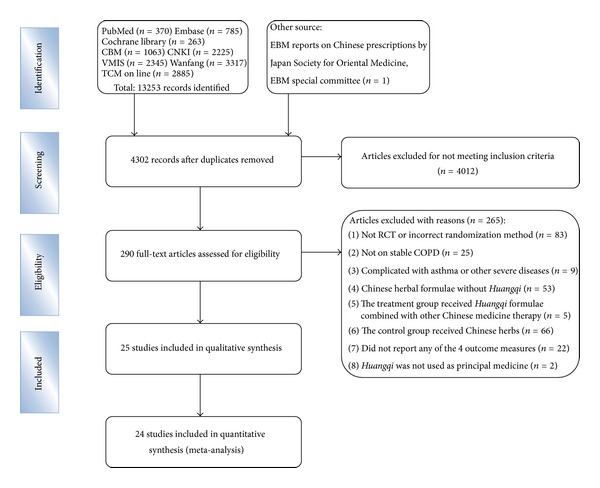
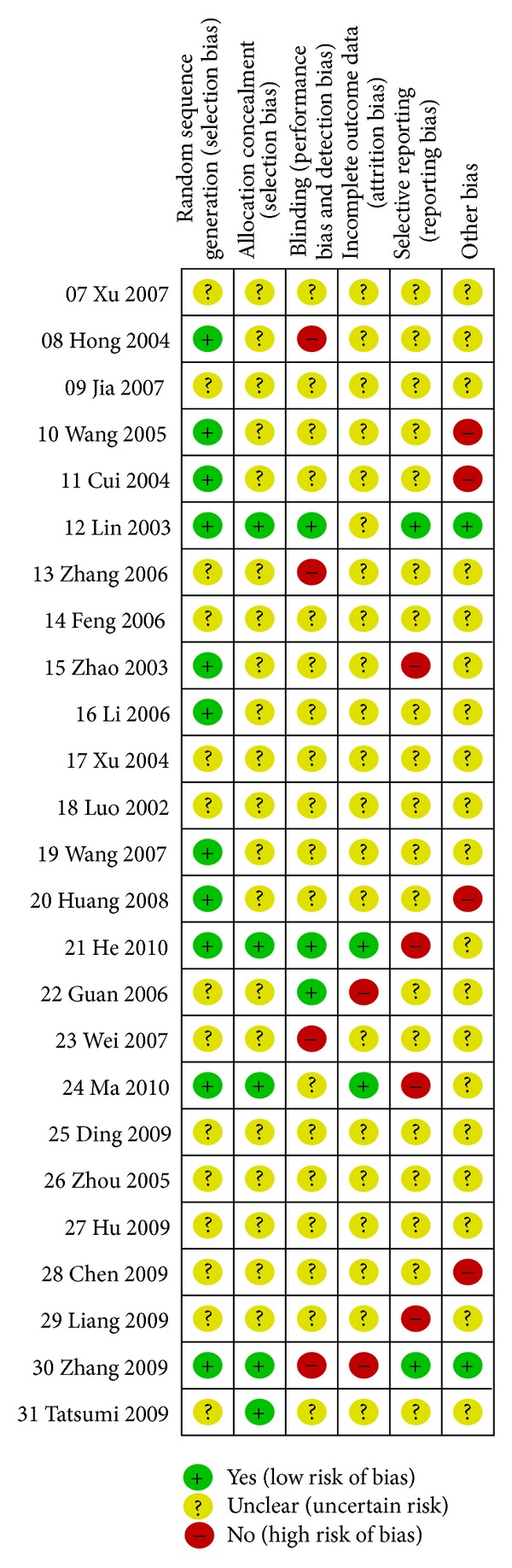
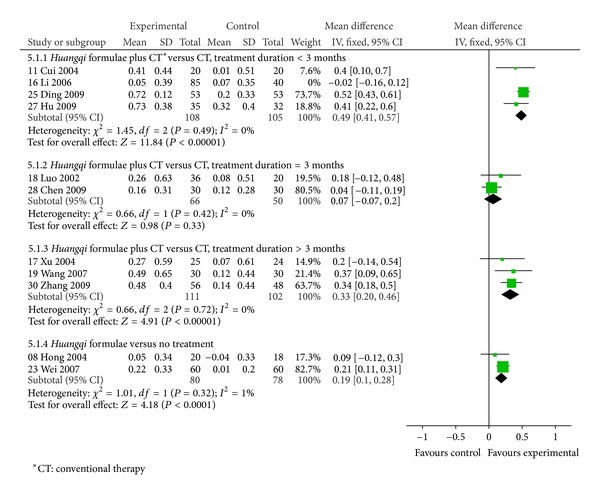
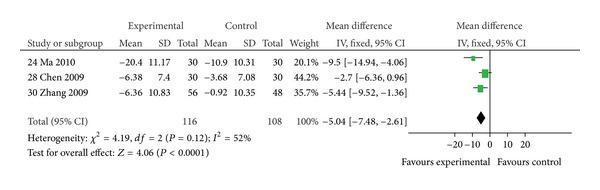
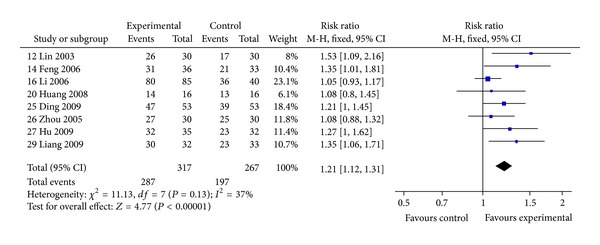
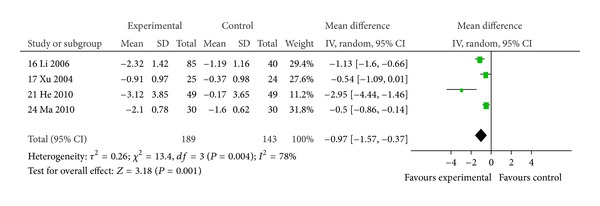
Objective. To evaluate the efficacy and safety of oral Huangqi formulae for the treatment of stable COPD. Methods. The major databases were searched until September 2010 and supplemented with a manual search. Randomized controlled trials (RCTs) of oral Huangqi formulae that reported on lung function, St. George's Respiratory Questionnaire, symptom improvement and/or frequency of exacerbations were extracted by two reviewers. The Cochrane tool was used for the assessment of risk of bias in the included trials. Data were analyzed with RevMan 5.1.2 software. Results. 25 RCTs (1,661 participants) were included. Compared with conventional therapy (CT) alone, oral Huangqi formulae plus CT increased FEV1, and a similar result was found comparing Huangqi formulae with no treatment. Improvements in SGRQ total score, COPD-related symptoms and reduction of frequency of exacerbations were found in patients receiving Huangqi formulae plus CT compared to those receiving CT alone or CT plus placebo. No serious adverse events were reported. However, there were some methodological inadequacies in the included studies. Conclusions. The benefits of Huangqi formulae for stable COPD were promising, but its efficacy and safety have not been established due to methodological weakness and possible bias in the reported results. Further rigorously designed studies are warranted.
Figures
References
-
- GOLD. Global strategy for the diagnosis, management and prevention of chronic obstructive pulmonary disease. 2010, http://www.goldcopd.
-
- Lopez AD, Murray CC. The global burden of disease, 1990–2020. Nature Medicine. 1998;4:1241–1243. - PubMed
-
- Zhong N, Wang C, Yao W, et al. Prevalence of chronic obstructive pulmonary disease in China: a large, population-based survey. American Journal of Respiratory and Critical Care Medicine. 2007;176(8):753–760. - PubMed
-
- Anthonisen NR, Connett JE, Kiley JP, et al. Effects of smoking intervention and the use of an inhaled anticholinergic bronchodilator on the rate of decline of FEV1: the lung health study. Journal of the American Medical Association. 1994;272(19):1497–1505. - PubMed
LinkOut - more resources
Full Text Sources
Other Literature Sources
