


Rapid localized spread and immunologic containment define Herpes simplex virus-2 reactivation in the human genital tract
- PMID: 23606943
- PMCID: PMC3629793
- DOI: 10.7554/eLife.00288
Rapid localized spread and immunologic containment define Herpes simplex virus-2 reactivation in the human genital tract
Abstract
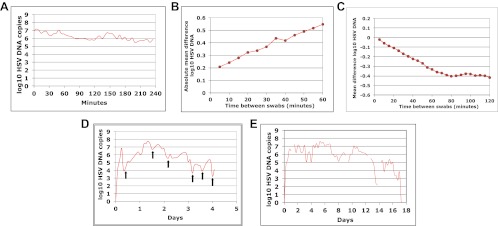
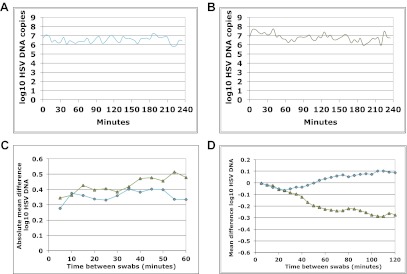
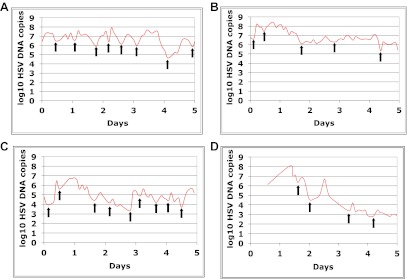
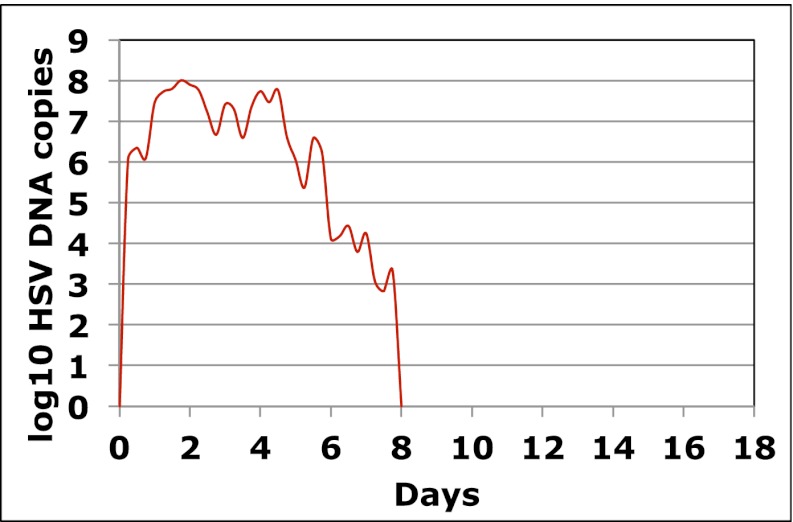
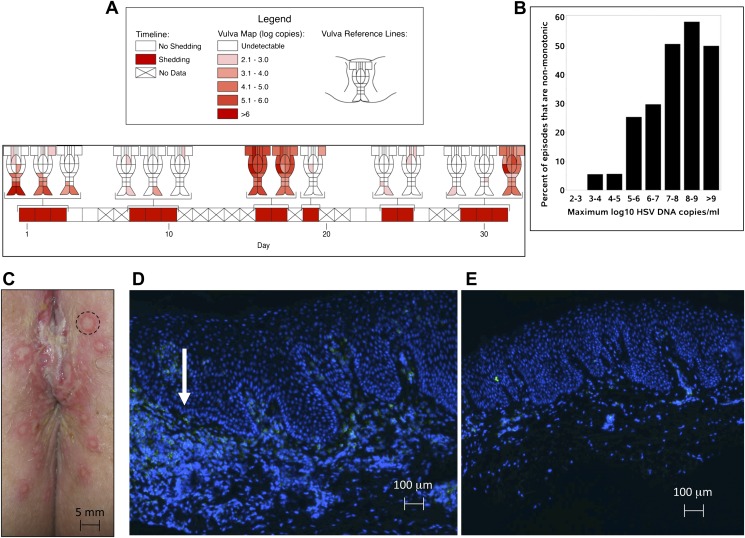
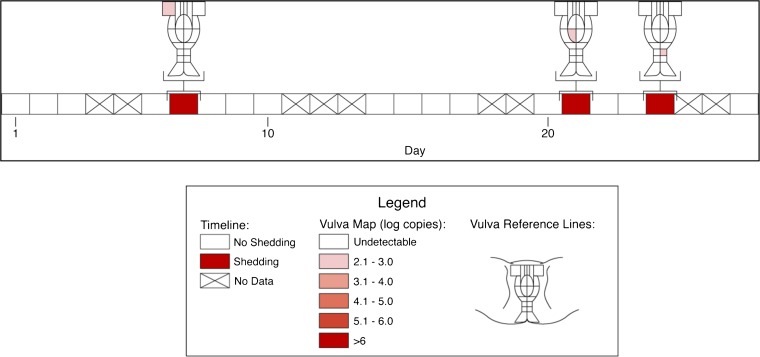
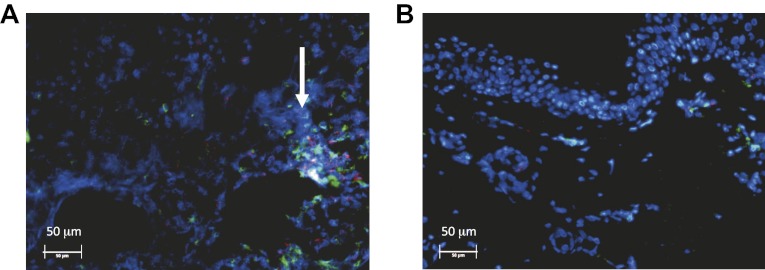
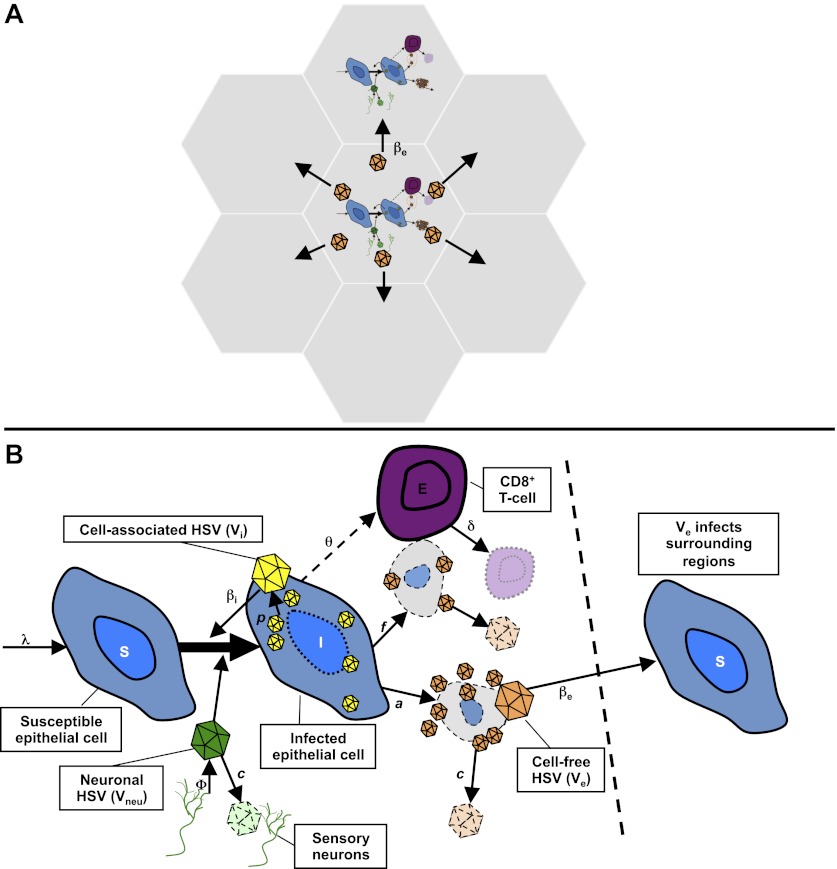
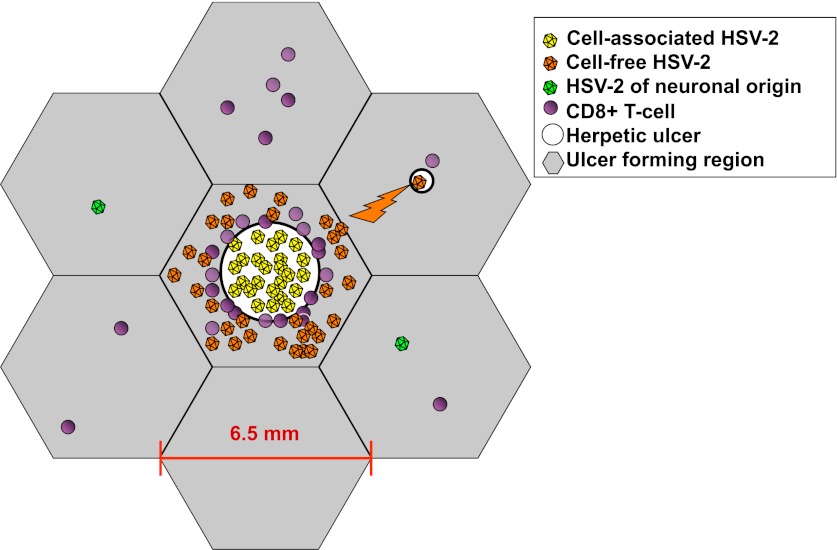
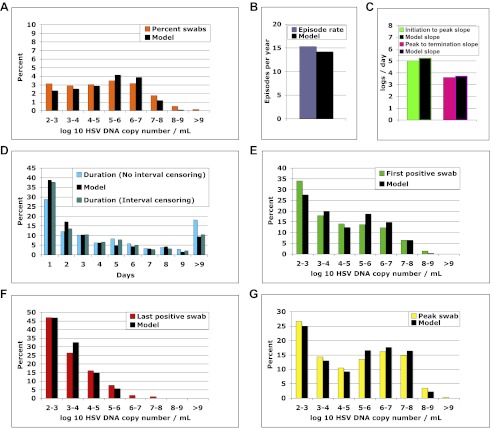
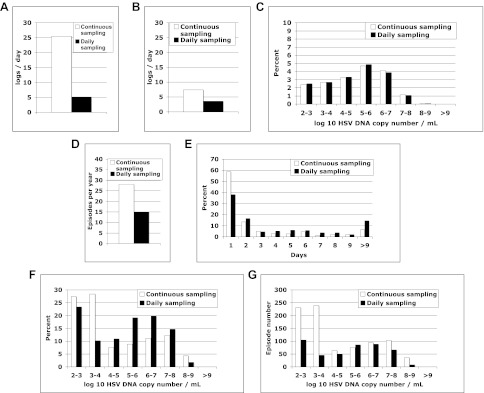
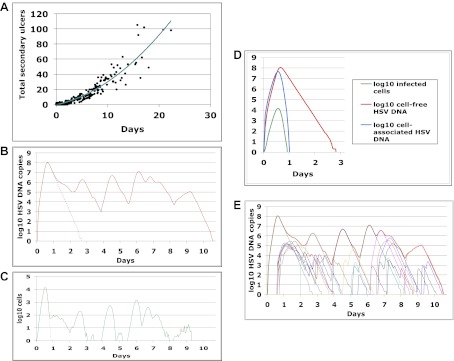
Herpes simplex virus-2 (HSV-2) is shed episodically, leading to occasional genital ulcers and efficient transmission. The biology explaining highly variable shedding patterns, in an infected person over time, is poorly understood. We sampled the genital tract for HSV DNA at several time intervals and concurrently at multiple sites, and derived a spatial mathematical model to characterize dynamics of HSV-2 reactivation. The model reproduced heterogeneity in shedding episode duration and viral production, and predicted rapid early viral expansion, rapid late decay, and wide spatial dispersion of HSV replication during episodes. In simulations, HSV-2 spread locally within single ulcers to thousands of epithelial cells in <12 hr, but host immune responses eliminated infected cells in <24 hr; secondary ulcers formed following spatial propagation of cell-free HSV-2, allowing for episode prolongation. We conclude that HSV-2 infection is characterized by extremely rapid virological growth and containment at multiple contemporaneous sites within genital epithelium. DOI:http://dx.doi.org/10.7554/eLife.00288.001.
Keywords: Herpes simplex; Human; Mathematical modeling; Mucosal immunity; Other; Viruses.
Conflict of interest statement
The authors declare that no competing interests exist.
Figures
References
-
- Corey L, Adams HG, Brown ZA, Holmes KK. 1983. Genital herpes simplex virus infections: clinical manifestations, course, and complications. Ann Intern Med 98:958–72 - PubMed
Publication types
MeSH terms
Substances
Grants and funding
- R01 AI111780/AI/NIAID NIH HHS/United States
- K23 AI079394/AI/NIAID NIH HHS/United States
- P01 AI030731/AI/NIAID NIH HHS/United States
- K23 AI071257/AI/NIAID NIH HHS/United States
- UL1 TR002319/TR/NCATS NIH HHS/United States
- K23 AI087206/AI/NIAID NIH HHS/United States
- R01 AI042528/AI/NIAID NIH HHS/United States
- K24 AI07113/AI/NIAID NIH HHS/United States
- UL1TR000423/TR/NCATS NIH HHS/United States
- R37 AI042528/AI/NIAID NIH HHS/United States
- K24 AI071113/AI/NIAID NIH HHS/United States
- UL1 TR000423/TR/NCATS NIH HHS/United States
LinkOut - more resources
Full Text Sources
Other Literature Sources
Medical
