


In pursuit of excellence: an integrated care pathway for C1 inhibitor deficiency
- PMID: 23607500
- PMCID: PMC3694529
- DOI: 10.1111/cei.12083
In pursuit of excellence: an integrated care pathway for C1 inhibitor deficiency
Abstract
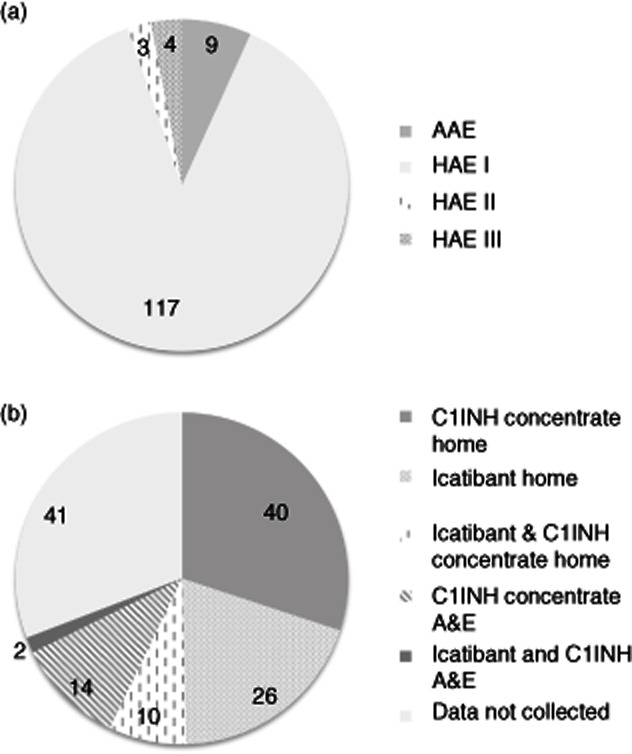
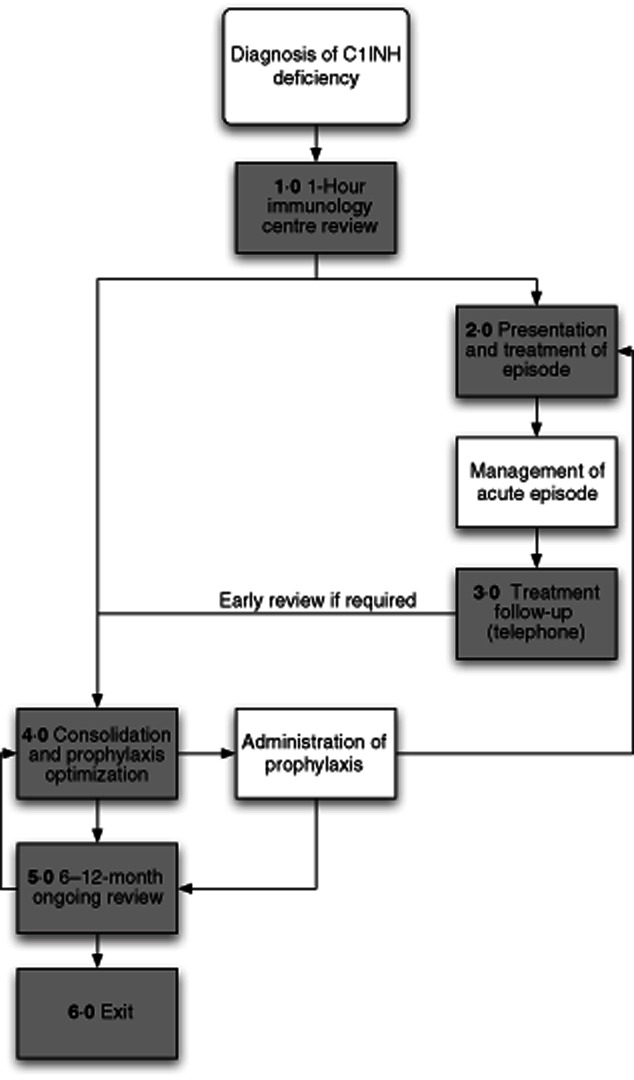
There are estimated to be approximately 1500 people in the United Kingdom with C1 inhibitor (C1INH) deficiency. At BartsHealth National Health Service (NHS) Trust we manage 133 patients with this condition and we believe that this represents one of the largest cohorts in the United Kingdom. C1INH deficiency may be hereditary or acquired. It is characterized by unpredictable episodic swellings, which may affect any part of the body, but are potentially fatal if they involve the larynx and cause significant morbidity if they involve the viscera. The last few years have seen a revolution in the treatment options that are available for C1 inhibitor deficiency. However, this occurs at a time when there are increased spending restraints in the NHS and the commissioning structure is being overhauled. Integrated care pathways (ICP) are a tool for disseminating best practice, for facilitating clinical audit, enabling multi-disciplinary working and for reducing health-care costs. Here we present an ICP for managing C1 inhibitor deficiency.
© 2013 Crown Copyright. This article is published with the permission of the Controller of HMSO and the Queen's Printer for Scotland.
Figures
References
-
- Bygum A. Hereditary angio-oedema in Denmark: a nationwide survey. Br J Dermatol. 2009;161:1153–1158. - PubMed
-
- Roche O, Blanch A, Caballero T, Sastre N, Callejo D, Lopez-Trascasa M. Hereditary angioedema due to C1 inhibitor deficiency: patient registry and approach to the prevalence in Spain. Ann Allergy Asthma Immunol. 2005;94:498–503. - PubMed
-
- Agostoni A, Cicardi M. Hereditary and acquired C1-inhibitor deficiency: biological and clinical characteristics in 235 patients. Medicine. 1992;71:206–215. - PubMed
-
- Bork K, Hardt J, Schicketanz KH, Ressel N. Clinical studies of sudden upper airway obstruction in patients with hereditary angioedema due to C1 esterase inhibitor deficiency. Arch Intern Med. 2003;163:1229–1235. - PubMed
-
- Bork K, Siedlecki K, Bosch S, Schopf RE, Kreuz W. Asphyxiation by laryngeal edema in patients with hereditary angioedema. Mayo Clin Proc. 2000;75:349–354. - PubMed
Publication types
MeSH terms
Substances
LinkOut - more resources
Full Text Sources
Other Literature Sources
Miscellaneous
