


Genotyping and drug resistance patterns of Mycobacterium tuberculosis strains observed in a tuberculosis high-burden municipality in Northeast, Brazil
- PMID: 23607922
- PMCID: PMC9427382
- DOI: 10.1016/j.bjid.2012.10.019
Genotyping and drug resistance patterns of Mycobacterium tuberculosis strains observed in a tuberculosis high-burden municipality in Northeast, Brazil
Abstract
Objectives: This study has used a combination of clinical information, spoligotyping, and georeferencing system to elucidate the genetic diversity of the Mycobacterium tuberculosis isolates circulating in a TB-prevalent municipality of Northeast Brazil.
Methods: A total of 115 M. tuberculosis strains were isolated from pulmonary tuberculosis patients from January 2007 to March 2008 in Fortaleza. Drug susceptibility and spoligotyping assays were performed and place of residence of the patients were georeferenced.
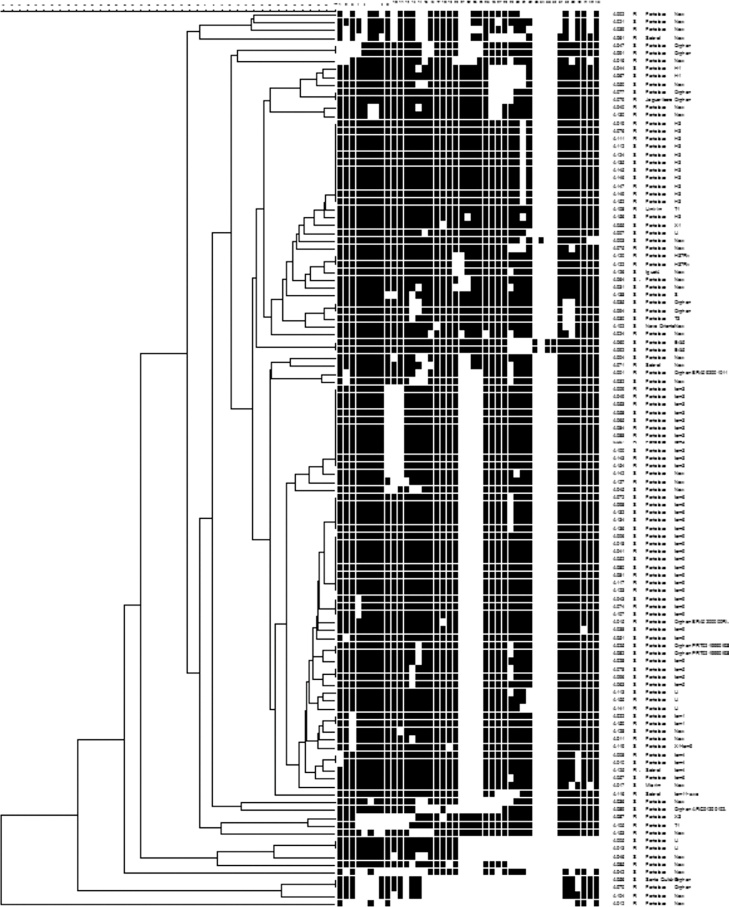
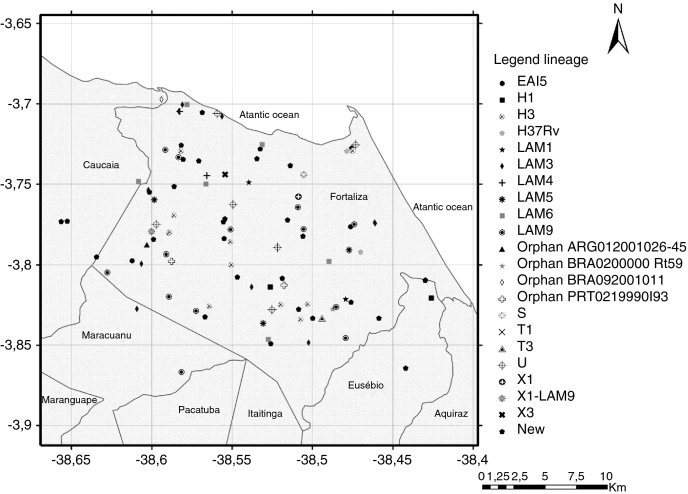
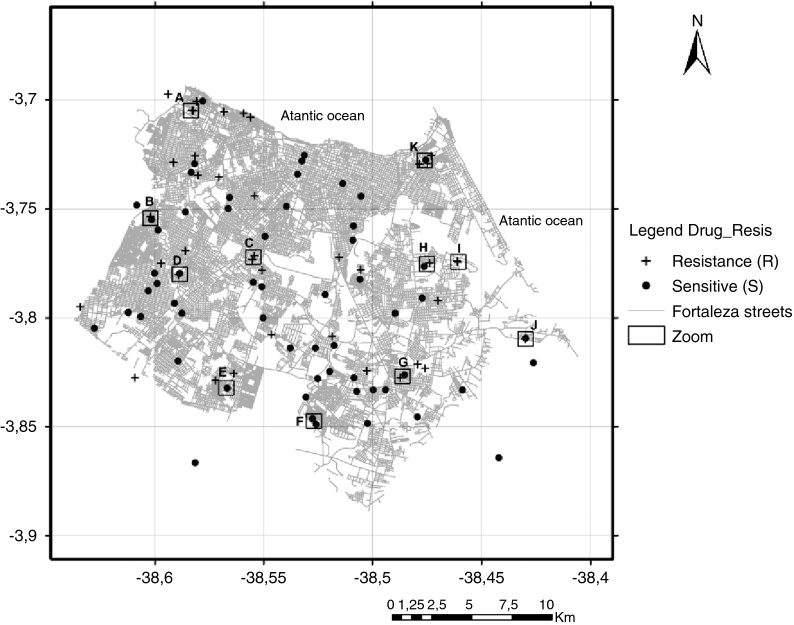
Results: Of the M. tuberculosis strains studied, 51 (44.3%) isolates were resistant to at least one drug (R-TB) and 64 (55.7%) were sensitive to all the drugs tested (S-TB). A high frequency of resistance was found in previously treated cases (84%) and among new cases (16%; p<0.001). A total of 74 (64%) isolates were grouped into 22 spoligotyped lineages, while 41 (36%) isolates were identified as new. Among the predominant genotypes, 33% were Latim American Mediterranean (LAM), 12% Haarlem (H), and 5% U. There was no association of geographic distribution of RT-TB patients as compared to the controls and also the geographic location to the spoligotype patterns. The geospatial analysis revealed that 24 (23%) patients (hot spot zones) either shared the same residence or lived in a close neighborhood of a case. Among these concentration zones, the patients lived in the same residence and shared a common genotype pattern and resistance pattern.
Discussion: It was observed that the spoligopatterns family distribution was similar to that reported for South America, prevailing the LAM and H lineages. A high rate-case among the resistant TB group occurs as a result of transmitted and acquired resistance. A more effective surveillance program is needed in order to succeed in reducing tuberculosis in Northeast Brazil.
Copyright © 2013 Elsevier Editora Ltda. All rights reserved.
Figures
References
-
- Migliori G.B., Dheda K., Centis R., et al. Review of multidrug-resistant and extensively drug-resistant TB: global perspectives with a focus on sub-Saharan Africa. Trop Med Int Health. 2010:10. - PubMed
-
- WHO I. Anti-tuberculosis drug resistance in the world. Fourth global report 2008. Available from http://www.who.int/tb/publications/2008/drs_report4_26feb08.pdf.
-
- WHO. Multidrug and extensively and drug-resistant TB (M/XDR-TB): 2010 global report on surveillance and response. 2010. Available from http://whqlibdoc.who.int/.
-
- WHO. Global tuberculosis control. WHO report 2011. Available from http://whqlibdoc.who.int/publications/2011/9789241564380_eng.pdf.
-
- WHO. Global tuberculosis control – epidemiology, strategy, financing. WHO report 2009. Available from http://www.who.int/tb/publications/global_report/2009/pdf/full_report.pdf [cited 20.11.09].
Publication types
MeSH terms
Substances
LinkOut - more resources
Full Text Sources
Other Literature Sources
