


Comparing clinical predictors of deep venous thrombosis versus pulmonary embolus after severe injury: a new paradigm for posttraumatic venous thromboembolism?
- PMID: 23609272
- PMCID: PMC3716365
- DOI: 10.1097/TA.0b013e31828cc9a0
Comparing clinical predictors of deep venous thrombosis versus pulmonary embolus after severe injury: a new paradigm for posttraumatic venous thromboembolism?
Abstract
Background: The traditional paradigm is that deep venous thrombosis (DVT) and pulmonary embolus (PE) are different temporal phases of a single disease process, most often labeled as the composite end point venous thromboembolism (VTE). However, we theorize that after severe blunt injury, DVT and PE may represent independent thrombotic entities rather than different stages of a single pathophysiologic process and therefore exhibit different clinical risk factor profiles.
Methods: We examined a large, multicenter prospective cohort of severely injured blunt trauma patients to compare clinical risk factors for DVT and PE, including indicators of injury severity, shock, resuscitation parameters, comorbidities, and VTE prophylaxis. Independent risk factors for each outcome were determined by cross-validated logistic regression modeling using advanced exhaustive model search procedures.
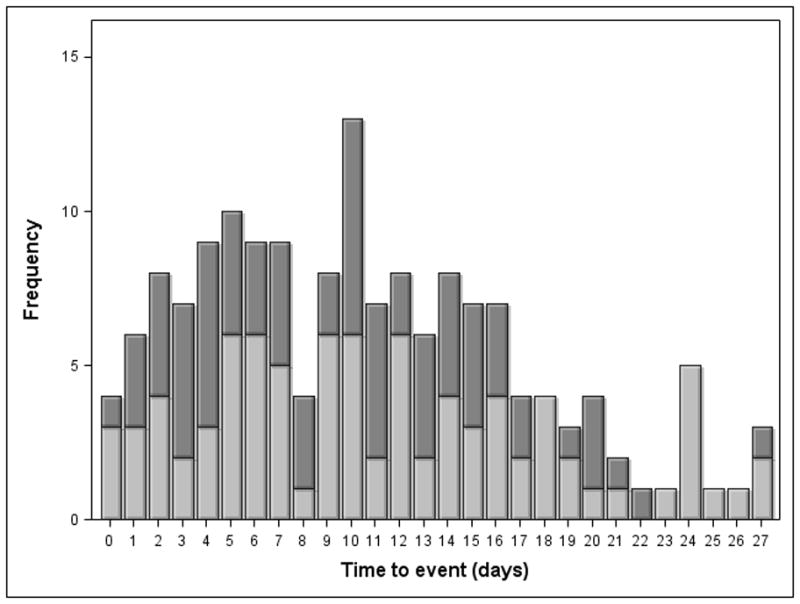
Results: The study cohort consisted of 1,822 severely injured blunt trauma patients (median Injury Severity Score [ISS], 33; median base deficit, -9.5). Incidence of DVT and PE were 5.1% and 3.9%, respectively. Only 9 (5.7%) of 73 patients with a PE were also diagnosed with DVT. Independent risk factors associated with DVT include prophylaxis initiation within 48 hours (odds ratio [OR], 0.57; 95% confidence interval [CI], 0.36-0.90) and thoracic Abbreviated Injury Scale (AIS) score of 3 or greater (OR, 1.82; 95% CI, 1.12-2.95), while independent risk factors for PE were serum lactate of greater than 5 (OR, 2.33; 95% CI, 1.43-3.79) and male sex (OR, 2.12; 95% CI, 1.17-3.84). Both DVT and PE exhibited differing risk factor profiles from the classic composite end point of VTE.
Conclusion: DVT and PE exhibit differing risk factor profiles following severe injury. Clinical risk factors for diagnosis of DVT after severe blunt trauma include the inability to initiate prompt pharmacologic prophylaxis and severe thoracic injury, which may represent overall injury burden. In contrast, risk factors for PE are male sex and physiologic evidence of severe shock. We hypothesize that postinjury DVT and PE may represent a broad spectrum of pathologic thrombotic processes as opposed to the current conventional wisdom of peripheral thrombosis and subsequent embolus.
Conflict of interest statement
The authors have no conflicts of interest to report.
Figures
References
-
- Geerts WH, Bergqvist D, Pineo GF, et al. Prevention of venous thromboembolism: American College of Chest Physicians Evidence-Based Clinical Practice Guidelines (8th Edition) Chest. 2008;133:381S–453S. - PubMed
-
- Geerts WH, Code KI, Jay RM, Chen E, Szalai JP. A prospective study of venous thromboembolism after major trauma. N Engl J Med. 1994;331:1601–6. - PubMed
-
- Meissner MH, Chandler WL, Elliott JS. Venous thromboembolism in trauma: a local manifestation of systemic hypercoagulability? The Journal of trauma. 2003;54:224–31. - PubMed
-
- Schultz DJ, Brasel KJ, Washington L, et al. Incidence of asymptomatic pulmonary embolism in moderately to severely injured trauma patients. The Journal of trauma. 2004;56:727–31. discussion 31–3. - PubMed
Publication types
MeSH terms
Substances
Grants and funding
LinkOut - more resources
Full Text Sources
Other Literature Sources
Medical
