


Mammographic density reduction is a prognostic marker of response to adjuvant tamoxifen therapy in postmenopausal patients with breast cancer
- PMID: 23610119
- PMCID: PMC3677838
- DOI: 10.1200/JCO.2012.44.5015
Mammographic density reduction is a prognostic marker of response to adjuvant tamoxifen therapy in postmenopausal patients with breast cancer
Abstract
Purpose: Tamoxifen treatment is associated with a reduction in mammographic density and an improved survival. However, the extent to which change in mammographic density during adjuvant tamoxifen therapy can be used to measure response to treatment is unknown.
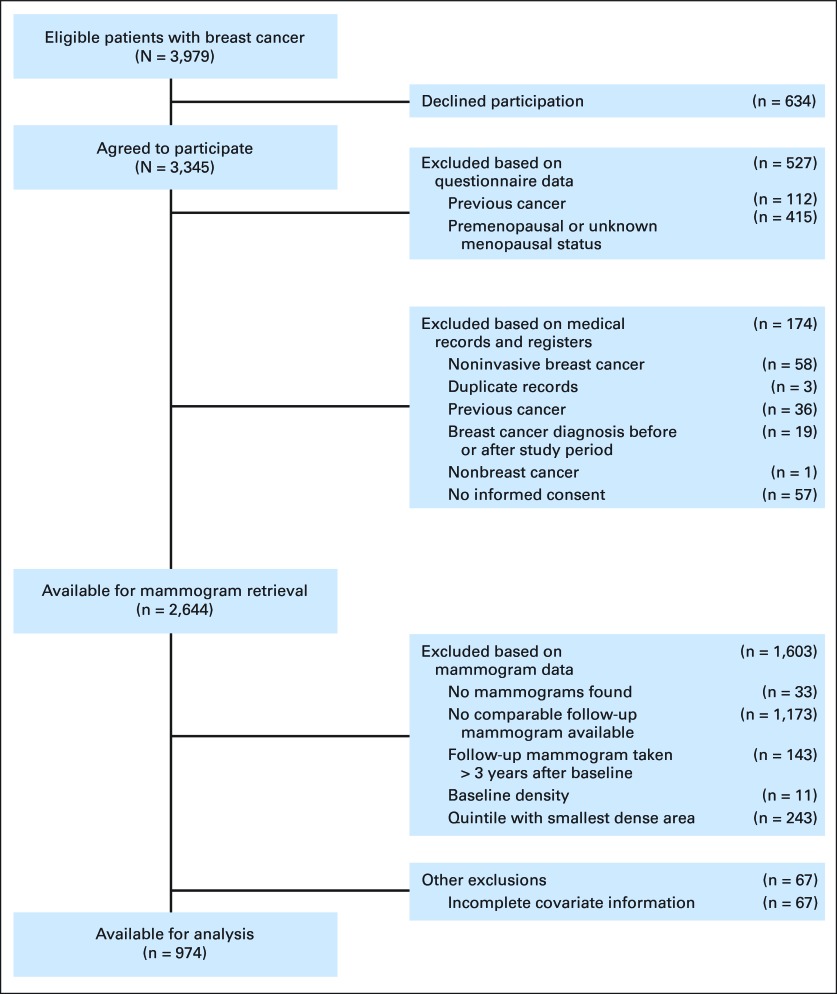
Patients and methods: Overall, 974 postmenopausal patients with breast cancer who had both a baseline and a follow-up mammogram were eligible for analysis. On the basis of treatment information abstracted from medical records, 474 patients received tamoxifen treatment and 500 did not. Mammographic density was measured by using an automated thresholding method and expressed as absolute dense area. Change in mammographic density was calculated as percentage change from baseline. Survival analysis was performed by using delayed-entry Cox proportional hazards regression models, with death as a result of breast cancer as the end point. Analyses were adjusted for a range of patient and tumor characteristics.
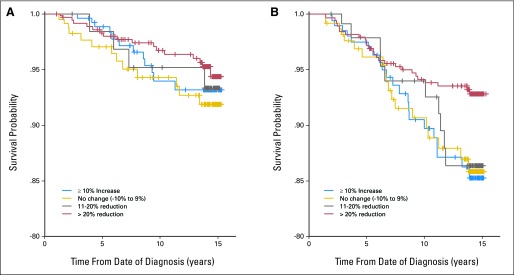
Results: During a 15-year follow-up, 121 patients (12.4%) died from breast cancer. Women treated with tamoxifen who experienced a relative density reduction of more than 20% between baseline and first follow-up mammogram had a reduced risk of death as a result of breast cancer of 50% (hazard ratio, 0.50; 95% CI, 0.27 to 0.93) compared with women with stable mammographic density. In the no-tamoxifen group, there was no statistically significant association between mammographic density change and survival. The survival advantage was not observed when absolute dense areas at baseline or follow-up were evaluated separately.
Conclusion: A decrease in mammographic density after breast cancer diagnosis appears to serve as a prognostic marker for improved long-term survival in patients receiving adjuvant tamoxifen, and these data should be externally validated.
Conflict of interest statement
Authors' disclosures of potential conflicts of interest and author contributions are found at the end of this article.
Figures
Comment in
-
Treatment-emergent effects may predict benefit from endocrine therapy.J Clin Oncol. 2013 Jun 20;31(18):2233-5. doi: 10.1200/JCO.2013.48.9153. Epub 2013 Apr 22. J Clin Oncol. 2013. PMID: 23610120 No abstract available.
References
-
- Boyd NF, Rommens JM, Vogt K, et al. Mammographic breast density as an intermediate phenotype for breast cancer. Lancet Oncol. 2005;6:798–808. - PubMed
-
- Greendale GA, Reboussin BA, Slone S, et al. Postmenopausal hormone therapy and change in mammographic density. J Natl Cancer Inst. 2003;95:30–37. - PubMed
-
- McTiernan A, Martin CF, Peck JD, et al. Estrogen-plus-progestin use and mammographic density in postmenopausal women: Women's Health Initiative randomized trial. J Natl Cancer Inst. 2005;97:1366–1376. - PubMed
-
- Cuzick J, Warwick J, Pinney E, et al. Tamoxifen and breast density in women at increased risk of breast cancer. J Natl Cancer Inst. 2004;96:621–628. - PubMed
-
- Cuzick J, Warwick J, Pinney E, et al. Tamoxifen-induced reduction in mammographic density and breast cancer risk reduction: A nested case-control study. J Natl Cancer Inst. 2011;103:744–752. - PubMed
Publication types
MeSH terms
Substances
LinkOut - more resources
Full Text Sources
Other Literature Sources
Medical
