


Computer-assisted school-based asthma management: a pilot study
- PMID: 23612058
- PMCID: PMC3626150
- DOI: 10.2196/resprot.1958
Computer-assisted school-based asthma management: a pilot study
Abstract
Background: The high prevalence of asthma among children continues to be a major public health issue. In particular, low-income African-American and Hispanic children often receive asthma care in the emergency department and lack access to continuity of care.
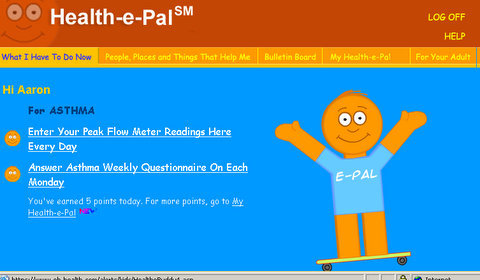
Objective: The aim of the current study was to test the feasibility of implementing a computerized program for empowering low-income children with asthma to manage their own disease. This pilot program consisted of a guided, personalized, Web-based computer program as the main component of a school-based asthma intervention.
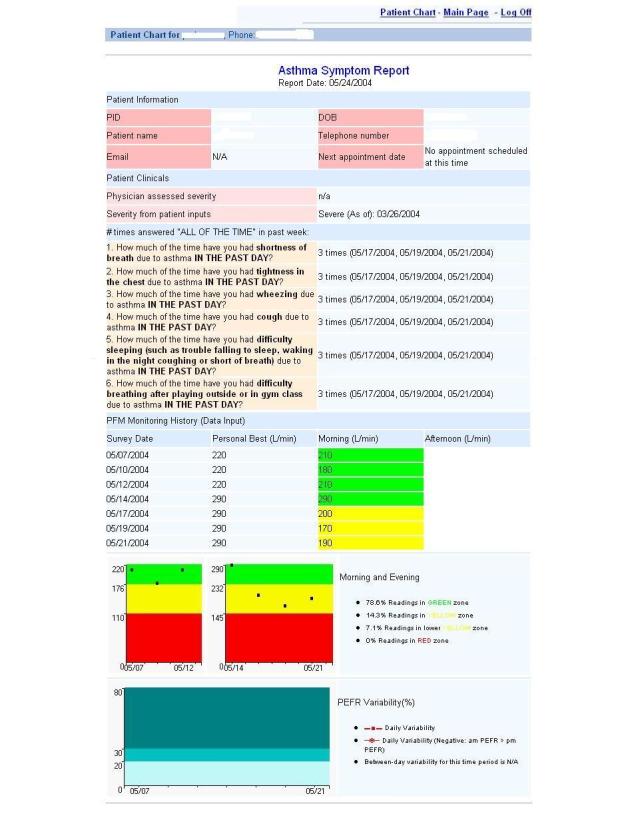
Methods: The Automated Live E-Health Response Tracking System (ALERTS), a computer-assisted, Web-based tracking program, was tested for implementation in a school in East Harlem, New York. The program required children with asthma, assisted by trained researchers, to routinely measure their peak flow meter readings and answer a symptom questionnaire. The program provided individualized feedback on their disease status based on peak flow meter input. The computer program sent reports to the child's physician and the nurse practitioner at the on-site school health center. The children were also encouraged to bring the reports home to their parents. A pre/post study design was employed such that each participant acted as his/her own control. Comparisons of preintervention and postintervention outcomes were calculated using the paired t-test and the McNemar test for dichotomous data.
Results: Twenty-four children (6 to 12 years) participated in the program over 2 to 15 months. Improvements in health outcomes showed the greatest significance among the group of participants who were enrolled for 8 months or longer. Statistically significant improvements were seen in the average physical health score of the children (from 65.64 preintervention to 76.28 postintervention, P = .045). There was a significant decrease in the number of participants experiencing wheezing episodes (n = 9 to n = 2, P = .03), and in the average number of wheezing episodes per child (1.86 to 0.43, P = .02). Although not statistically significant, decreases were also seen in the number of children experiencing an asthma attack and in the average number of asthma attacks among participants. There was also a significant decrease in the average number of visits to doctors' offices or clinics (1.23 to 0.38, P = .04). There were no overnight hospitalizations in the two-week period following the end of the pilot program, a nonsignificant reduction from an average of 0.21 per child.
Conclusion: This individualized, computer-assisted intervention resulted in improvements in some health outcomes among low-income children in an urban, public school-based setting. Consistent peak flow meter self-measurements, management of medication usage, and a computerized approach to symptom tracking resulted in fewer asthma exacerbations and improved overall physical health among this pediatric population with asthma.
Keywords: Asthma; Asthma Action Plan; Internet; child; disease management; low-income; outcomes; underserved; urban.
Conflict of interest statement
Conflicts of Interest: None declared.
Figures
References
-
- Centers for Disease Control and Prevention. 2011. May, [2011-05-13]. Vital Signs: Asthma in the US http://www.cdc.gov/VitalSigns/Asthma/index.html.
-
- American Lung Association. 2010. [2011-08-13]. Asthma & Children Fact Sheet http://www.lungusa.org/lung-disease/asthma/resources/facts-and-figures/a....
-
- Akinbami L. Centers for Disease Control and Prevention. 2010. [2011-08-13]. NCHS Health E-Stat: Asthma Prevalence, Health Care Use and Mortality: United States, 2003-05 http://www.cdc.gov/nchs/data/hestat/asthma03-05/asthma03-05.htm.
-
- Akinbami LJ, Moorman JE, Garbe PL, Sondik EJ. Status of childhood asthma in the United States, 1980-2007. Pediatrics. 2009;123(Suppl 3):S131–45. - PubMed
LinkOut - more resources
Full Text Sources
