


High-throughput analysis of antimalarial susceptibility data by the WorldWide Antimalarial Resistance Network (WWARN) in vitro analysis and reporting tool
- PMID: 23612201
- PMCID: PMC3697366
- DOI: 10.1128/AAC.02350-12
High-throughput analysis of antimalarial susceptibility data by the WorldWide Antimalarial Resistance Network (WWARN) in vitro analysis and reporting tool
Abstract
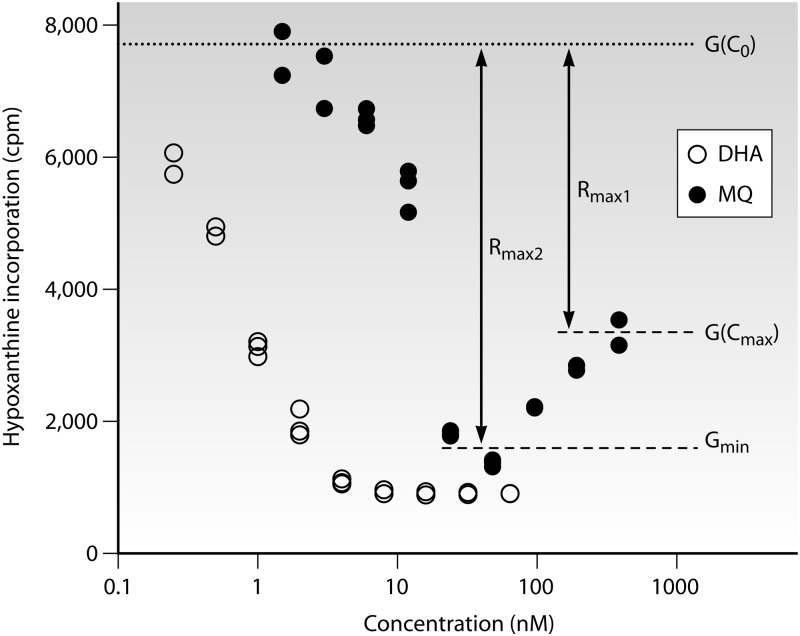
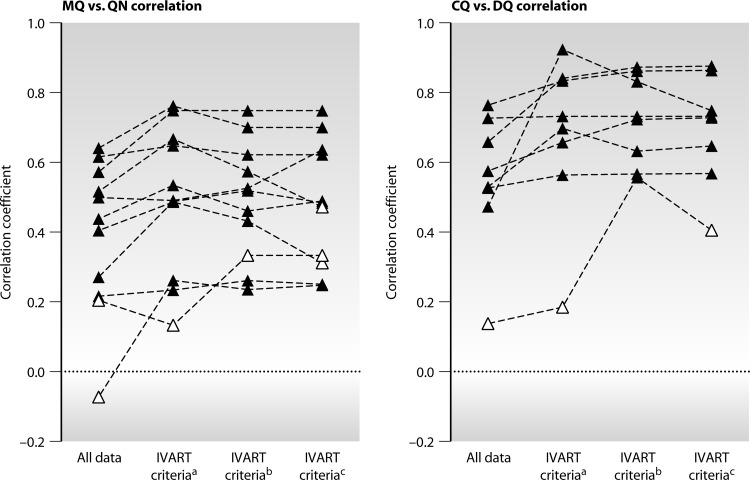
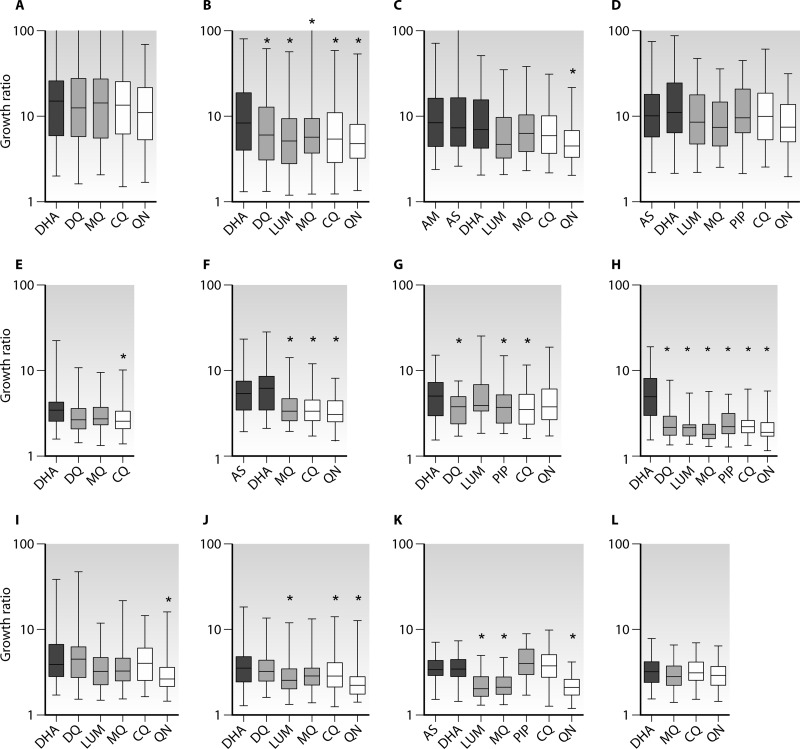
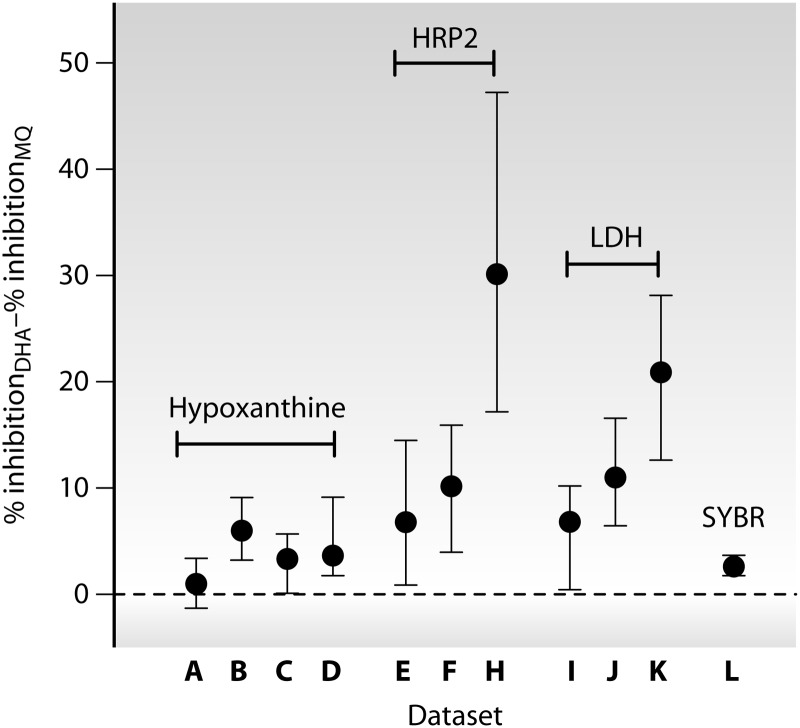
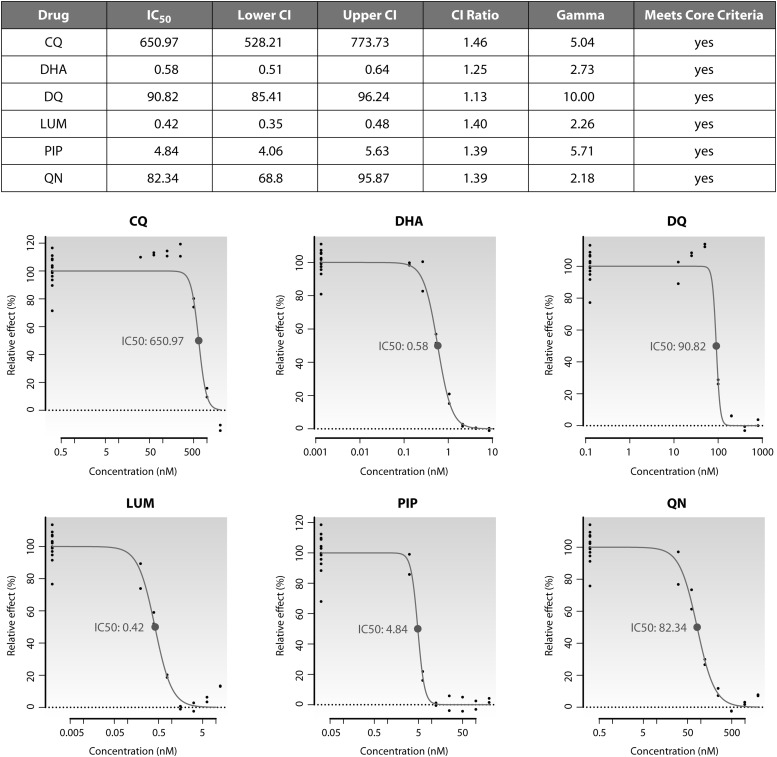
Assessment of in vitro susceptibility is a fundamental component of antimalarial surveillance studies, but wide variations in the measurement of parasite growth and the calculation of inhibitory constants make comparisons of data from different laboratories difficult. Here we describe a Web-based, high-throughput in vitro analysis and reporting tool (IVART) generating inhibitory constants for large data sets. Fourteen primary data sets examining laboratory-determined susceptibility to artemisinin derivatives and artemisinin combination therapy partner drugs were collated from 11 laboratories. Drug concentrations associated with half-maximal inhibition of growth (IC50s) were determined by a modified sigmoid Emax model-fitting algorithm, allowing standardized analysis of 7,350 concentration-inhibition assays involving 1,592 isolates. Examination of concentration-inhibition data revealed evidence of apparent paradoxical growth at high concentrations of nonartemisinin drugs, supporting amendment of the method for calculating the maximal drug effect in each assay. Criteria for defining more-reliable IC50s based on estimated confidence intervals and growth ratios improved correlation coefficients for the drug pairs mefloquine-quinine and chloroquine-desethylamodiaquine in 9 of 11 and 8 of 8 data sets, respectively. Further analysis showed that maximal drug inhibition was higher for artemisinins than for other drugs, particularly in ELISA (enzyme-linked immunosorbent assay)-based assays, a finding consistent with the earlier onset of action of these drugs in the parasite life cycle. This is the first high-throughput analytical approach to apply consistent constraints and reliability criteria to large, diverse antimalarial susceptibility data sets. The data also illustrate the distinct biological properties of artemisinins and underline the need to apply more sensitive approaches to assessing in vitro susceptibility to these drugs.
Figures
References
-
- Laufer MK, Djimde AA, Plowe CV. 2007. Monitoring and deterring drug-resistant malaria in the era of combination therapy. Am. J. Trop. Med. Hyg. 77:160–169 - PubMed
-
- Rieckmann KH, McNamara JV, Frischer H, Stockert TA, Carson PE, Powell RD. 1968. Effects of chloroquine, quinine, and cycloguanil upon the maturation of asexual erythrocytic forms of two strains of Plasmodium falciparum in vitro. Am. J. Trop. Med. Hyg. 17:661–671 - PubMed
-
- Basco LK. 2007. Field application of in vitro assays for the sensitivity of human malaria parasites to antimalarial drugs. WHO, Geneva, Switzerland
-
- Noedl H, Wongsrichanalai C, Wernsdorfer WH. 2003. Malaria drug-sensitivity testing: new assays, new perspectives. Trends Parasitol. 19:175–181 - PubMed
Publication types
MeSH terms
Substances
Grants and funding
LinkOut - more resources
Full Text Sources
Other Literature Sources
