


TNFR1 signaling kinetics: spatiotemporal control of three phases of IKK activation by posttranslational modification
- PMID: 23612498
- PMCID: PMC3824607
- DOI: 10.1016/j.cellsig.2013.04.005
TNFR1 signaling kinetics: spatiotemporal control of three phases of IKK activation by posttranslational modification
Abstract
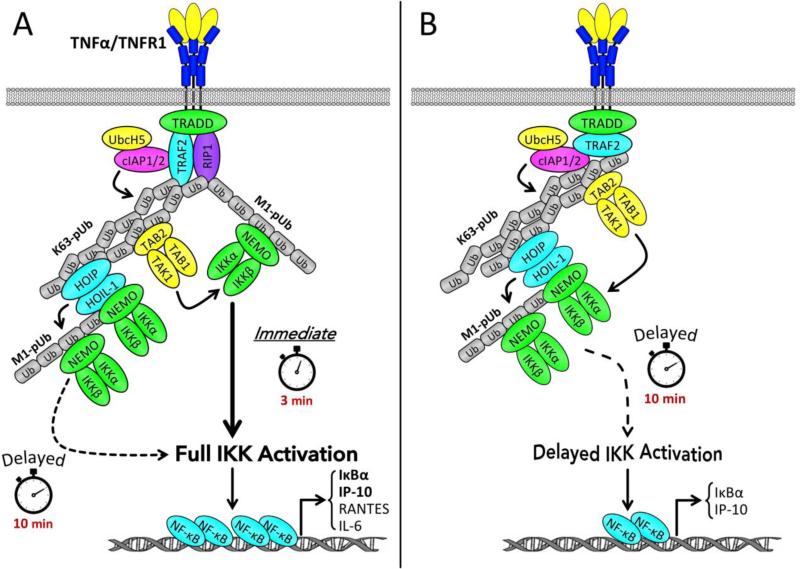
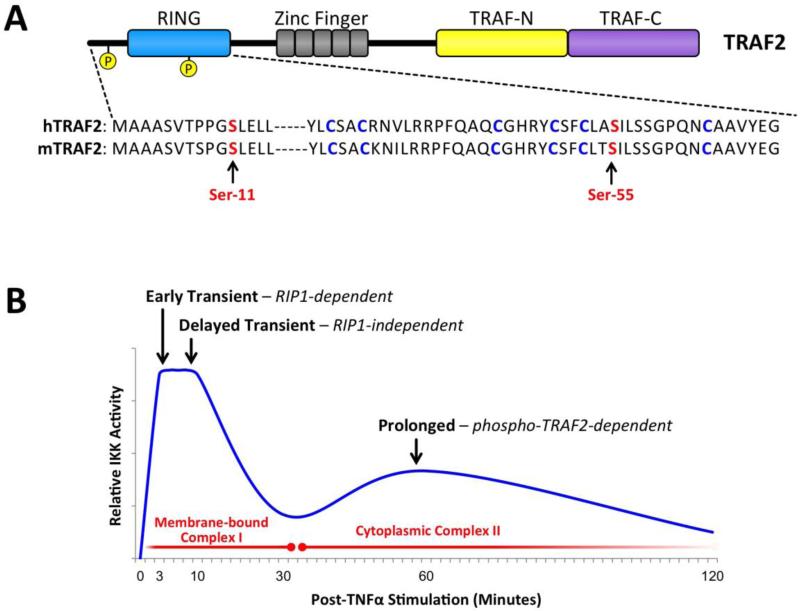
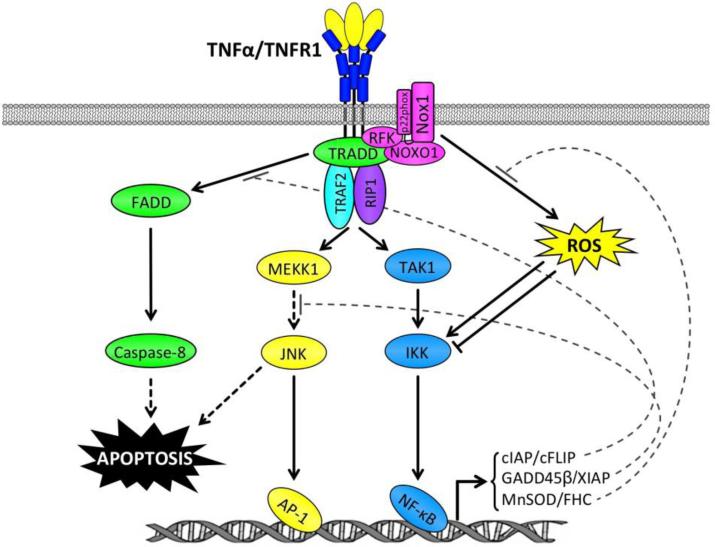
TNFα is a pleotropic cytokine that plays a central role in the inflammatory response by activating the NF-κB signaling pathway, and is targeted in a range of chronic inflammatory diseases, underscoring the therapeutic importance of understanding its underlying molecular mechanisms. Although K63-linked ubiquitination of RIP1 by TRAF2/5 and cIAP1/2 was thought to serve as a scaffold to activate the NF-κB pathway, the recent accumulation of conflicting results has challenged the necessity of these proteins in NF-κB activation. In addition, several serine/threonine kinases have been implicated in TNFα-induced IKK activation; however, the targeted disruption of these kinases had no effect on transient IKK activation. The recent discovery of RIP1-dependent and -independent activation of the early and delayed phases of IKK and TRAF2 phosphorylation-dependent activation of the prolonged phase of IKK offers a reconciliatory model for the interpretation of contradictory results in the field. Notably, the TNFα-induced inflammatory response is not exclusively controlled by the NF-κB pathway but is subject to regulatory crosstalk between NF-κB and other context-dependent pathways. Thus further elucidation of these spatiotemporally-coordinated signaling mechanisms has the potential to provide novel molecular targets and therapeutic strategies for NF-κB intervention.
Copyright © 2013 Elsevier Inc. All rights reserved.
Figures
References
Publication types
MeSH terms
Substances
Grants and funding
LinkOut - more resources
Full Text Sources
Other Literature Sources
Miscellaneous
