


Identification of miR-27b as a novel signature from the mRNA profiles of adipose-derived mesenchymal stem cells involved in the tolerogenic response
- PMID: 23613728
- PMCID: PMC3628792
- DOI: 10.1371/journal.pone.0060492
Identification of miR-27b as a novel signature from the mRNA profiles of adipose-derived mesenchymal stem cells involved in the tolerogenic response
Abstract
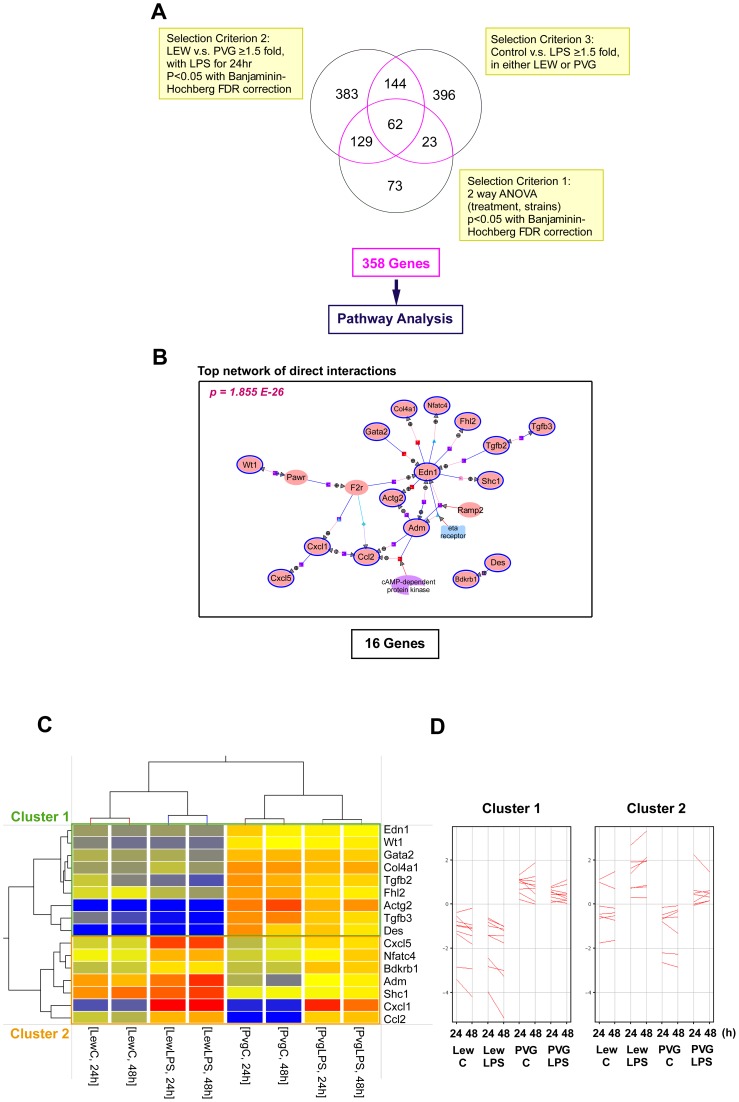
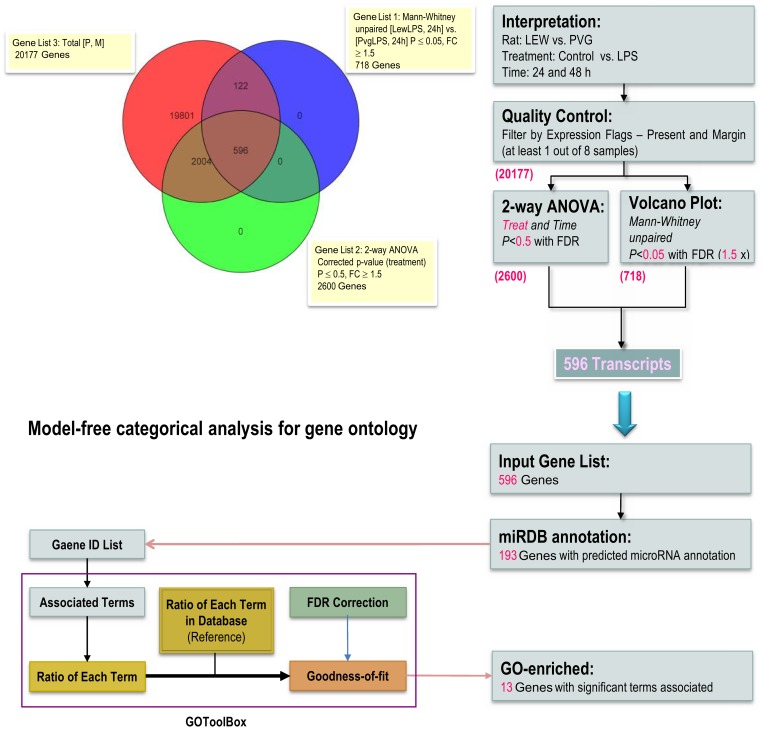
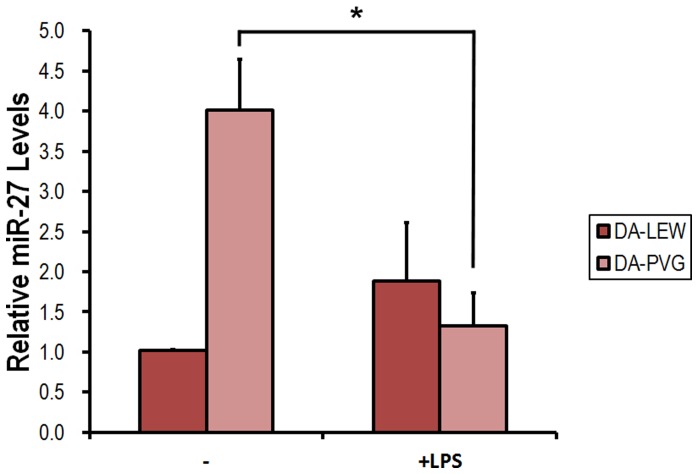
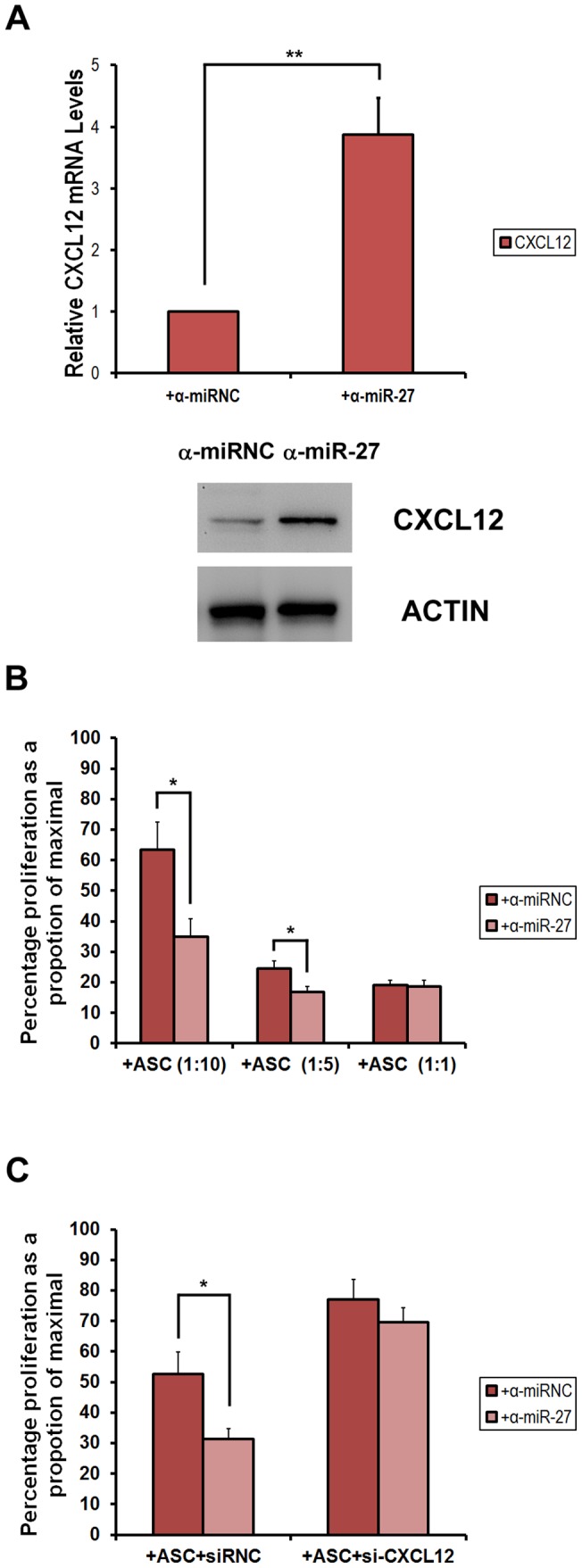
Adipose-derived mesenchymal stem cells (adipose-derived MSCs, ASCs) possess the ability to differentiate into multiple tissue types and have immune-modulatory properties similar to those of MSCs from other origins. However, the regulation of the MSC-elicited immune-modulatory activity by specific microRNA (miRNA) mechanisms remains unexplored. Gene expression profiling with knowledge-based functional enrichment analysis is an appropriate approach for unraveling these mechanisms. This tool can be used to examine the transcripts and miRNA regulators that differentiate the rat tolerogenic orthotopic liver transplantation (OLT; DA liver into PVG) and rejection OLT (DA liver into LEW) models. In both models, the rejection reaction was observed on postoperative day 7∼14 (rejection phase) but was overcome only by the PVG recipients. Thus, the global gene expression patterns of ASCs from spontaneously tolerant (PVG) and acute rejecting (LEW) rats in response to LPS activation were compared. In this study, we performed miRNA enrichment analysis based on the analysis of pathway, gene ontology (GO) terms and transcription factor binding site (TFBS) motif annotations. We found that the top candidate, miR-27, was specifically enriched and had the highest predicted frequency. We also identified a greater than 3-fold increase of miR-27b expression in the ASCs of tolerant recipients (DA to PVG) compared to those of rejecting recipients (DA to LEW) during the rejection phase in the rat OLT model. Furthermore, our data showed that miR-27b knockdown has a positive influence on the allosuppressive activity that inhibits T-cell proliferation. We found that miR-27 knockdown significantly induced the expression of CXCL12 in cultured ASCs and the expression of CXCL12 was responsible for the miR-27b antagomir-mediated inhibition of T-cell proliferation. These results, which through a series of comprehensive miRNA enrichment analyses, might be relevant for stem cell-based therapeutic applications in immunosuppressive function using ASCs.
Conflict of interest statement
Figures
References
-
- Pittenger MF, Mackay AM, Beck SC, Jaiswal RK, Douglas R, et al. (1999) Multilineage potential of adult human mesenchymal stem cells. Science 284: 143–147. - PubMed
-
- Zuk PA, Zhu M, Mizuno H, Huang J, Futrell JW, et al. (2001) Multilineage cells from human adipose tissue: implications for cell-based therapies. Tissue Eng 7: 211–228. - PubMed
-
- Beyth S, Borovsky Z, Mevorach D, Liebergall M, Gazit Z, et al. (2005) Human mesenchymal stem cells alter antigen-presenting cell maturation and induce T-cell unresponsiveness. Blood 105: 2214–2219. - PubMed
-
- Augello A, Tasso R, Negrini SM, Cancedda R, Pennesi G (2007) Cell therapy using allogeneic bone marrow mesenchymal stem cells prevents tissue damage in collagen-induced arthritis. Arthritis Rheum 56: 1175–1186. - PubMed
-
- Yanez R, Lamana ML, Garcia-Castro J, Colmenero I, Ramirez M, et al. (2006) Adipose tissue-derived mesenchymal stem cells have in vivo immunosuppressive properties applicable for the control of the graft-versus-host disease. Stem Cells 24: 2582–2591. - PubMed
Publication types
MeSH terms
Substances
LinkOut - more resources
Full Text Sources
Other Literature Sources
Molecular Biology Databases
