


Early life stress interacts with the diet deficiency of omega-3 fatty acids during the life course increasing the metabolic vulnerability in adult rats
- PMID: 23614006
- PMCID: PMC3629088
- DOI: 10.1371/journal.pone.0062031
Early life stress interacts with the diet deficiency of omega-3 fatty acids during the life course increasing the metabolic vulnerability in adult rats
Abstract
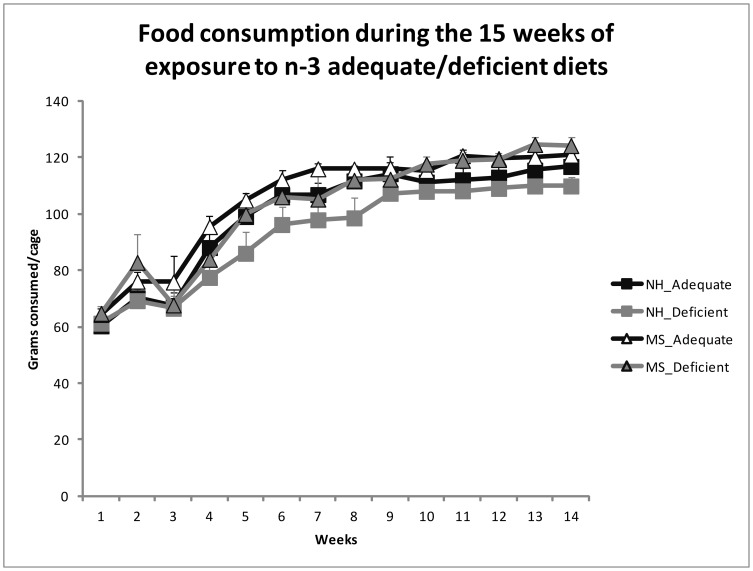
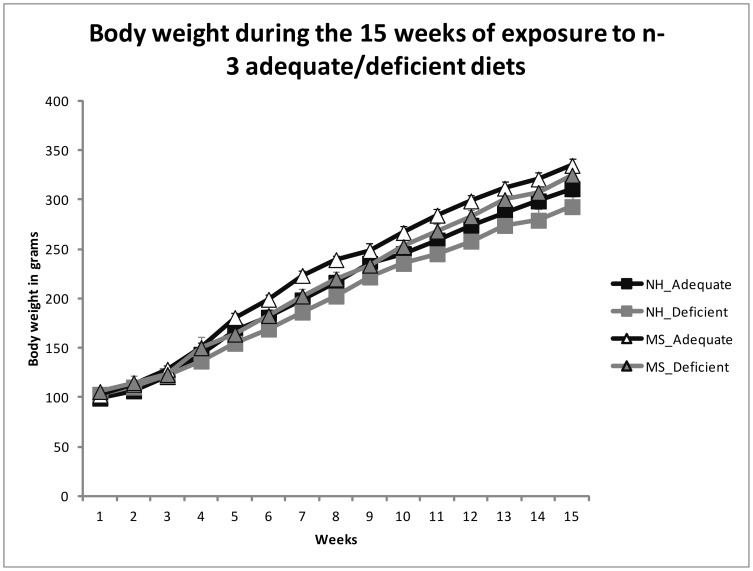
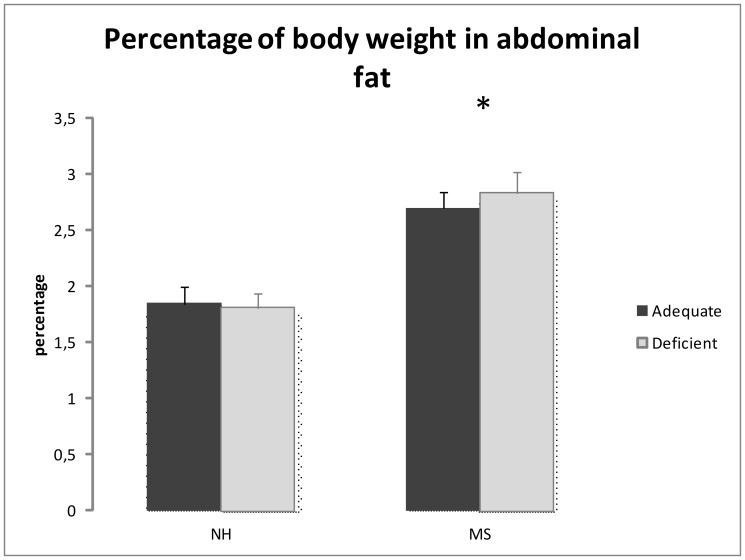
Early stress can cause metabolic disorders in adulthood. Omega-3 polyunsaturated fatty acids (n-3 PUFAs) deficiency has also been linked to the development of metabolic disorders. The aim of this study was to assess whether an early stressful event such as maternal separation interacts with the nutritional availability of n-3 PUFAs during the life course on metabolic aspects. Litters were randomized into: maternal separated (MS) and non-handled (NH). The MS group was removed from their dam for 3 hours per day and put in an incubator at 32 °C on days 1° to 10° postnatal (PND). On PND 35, males were subdivided into diets that were adequate or deficient in n-3 PUFAs, and this intervention was applied during the subsequent 15 weeks. Animal's body weight and food consumption were measured weekly, and at the end of the treatment tissues were collected. MS was associated with increased food intake (p = 0.047) and weight gain (p = 0.012), but no differences were found in the NPY hypothalamic content between the groups. MS rats had also increased deposition of abdominal fat (p<0.001) and plasma triglycerides (p = 0.018) when compared to the NH group. Interactions between early life stress and n-3 PUFAs deficiency were found in plasma insulin (p = 0.033), HOMA index (p = 0.049), leptin (p = 0.010) and liver PEPCK expression (p = 0.050), in which the metabolic vulnerability in the MS group was aggravated by the n-3 PUFAs deficient diet exposure. This was associated with specific alterations in the peripheral fatty acid profile. Variations in the neonatal environment interact with nutritional aspects during the life course, such as n-3 PUFAs diet content, and persistently alter the metabolic vulnerability in adulthood.
Conflict of interest statement
Figures
References
-
- Clarke G, O'Mahony SM, Hennessy AA, Ross P, Stanton C, et al. (2009) Chain reactions: early-life stress alters the metabolic profile of plasma polyunsaturated fatty acids in adulthood. Behav Brain Res 205: 319–321. - PubMed
-
- Jahng JW (2011) An animal model of eating disorders associated with stressful experience in early life. Horm Behav 59: 213–220. - PubMed
-
- Kuhn CM, Butler SR, Schanberg SM (1978) Selective depression of serum growth hormone during maternal deprivation in rat pups. Science 201: 1034–1036. - PubMed
-
- Kuhn CM, Pauk J, Schanberg SM (1990) Endocrine responses to mother-infant separation in developing rats. Dev Psychobiol 23: 395–410. - PubMed
-
- Plotsky PM, Meaney MJ (1993) Early, postnatal experience alters hypothalamic corticotropin-releasing factor (CRF) mRNA, median eminence CRF content and stress-induced release in adult rats. Brain Res Mol Brain Res 18: 195–200. - PubMed
Publication types
MeSH terms
Substances
LinkOut - more resources
Full Text Sources
Other Literature Sources
Medical
Miscellaneous
