


Antihypertensive effects of statins: a meta-analysis of prospective controlled studies
- PMID: 23614844
- PMCID: PMC8033902
- DOI: 10.1111/jch.12081
Antihypertensive effects of statins: a meta-analysis of prospective controlled studies
Abstract
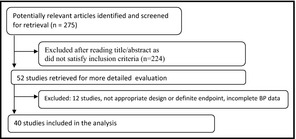
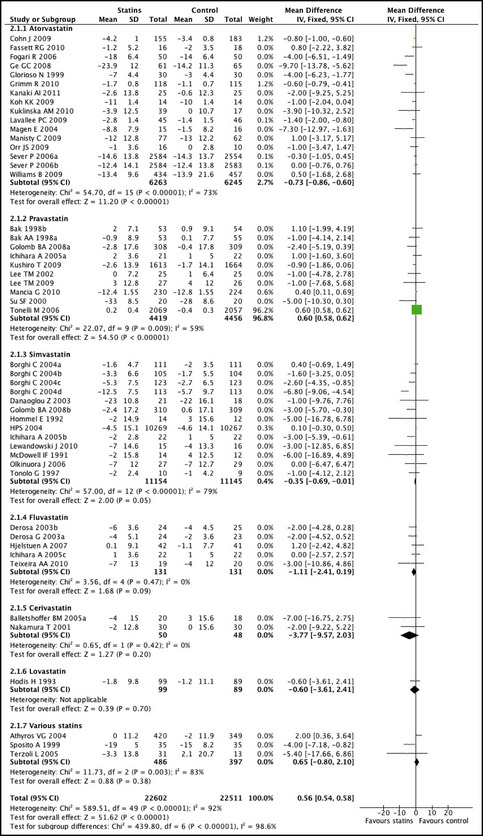
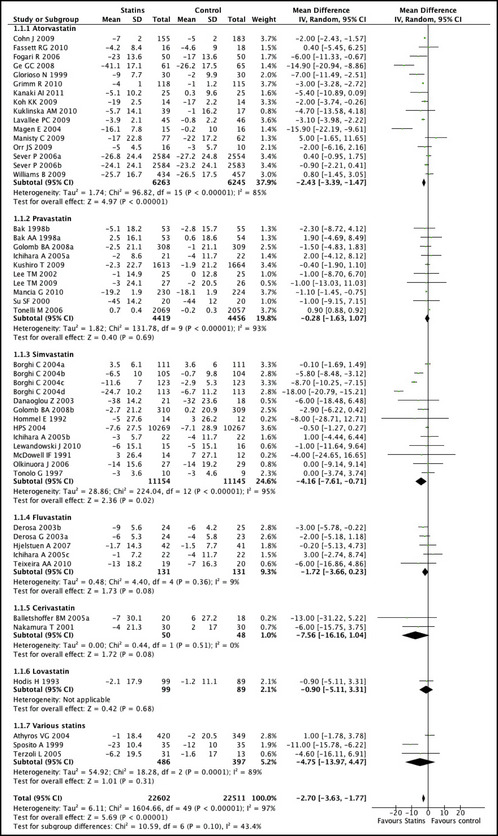
In experimental studies, statins have been shown to lower blood pressure through increased nitric oxide bioavailability and improved arterial compliance. The clinical significance of this effect remains poorly documented. The authors performed a meta-analysis of the effect of statins on systolic blood pressure (SBP) and diastolic blood pressure (DBP) including prospective randomized, controlled trials of statin therapy. EMBASE and MEDLINE searches for studies in which patients were randomized to treatment with a statin plus standard treatment (or placebo) vs standard treatment (or placebo) were conducted. Studies that provided data on SBP and DBP values before the initiation of the treatment and at the end of the follow-up period were included. A total of 40 studies with 51 comparison groups examining 22,511 controls and 22,602 patients taking statins were examined. Mean SBP in the statin group decreased by 2.62 mm Hg (95% confidence interval [CI], -3.41 to -1.84; P<.001) and DBP by 0.94 mm Hg (95% CI, -1.31 to -0.57; P<.001). In studies including hypertensive patients, the decrease in blood pressures with statins was slightly greater (SBP, -3.07 mm Hg; 95% CI, -4.00 to -2.15 and DBP, 1.04; 95% CI, -1.47 to -0.61). Similarly, statins effectively reduced SBP in diabetic patients. In this large meta-analysis of prospective controlled studies, the authors found a small but statistically significant reduction of SBP in patients taking statins. The decrease in blood pressure may contribute to the pleiotropic effect of statins in reducing cardiovascular risk.
© 2013 Wiley Periodicals, Inc.
Figures
References
-
- Haug C, Schmid‐Kotsas A, Zorn U, et al. Endothelin‐1 synthesis and endothelin B receptor expression in human coronary artery smooth muscle cells and monocytederived macrophages is up‐regulated by low density lipoproteins. J Mol Cell Cardiol. 2001;33:1701–1712. - PubMed
-
- Wassmann S, Laufs U, Baumer AT, et al. HMG‐CoA reductase inhibitors improve endothelial dysfunction in normocholesterolemic hypertension via reduced production of reactive oxygen species. Hypertension. 2001;37:1450–1457. - PubMed
-
- Ferrier KE, Muhlmann MH, Baguet JP, et al. Intensive cholesterol reduction lowers blood pressure and large artery stiffness in isolated systolic hypertension. J Am Coll Cardiol. 2002;39:1020–1025. - PubMed
-
- Strazzullo P, Kerry SM, Barbato A, et al. Do statins reduce blood pressure? A meta‐analysis of randomized, controlled trials. Hypertension. 2007;49:792–798. - PubMed
-
- Jadad AR, Moore RA, Carroll D, et al. Assessing the quality of reports of randomized clinical trials: is blinding necessary? Control Clin Trials. 1996;17:1–12. - PubMed
Publication types
MeSH terms
Substances
LinkOut - more resources
Full Text Sources
Other Literature Sources
Medical
