


MAP65/Ase1 promote microtubule flexibility
- PMID: 23615441
- PMCID: PMC3681700
- DOI: 10.1091/mbc.E13-03-0141
MAP65/Ase1 promote microtubule flexibility
Abstract
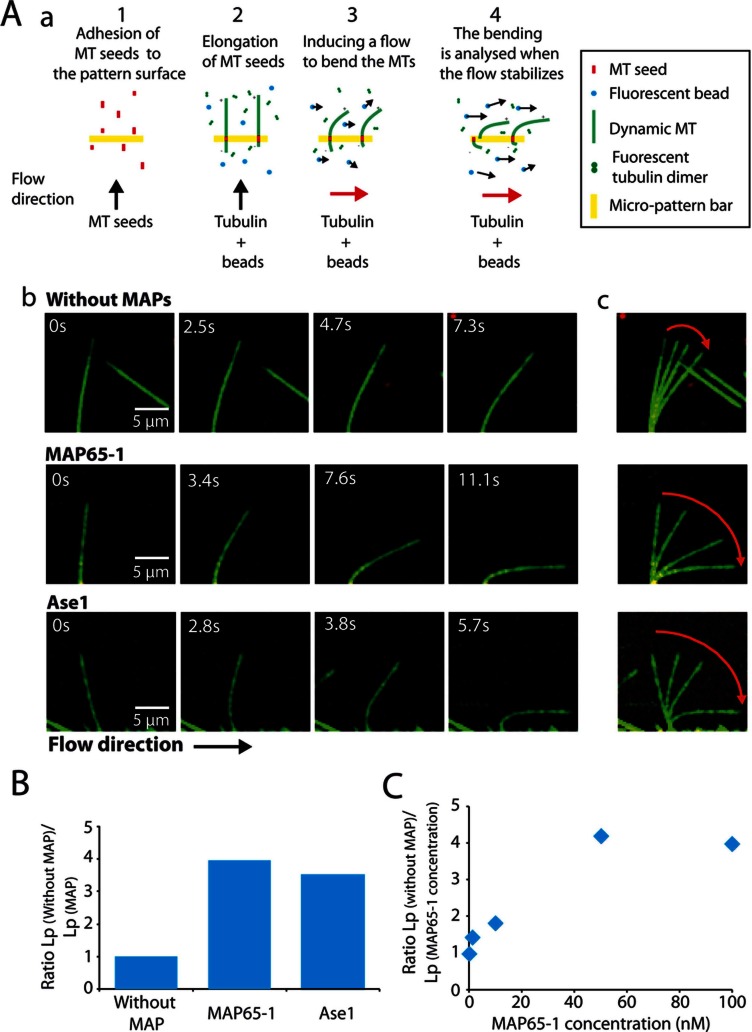
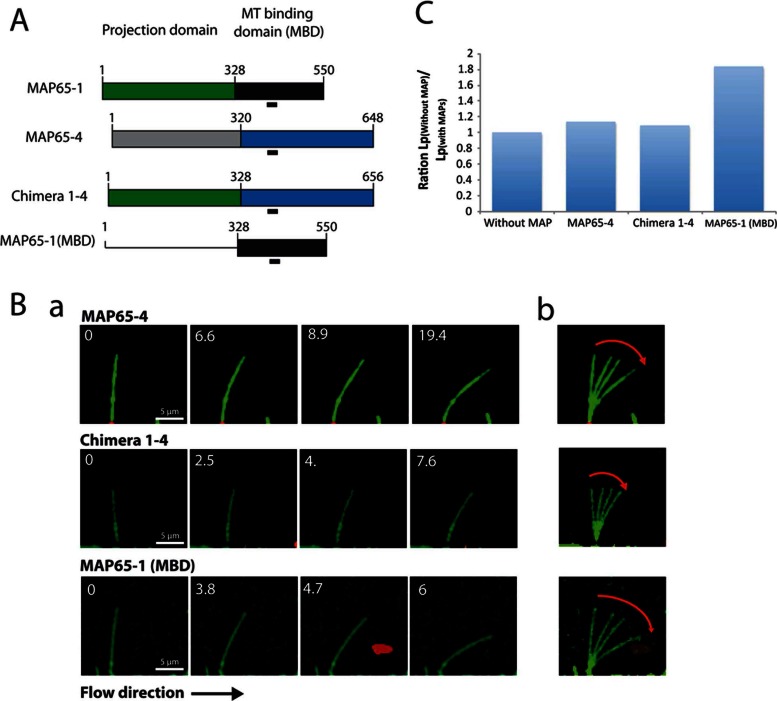
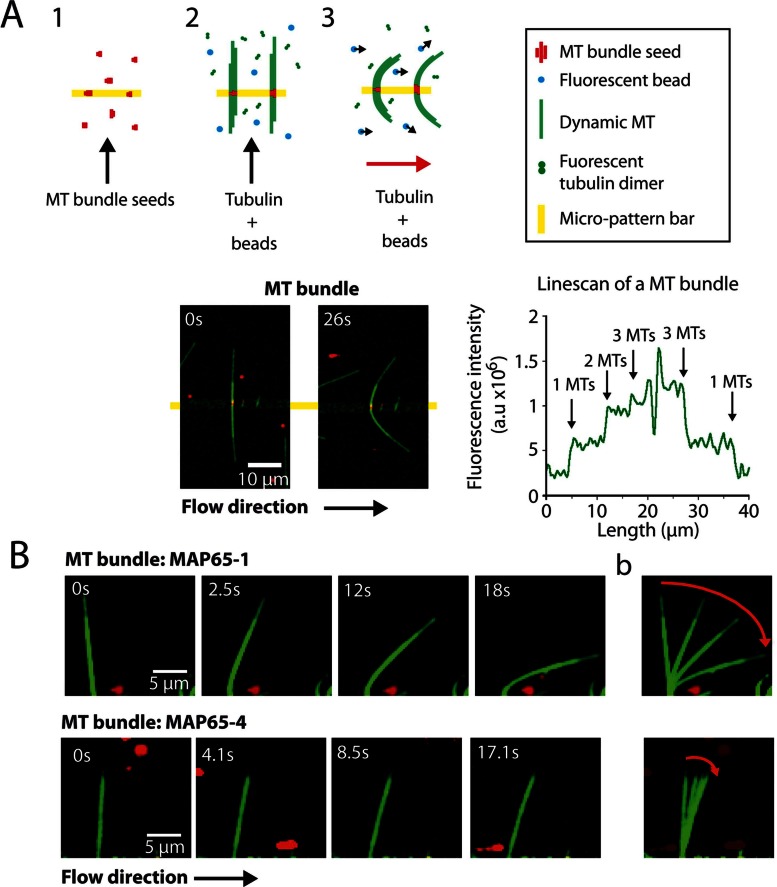
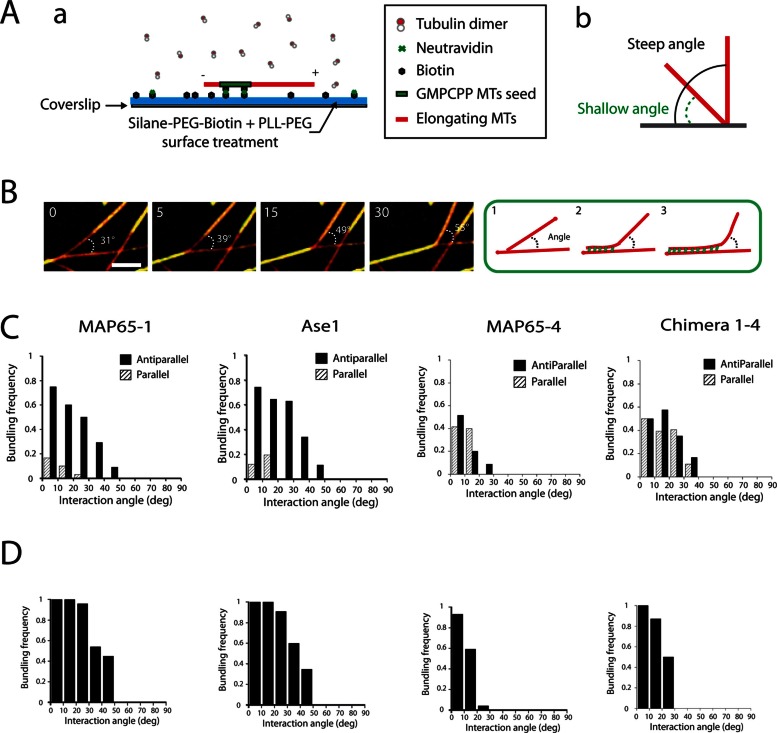
Microtubules (MTs) are dynamic cytoskeletal elements involved in numerous cellular processes. Although they are highly rigid polymers with a persistence length of 1-8 mm, they may exhibit a curved shape at a scale of few micrometers within cells, depending on their biological functions. However, how MT flexural rigidity in cells is regulated remains poorly understood. Here we ask whether MT-associated proteins (MAPs) could locally control the mechanical properties of MTs. We show that two major cross-linkers of the conserved MAP65/PRC1/Ase1 family drastically decrease MT rigidity. Their MT-binding domain mediates this effect. Remarkably, the softening effect of MAP65 observed on single MTs is maintained when MTs are cross-linked. By reconstituting physical collisions between growing MTs/MT bundles, we further show that the decrease in MT stiffness induced by MAP65 proteins is responsible for the sharp bending deformations observed in cells when they coalign at a steep angle to create bundles. Taken together, these data provide new insights into how MAP65, by modifying MT mechanical properties, may regulate the formation of complex MT arrays.
Figures
References
-
- Bartolini F, Gundersen GG. Generation of noncentrosomal microtubule arrays. J Cell Sci. 2006;119:4155–4163. - PubMed
Publication types
MeSH terms
Substances
LinkOut - more resources
Full Text Sources
Other Literature Sources
Miscellaneous
