


Progress in introduction of pneumococcal conjugate vaccine - worldwide, 2000-2012
- PMID: 23615674
- PMCID: PMC4604961
Progress in introduction of pneumococcal conjugate vaccine - worldwide, 2000-2012
Abstract
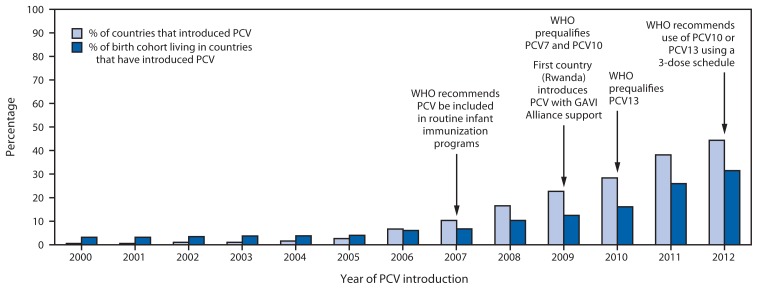
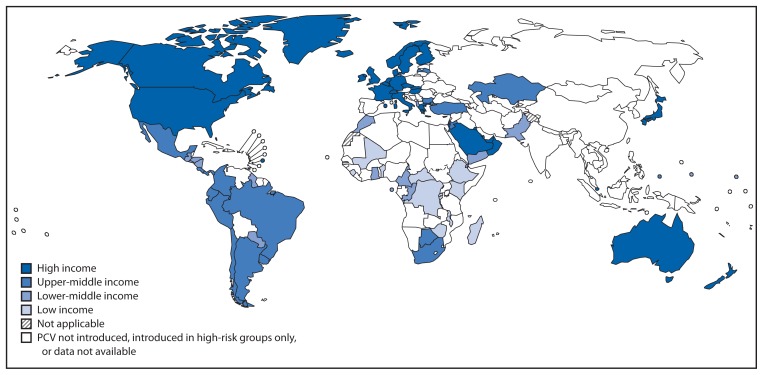
Pneumococcal conjugate vaccines (PCVs) are safe and effective for reducing illness and deaths caused by Streptococcus pneumoniae. Recommendations for PCV use from the World Health Organization (WHO) and funding from the GAVI Alliance have resulted in an increase in PCV introductions into national immunization programs, especially in lower-income countries. Additionally, new formulations that cover more serotypes commonly causing disease in lower- and middle-income countries have become available. This report uses WHO data from 2000-2012, stratified by country disease burden characteristics and World Bank country income groups, to describe global progress in PCV introduction. As of December 2012, a total of 86 (44%) WHO member states have added PCV to the routine infant immunization schedule of their national immunization programs; among those, 23 have introduced PCV with GAVI Alliance support. PCV introduction among WHO member states was most common in the Americas Region (60% of member states), followed by the Eastern Mediterranean Region (50%), European Region (49%), African Region (41%), and Western Pacific Region (33%); none of 11 WHO member states in the South-East Asia Region have introduced PCV. Proportions of low- and middle-income countries with PCV introductions were similar. The proportion of the world's birth cohort living in countries with PCV in national immunization programs increased from 1% in 2000 to 31% in 2012. These findings suggest that efforts to increase PCV introduction and use globally are succeeding; however, gaps in PCV use remain in Asia and countries with large birth cohorts, where concerted efforts should be focused.
Figures
References
-
- World Health Organization. Pneumococcal vaccines; WHO position paper—2012. Wkly Epidemiol Rec. 2012;87:129–44. - PubMed
-
- World Health Organization. Pneumococcal conjugate vaccine for childhood immunization—WHO position paper. Wkly Epidemiol Rec. 2007;82:93–104. - PubMed
-
- O’Brien KL, Wolfson LJ, Watt JP, et al. Burden of disease caused by Streptococcus pneumoniae in children younger than 5 years: global estimates. Lancet. 2009;374:893–902. - PubMed
-
- World Health Organization. Immunization surveillance, assessment and monitoring: data, statistics and graphics. Geneva, Switzerland: World Health Organization; 2012. Available at http://www.who.int/immunization_monitoring/data/en.
MeSH terms
Substances
LinkOut - more resources
Full Text Sources
Other Literature Sources
Medical
