


Syncope and orthostatic intolerance increase risk of brain lesions in migraineurs and controls
- PMID: 23616159
- PMCID: PMC3716345
- DOI: 10.1212/WNL.0b013e318293e1c7
Syncope and orthostatic intolerance increase risk of brain lesions in migraineurs and controls
Abstract
Objectives: We and others showed that migraineurs are at increased risk of subclinical and clinical ischemic brain lesions. Migraineurs also have a higher prevalence of frequent syncope and orthostatic intolerance, symptoms that are associated with transient reductions in cerebral blood flow. In this study, we assessed whether these autonomic symptoms may contribute to the increased risk of brain lesions in migraine.
Methods: Migraineurs (n = 291) and controls (n = 140) from the population-based, cross-sectional CAMERA (Cerebral Abnormalities in Migraine, an Epidemiologic Risk Analysis) cohort (aged 30-60 years, and free of other neurologic symptoms) underwent 1) brain MRI scan, and 2) structured telephone interview including questions on frequent syncope (≥5/lifetime) and orthostatic intolerance.
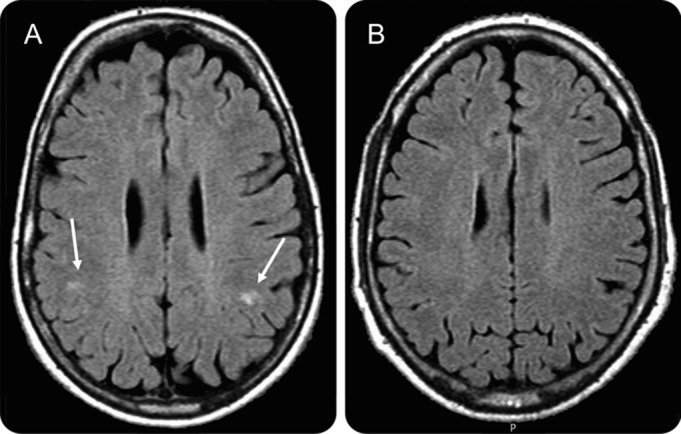
Results: Frequent syncope (odds ratio [OR] = 2.7; 95% confidence interval: 1.3-5.5) and orthostatic intolerance (OR = 2.0 [1.1-3.6]) were independent risk factors for high load of deep white matter lesions. Effects were strongest in women and similar in migraineurs and controls. Migraine diagnosis did not mediate or moderate these associations. Individuals with orthostatic intolerance had higher prevalence of high periventricular white matter lesion load (OR = 1.9 [1.1-3.5]). Syncope and orthostatic intolerance were not related to subclinical infarcts or infratentorial lesions.
Conclusions: Frequent syncope, orthostatic intolerance, and migraine independently increase the risk of white matter lesions, particularly in females.
Figures
References
-
- Headache Classification Subcommittee of the International Headache Society The International Classification of Headache Disorders: 2nd edition. Cephalalgia 2004;24(suppl 1):9–160 - PubMed
-
- Kruit MC, van Buchem MA, Hofman PA, et al. Migraine as a risk factor for subclinical brain lesions. JAMA 2004;291:427–434 - PubMed
-
- Kruit MC, Launer LJ, Ferrari MD, van Buchem MA. Brain stem and cerebellar hyperintense lesions in migraine. Stroke 2006;37:1109–1112 - PubMed
Publication types
MeSH terms
LinkOut - more resources
Full Text Sources
Other Literature Sources
Medical
