


IL-17-mediated M1/M2 macrophage alteration contributes to pathogenesis of bisphosphonate-related osteonecrosis of the jaws
- PMID: 23616636
- PMCID: PMC5558149
- DOI: 10.1158/1078-0432.CCR-13-0042
IL-17-mediated M1/M2 macrophage alteration contributes to pathogenesis of bisphosphonate-related osteonecrosis of the jaws
Abstract
Purpose: Osteonecrosis of the jaw (ONJ) is emerging as one of the important complications in cancer patients treated with antiresorptive agents. This study explored the potential role of interleukin (IL)-17-mediated M1/M2 macrophage alterations in the pathogenesis of bisphosphonate-related osteonecrosis of the jaw (BRONJ).
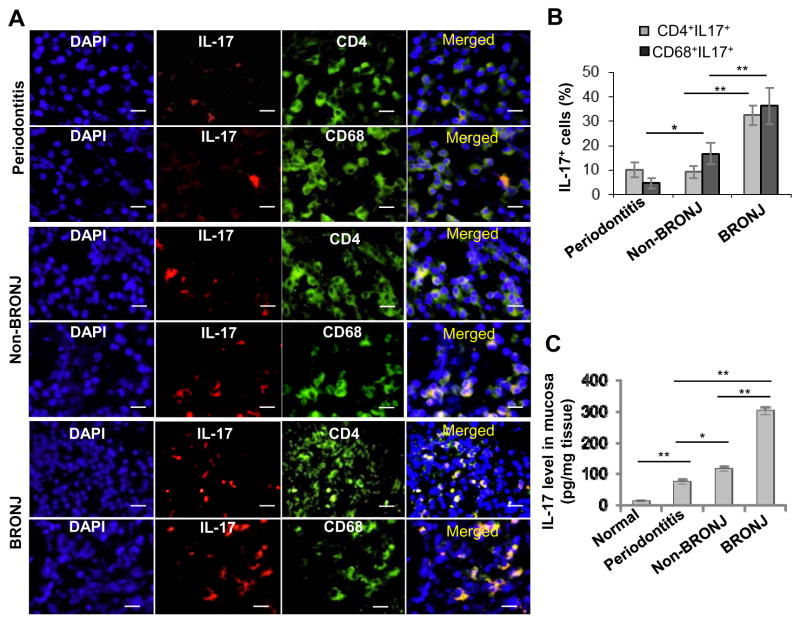
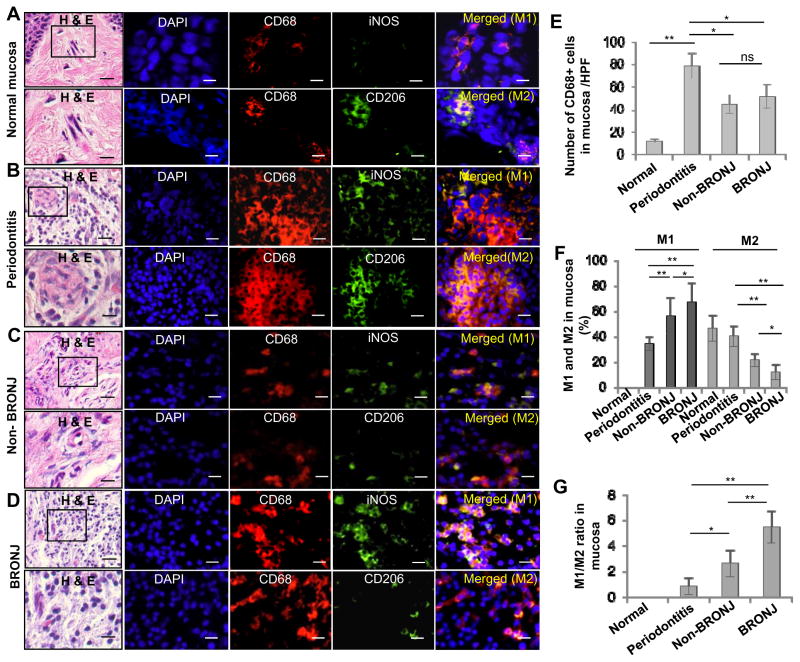
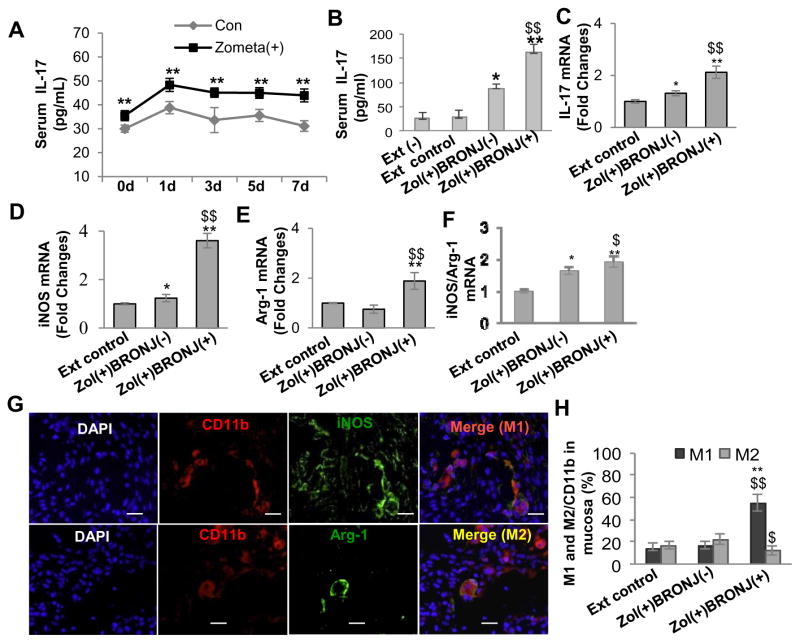
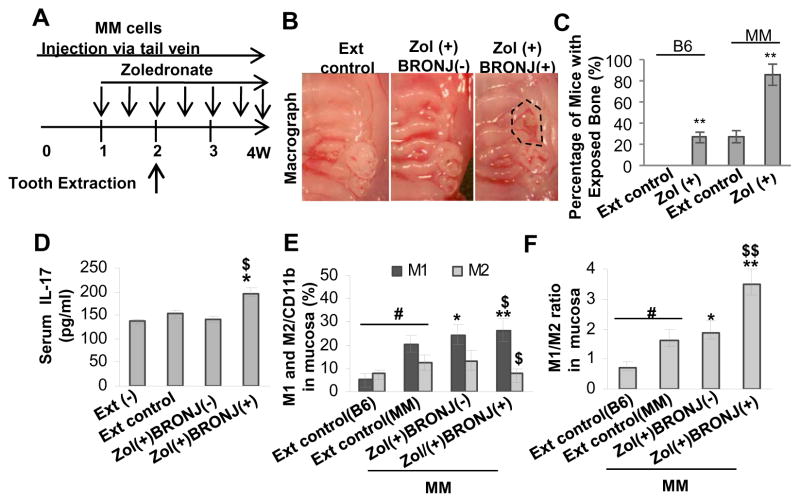
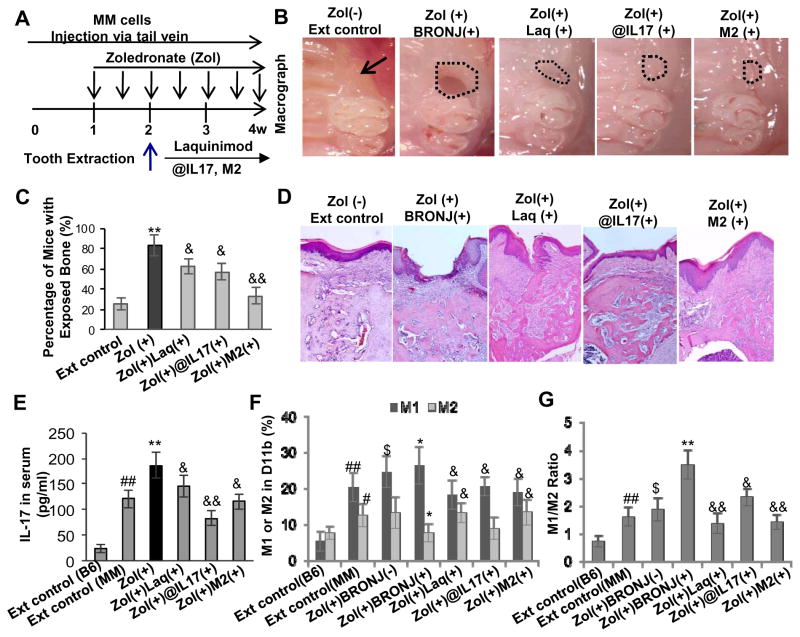
Experimental design: The expression of IL-17 and M1 and M2 macrophage markers at the local mucosal site of human BRONJ lesions was examined by immunofluorescence studies. BRONJ-like disease was induced in C57BL/6 mice and multiple myeloma-burdened mice by intravenous injection of zoledronate to evaluate the correlation of elevated IL-17 levels with changes in M1 and M2 macrophage phenotypes and the therapeutic effects of blocking IL-17 on pathogenesis of BRONJ-like disease.
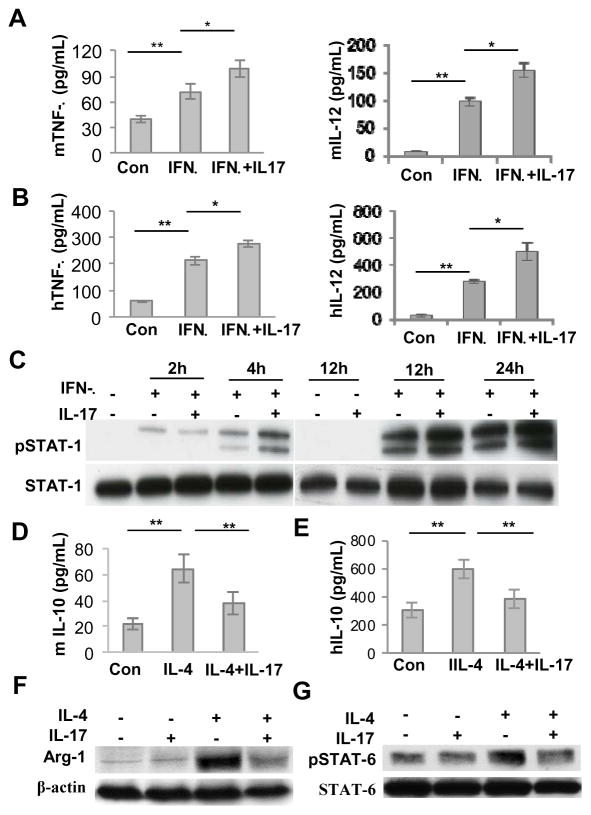
Results: Increased T-helper (TH)17 cells and IL-17 cytokine correlate with an increase in M1/M2 macrophages ratio at the local mucosal site of both murine and human BRONJ lesion. Convincingly, in mice burdened with multiple myeloma, a combination of elevated suprabasal level and drug-induced IL-17 activity augmented the incidence of BRONJ; both systemic increase of IL-17 and disease severity could be reversed by adoptive transfer of ex vivo expanded M2 macrophages. Targeting IL-17 via specific neutralizing antibodies or a small inhibitory molecule, laquinimod, significantly decreased M1/M2 ratio and concomitantly suppressed BRONJ-like condition in mice. Mechanistically, IL-17 enhanced IFN-γ-induced M1 polarization through augmenting STAT-1 phosphorylation while suppressing IL-4-mediated M2 conversion via inhibiting STAT-6 activation.
Conclusions: These findings have established a compelling linkage between activated IL-17-mediated polarization of M1 macrophages and the development of BRONJ-like conditions in both human disease and murine models.
Conflict of interest statement
Figures
References
-
- Marx RE. Pamidronate (Aredia) and zoledronate (Zometa) induced avascular necrosis of the jaws: a growing epidemic. J Oral Maxillofac Surg. 2003;61:1115–7. - PubMed
-
- Advisory Task Force on Bisphosphonate-Related Ostenonecrosis of the Jaws, American Association of Oral and Maxillofacial Surgeons. American Association of Oral and Maxillofacial Surgeons position paper on bisphosphonate-related osteonecrosis of the jaws. J Oral Maxillofac Surg. 2007;65:369–77. - PubMed
-
- Ruggiero SL, Drew SJ. Osteonecrosis of the jaws and bisphosphonate therapy. J Dent Res. 2007;86:1013–21. - PubMed
-
- Silverman SL, Landesberg R. Osteonecrosis of the jaw and the role of bisphosphonates: a critical review. Am J Med. 2009;122(2 suppl):S33–S45. - PubMed
-
- Bagan J, Scully C, Sabater V, Jimenez Y. Osteonecrosis of the jaws in patients treated with intravenous bisphosphonates (BRONJ): A concise update. Oral Oncol. 2009;45:551–4. - PubMed
Publication types
MeSH terms
Substances
Grants and funding
LinkOut - more resources
Full Text Sources
Other Literature Sources
Medical
Research Materials
Miscellaneous
