


Obstructive sleep apnea syndrome: natural history, diagnosis, and emerging treatment options
- PMID: 23616712
- PMCID: PMC3630950
- DOI: 10.2147/NSS.S6844
Obstructive sleep apnea syndrome: natural history, diagnosis, and emerging treatment options
Abstract
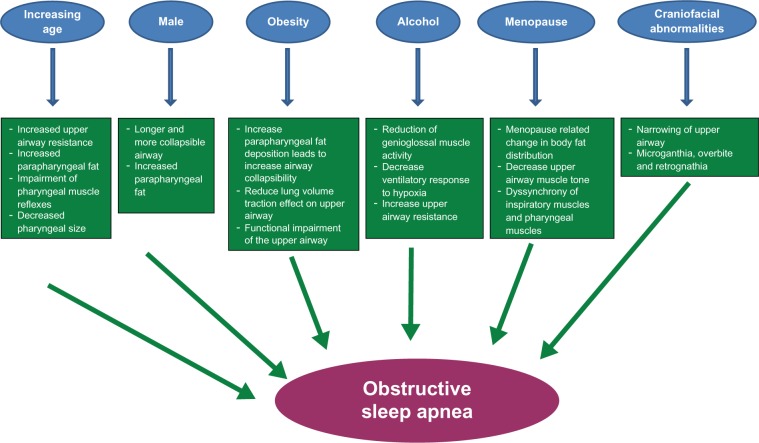
Sleep apnea is an entity characterized by repetitive upper airway obstruction resulting in nocturnal hypoxia and sleep fragmentation. It is estimated that 2%-4% of the middle-aged population has sleep apnea with a predilection in men relative to women. Risk factors of sleep apnea include obesity, gender, age, menopause, familial factors, craniofacial abnormalities, and alcohol. Sleep apnea has been increasingly recognized as a major health burden associated with hypertension and increased risk of cardiovascular disease and death. Increased airway collapsibility and derangement in ventilatory control responses are the major pathological features of this disorder. Polysomnography (PSG) is the gold-standard method for diagnosis of sleep apnea and assessment of sleep apnea severity; however, portable sleep monitoring has a diagnostic role in the setting of high pretest probability sleep apnea in the absence of significant comorbidity. Positive pressure therapy is the mainstay therapy of sleep apnea. Other treatment modalities, such as upper airway surgery or oral appliances, may be used for the treatment of sleep apnea in select cases. In this review, we focus on describing the sleep apnea definition, risk factor profile, underlying pathophysiologic mechanisms, associated adverse consequences, diagnostic modalities, and treatment strategies.
Keywords: cardiovascular disease; obstructive sleep apnea; positive airway pressure.
Figures
References
-
- Sleep-related breathing disorders in adults: recommendations for syndrome definition and measurement techniques in clinical research. The Report of an American Academy of Sleep Medicine Task Force. Sleep. 1999 Aug 1;22(5):667–689. - PubMed
-
- Kushida CA, Littner MR, Morgenthaler T, et al. Practice parameters for the indications for polysomnography and related procedures: an update for 2005. Sleep. 2005;28(4):499–521. - PubMed
-
- Gottlieb DJ, Whitney CW, Bonekat WH, et al. Relation of sleepiness to respiratory disturbance index: the Sleep Heart Health Study. Am J Respir Crit Care Med. 1999;159(2):502–507. - PubMed
-
- Young T, Peppard P, Palta M, et al. Population-based study of sleep-disordered breathing as a risk factor for hypertension. Arch Intern Med. 1997;157(15):1746–1752. - PubMed
-
- Shahar E, Whitney CW, Redline S, et al. Sleep-disordered breathing and cardiovascular disease: cross-sectional results of the Sleep Heart Health Study. Am J Respir Crit Care Med. 2001;163(1):19–25. - PubMed
Grants and funding
LinkOut - more resources
Full Text Sources
