


Behavioral treatment of insomnia: a proposal for a stepped-care approach to promote public health
- PMID: 23616720
- PMCID: PMC3630964
- DOI: 10.2147/NSS.S12975
Behavioral treatment of insomnia: a proposal for a stepped-care approach to promote public health
Abstract
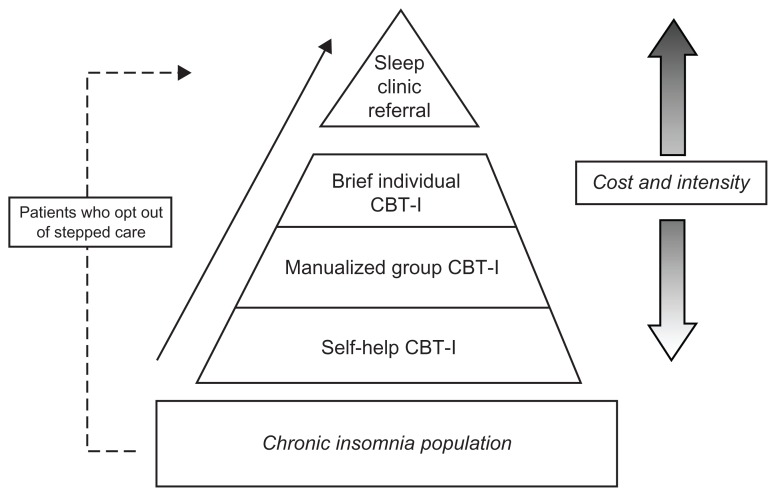
Chronic insomnia is a highly prevalent condition that has psychological and medical consequences for those who suffer from it and financial consequences for both the individual and society. In spite of the fact that nonpharmacologic treatment methods have been developed and shown to be as or more effective than medication for chronic insomnia, these methods remain greatly underutilized due to an absence of properly trained therapists and a general failure in dissemination. A stepped-care model implemented in a primary-care setting offers a public health solution to the problem of treatment accessibility and delivery of behavioral treatments for insomnia. Such a model would provide graduated levels of cognitive behavioral intervention, with corresponding increases in intensity and cost, including self-help, manualized group treatment, brief individual treatment, and finally, individualized behavioral treatment provided by a specialist. To provide such a systematic approach, future research would need to confirm several aspects of the model, and a cadre of professionals would need to be trained to administer manualized care in both group and individualized formats.
Keywords: chronic insomnia; cognitive behavioral therapy; primary care; stepped care.
Figures
References
-
- American Psychiatric Association. Diagnostic and Statistical Manual of Mental Disorders. 4th ed. Washington, DC: American Psychiatric Association; 2000. Text revision.
-
- Drake CL, Roehrs T, Roth T. Insomnia causes, consequences, and therapeutics: an overview. Depress Anxiety. 2003;18:163–176. - PubMed
-
- Spielman AJ, Caruso LS, Glovinsky PB. A behavioral perspective on insomnia treatment. Psychiatr Clin North Am. 1987;10:541–553. - PubMed
-
- Edinger JD, Wohlgemuth WK, Radtke RA, Marsh GR, Quillian RE. Does cognitive–behavioral insomnia therapy alter dysfunctional beliefs about sleep? Sleep. 2001;24:591–599. - PubMed
-
- Perlis ML, Giles DE, Mendelson WB, Bootzin RR, Wyatt JK. Psychophysiological insomnia: the behavioural model and a neurocognitive perspective. J Sleep Res. 1997;6:179–188. - PubMed
LinkOut - more resources
Full Text Sources
