


Eosinophilic inflammation in allergic asthma
- PMID: 23616768
- PMCID: PMC3627984
- DOI: 10.3389/fphar.2013.00046
Eosinophilic inflammation in allergic asthma
Abstract
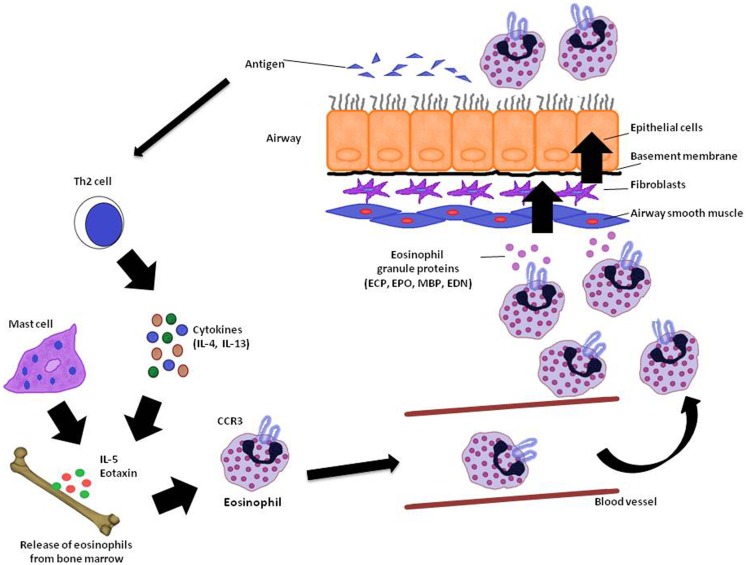
Eosinophils are circulating granulocytes involved in pathogenesis of asthma. A cascade of processes directed by Th2 cytokine producing T-cells influence the recruitment of eosinophils into the lungs. Furthermore, multiple elements including interleukin (IL)-5, IL-13, chemoattractants such as eotaxin, Clara cells, and CC chemokine receptor (CCR)3 are already directly involved in recruiting eosinophils to the lung during allergic inflammation. Once recruited, eosinophils participate in the modulation of immune response, induction of airway hyperresponsiveness and remodeling, characteristic features of asthma. Various types of promising treatments for reducing asthmatic response are related to reduction in eosinophil counts both in human and experimental models of pulmonary allergic inflammation, showing that the recruitment of these cells really plays an important role in the pathophysiology of allergic diseases such asthma.
Keywords: airway remodeling; asthma; eosinophils; experimental models of asthma; inflammation; respiratory hypersensitivity.
Figures
References
-
- Adamko D. J., Yost B. L., Gleich G. J., Fryer A. D., Jacoby D. B. (1999). Ovalbumin sensitization changes the inflammatory response to subsequent parainfluenza infection. Eosinophils mediate airway hyperresponsiveness, m(2) muscarinic receptor dysfunction, and antiviral effects. J. Exp. Med. 90, 1465–1478 10.1084/jem.190.10.1465 - DOI - PMC - PubMed
LinkOut - more resources
Full Text Sources
Other Literature Sources
