


A dynamic interplay between phytohormones is required for fruit development, maturation, and ripening
- PMID: 23616786
- PMCID: PMC3628358
- DOI: 10.3389/fpls.2013.00079
A dynamic interplay between phytohormones is required for fruit development, maturation, and ripening
Abstract
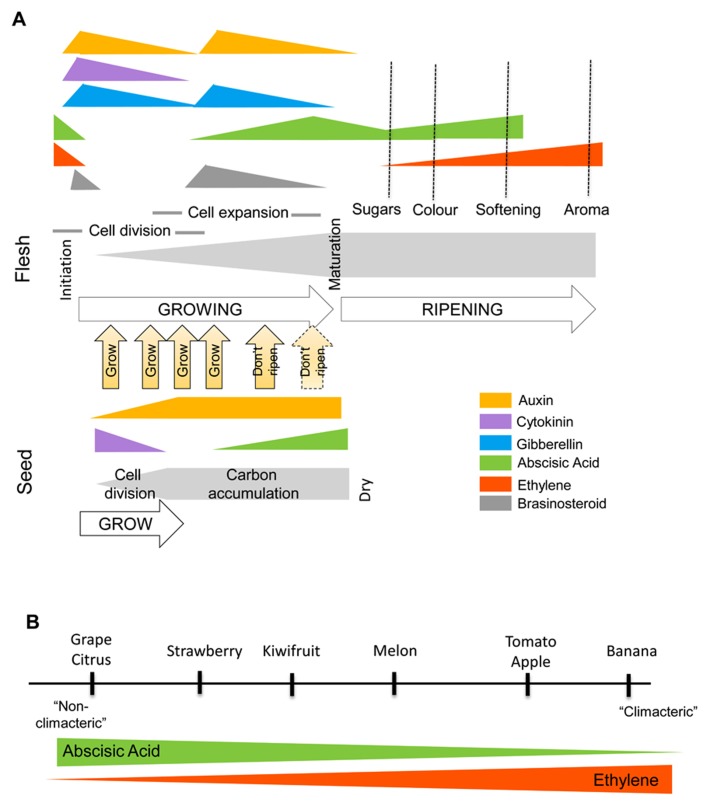
Plant species that bear fruit often utilize expansion of an ovary (carpel) or accessory tissue as a vehicle for seed dispersal. While the seed(s) develop, the tissue(s) of the fruit follow a common progression of cell division and cell expansion, promoting growth of the fruit. Once the seed is fully developed, the fruit matures and the surrounding tissue either dries or ripens promoting the dissemination of the seed. As with many developmental processes in plants, plant hormones play an important role in the synchronization of signals between the developing seed and its surrounding fruit tissue(s), regulating each phase of fruit development. Following pollination, fruit set is achieved through a de-repression of growth and an activation of cell division via the action of auxin and/or cytokinin and/or gibberellin. Following fruit set, growth of the fruit is facilitated through a relatively poorly studied period of cell expansion and endoreduplication that is likely regulated by similar hormones as in fruit set. Once the seeds reach maturity, fruit become ready to undergo ripening and during this period there is a major switch in relative hormone levels of the fruit, involving an overall decrease in auxin, gibberellin, and cytokinin and a simultaneous increase in abscisic acid and ethylene. While the role of hormones in fruit set and ripening is well documented, the knowledge of the roles of other hormones during growth, maturation, and some individual ripening components is sketchy.
Keywords: fruit development; hormonal regulation; ripening.
Figures
References
-
- Bapat V. A., Trivedi P. K., Ghosh A., Sane V. A., Ganapathi T. R., Nath P. (2010). Ripening of fleshy fruit: molecular insight and the role of ethylene. Biotechnol. Adv. 28 94–107 - PubMed
-
- Botondi R., DeSantis D., Bellincontro A., Vizovitis K., Mencarelli F. (2003). Influence of ethylene inhibition by 1-methylcyclopropene on apricot quality, volatile production, and glycosidase activity of low- and high-aroma varieties of apricots. J. Agric. Food Chem. 51 1189–1200 - PubMed
LinkOut - more resources
Full Text Sources
Other Literature Sources
Research Materials
