Not-in-trial simulation I: Bridging cardiovascular risk from clinical trials to real-life conditions
- PMID: 23617533
- PMCID: PMC3845320
- DOI: 10.1111/bcp.12151
Not-in-trial simulation I: Bridging cardiovascular risk from clinical trials to real-life conditions
Abstract
Aims: The assessment of heart rate-corrected QT (QTc) interval prolongation relies on the evidence of drug effects in healthy subjects. This study demonstrates the relevance of pharmacokinetic-pharmacodynamic (PKPD) relationships to characterize drug-induced QTc interval prolongation and explore the discrepancies between clinical trials and real-life conditions.
Methods: d,l-Sotalol data from healthy subjects and from the Rotterdam Study cohort were used to assess treatment response in a phase I setting and in a real-life conditions, respectively. Using modelling and simulation, drug effects at therapeutic doses were predicted in both populations.
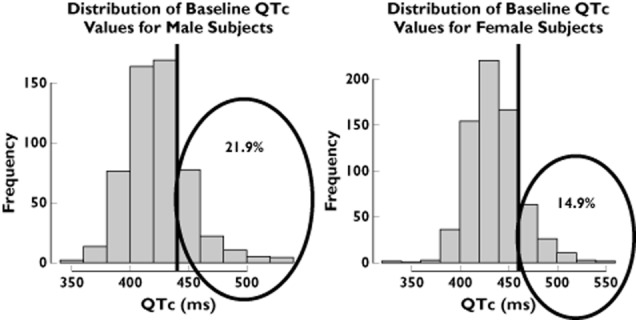
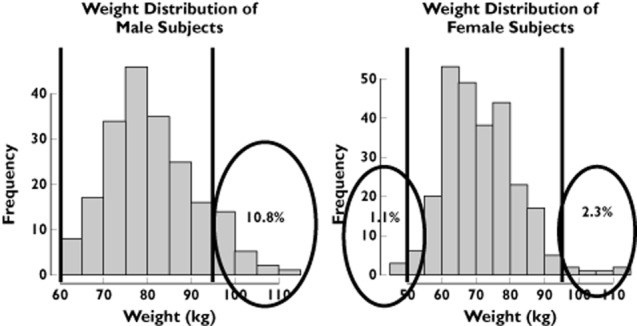
Results: Inclusion criteria were shown to restrict the representativeness of the trial population in comparison to real-life conditions. A significant part of the typical patient population was excluded from trials due to weight and baseline QTc interval criteria. Relative risk was significantly different between sotalol users with and without heart failure, hypertension, diabetes and myocardial infarction (P < 0.01). Although drug effects do cause an increase in the relative risk of QTc interval prolongation, the presence of diabetes represented an increase from 4.0 [95% confidence interval (CI) 2.7-5.8] to 6.5 (95% CI 1.6-27.1), whilst for myocardial infarction it increased from 3.4 (95% CI 2.3-5.13) to 15.5 (95% CI 4.9-49.3).
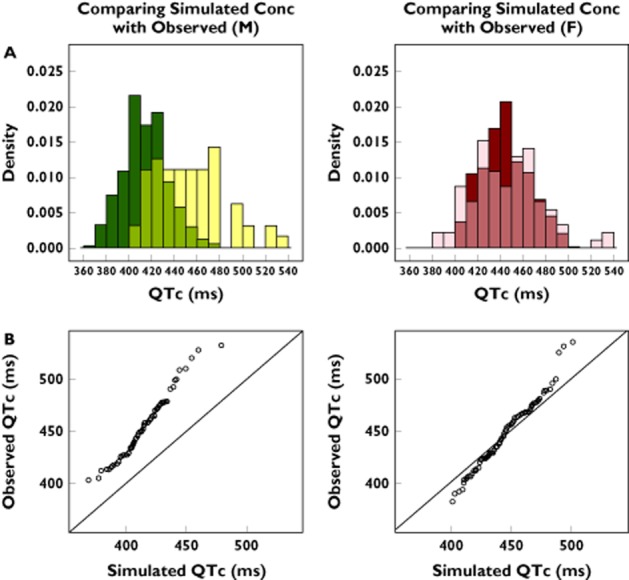
Conclusions: Our findings show that drug effects on QTc interval do not explain the observed QTc values in the population. The prevalence of high QTc values in the real-life population can be assigned to co-morbidities and concomitant medications. These findings substantiate the need to account for these factors when evaluating the cardiovascular risk of medicinal products.
Keywords: QTc interval prolongation; model-based drug development, risk management; observational cohorts; pharmacokinetic-pharmacodynamic modelling; sotalol.
© 2013 The British Pharmacological Society.
Figures
References
-
- Shah RR. Drug-induced QT interval prolongation: regulatory perspectives and drug development. Ann Med. 2004;36(Suppl. 1):47–52. - PubMed
-
- Dessertenne F. [Ventricular tachycardia with 2 variable opposing foci] Arch Mal Coeur Vaiss. 1966;59:263–272. - PubMed
-
- Straus SM, Kors JA, De Bruin ML, van der Hooft CS, Hofman A, Heeringa J, Deckers JW, Kingma JH, Sturkenboom MC, Stricker BH, Witteman JC. Prolonged QTc interval and risk of sudden cardiac death in a population of older adults. J Am Coll Cardiol. 2006;47:362–367. - PubMed
-
- Straus SM, Sturkenboom MC, Bleumink GS, Dieleman JP, van der Lei J, de Graeff PA, Kingma JH, Stricker BH. Non-cardiac QTc-prolonging drugs and the risk of sudden cardiac death. Eur Heart J. 2005;26:2007–2012. - PubMed
Publication types
MeSH terms
Substances
LinkOut - more resources
Full Text Sources
Other Literature Sources