


Bioremediation: a genuine technology to remediate radionuclides from the environment
- PMID: 23617701
- PMCID: PMC3917470
- DOI: 10.1111/1751-7915.12059
Bioremediation: a genuine technology to remediate radionuclides from the environment
Abstract
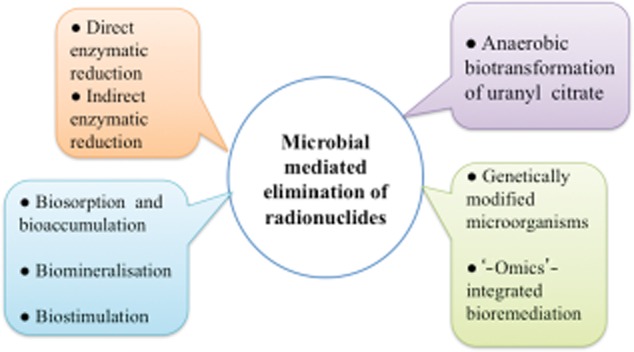
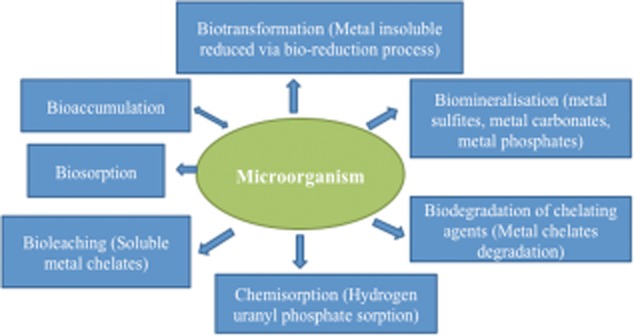
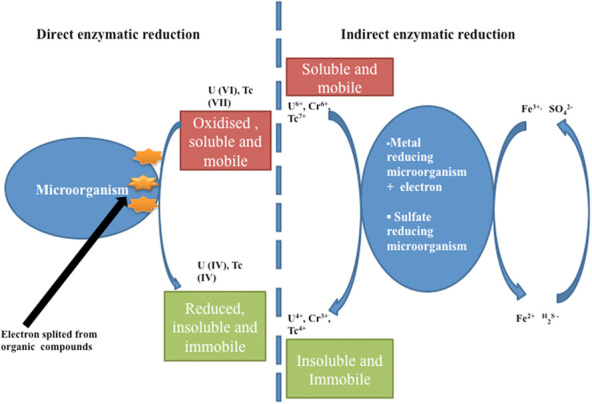
Radionuclides in the environment are a major human and environmental health concern. Like the Chernobyl disaster of 1986, the Fukushima Daiichi nuclear disaster in 2011 is once again causing damage to the environment: a large quantity of radioactive waste is being generated and dumped into the environment, and if the general population is exposed to it, may cause serious life-threatening disorders. Bioremediation has been viewed as the ecologically responsible alternative to environmentally destructive physical remediation. Microorganisms carry endogenous genetic, biochemical and physiological properties that make them ideal agents for pollutant remediation in soil and groundwater. Attempts have been made to develop native or genetically engineered (GE) microbes for the remediation of environmental contaminants including radionuclides. Microorganism-mediated bioremediation can affect the solubility, bioavailability and mobility of radionuclides. Therefore, we aim to unveil the microbial-mediated mechanisms for biotransformation of radionuclides under various environmental conditions as developing strategies for waste management of radionuclides. A discussion follows of '-omics'-integrated genomics and proteomics technologies, which can be used to trace the genes and proteins of interest in a given microorganism towards a cell-free bioremediation strategy.
© 2013 The Authors. Microbial Biotechnology published by John Wiley & Sons Ltd and Society for Applied Microbiology.
Figures
References
-
- Alliot I, Alliot C, Vitorge P, Fattahi M. Speciation of technetium(IV) in bicarbonate media. Environ Sci Technol. 2009;43:9174–9182. - PubMed
-
- Al-Zoughool M, Krewski D. Health effects of radon: a review of the literature. Int J Radiat Biol. 2009;85:57–69. - PubMed
-
- Amachi S, Minami K, Miyasaka I, Fukunaga S. Ability of anaerobic microorganisms to associate with iodine: 125I tracer experiments using laboratory strains and enriched microbial communities from subsurface formation water. Chemosphere. 2010;79:349–354. - PubMed
Publication types
MeSH terms
Substances
LinkOut - more resources
Full Text Sources
Other Literature Sources
