


Effectiveness of surgical reconstruction to restore radiocarpal joint mechanics after scapholunate ligament injury: an in vivo modeling study
- PMID: 23618131
- PMCID: PMC3711862
- DOI: 10.1016/j.jbiomech.2013.03.020
Effectiveness of surgical reconstruction to restore radiocarpal joint mechanics after scapholunate ligament injury: an in vivo modeling study
Abstract
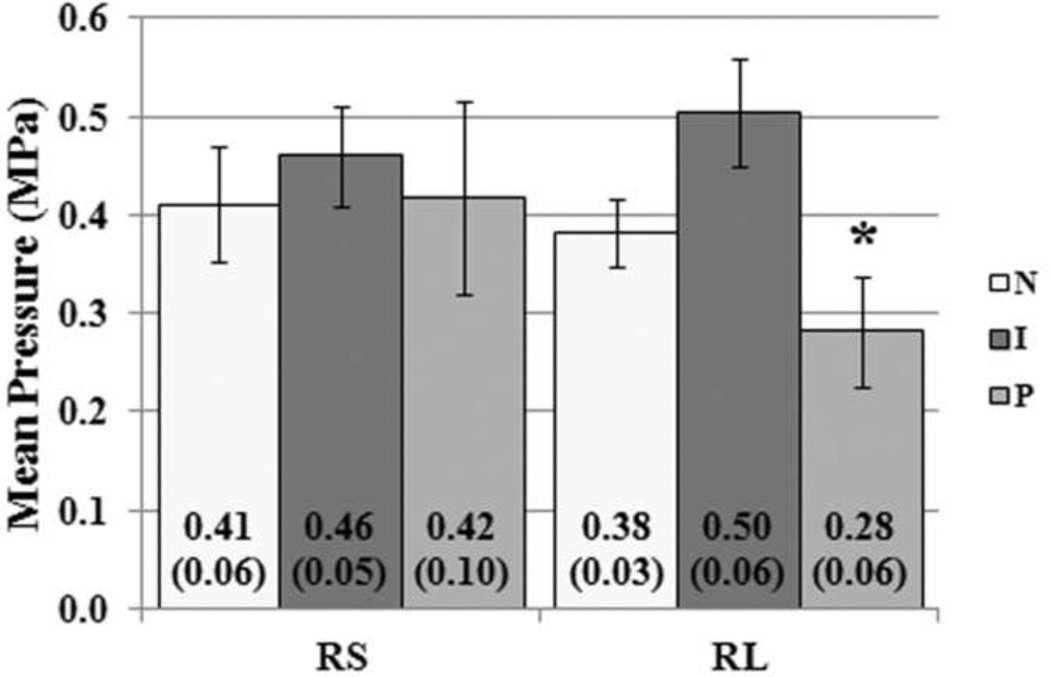
Disruption of the scapholunate ligament can cause a loss of normal scapholunate mechanics and eventually lead to osteoarthritis. Surgical reconstruction attempts to restore scapholunate relationship show improvement in functional outcomes, but postoperative effectiveness in restoring normal radiocarpal mechanics still remains a question. The objective of this study was to investigate the benefits of surgical repair by observing changes in contact mechanics on the cartilage surface before and after surgical treatment. Six patients with unilateral scapholunate dissociation were enrolled in the study, and displacement driven magnetic resonance image-based surface contact modeling was used to investigate normal, injured and postoperative radiocarpal mechanics. Model geometry was acquired from images of wrists taken in a relaxed position. Kinematics were acquired from image registration between the relaxed images, and images taken during functional loading. Results showed a trend for increase in radiocarpal contact parameters with injury. Peak and mean contact pressures significantly decreased after surgery in the radiolunate articulation and there were no significant differences between normal and postoperative wrists. Results indicated that surgical repair improves contact mechanics after injury and that contact mechanics can be surgically restored to be similar to normal. This study provides novel contact mechanics data on the effects of surgical repair after scapholunate ligament injury. With further work, it may be possible to more effectively differentiate between treatments and degenerative changes based on in vivo contact mechanics data.
Copyright © 2013 Elsevier Ltd. All rights reserved.
Conflict of interest statement
The authors do not have any conflicts of interest to disclose.
Figures


References
-
- Andriacchi TP, Mündermann A, Smith RL, Alexander EJ, Dyrby CO, Koo S. A Framework for the in Vivo Pathomechanics of Osteoarthritis at the Knee. Annals of Biomedical Engineering. 2004;32:447–457. - PubMed
-
- Berger RA. The ligaments of the wrist. A current overview of anatomy with considerations of their potential functions. Hand Clinics. 1997;13:63–82. - PubMed
-
- Buckwalter JA, Saltzman C, Brown T. The impact of osteoarthritis: implications for research. Clinical Orthopaedics and Related Research. 2004:S6–S15. - PubMed
-
- Chabas J-F, Gay A, Valenti D, Guinard D, Legre R. Results of the Modified Brunelli Tenodesis for Treatment of Scapholunate Instability: A Retrospective Study of 19 Patients. Journal of Hand Surgery. 2008;33:1469–1477. American Volume. - PubMed
Publication types
MeSH terms
Grants and funding
LinkOut - more resources
Full Text Sources
Other Literature Sources
