


Effects of cartilage impact with and without fracture on chondrocyte viability and the release of inflammatory markers
- PMID: 23620164
- PMCID: PMC3966619
- DOI: 10.1002/jor.22348
Effects of cartilage impact with and without fracture on chondrocyte viability and the release of inflammatory markers
Abstract
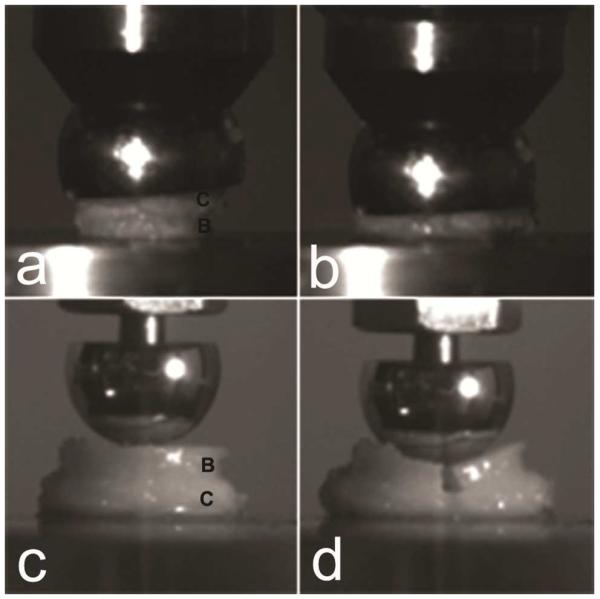
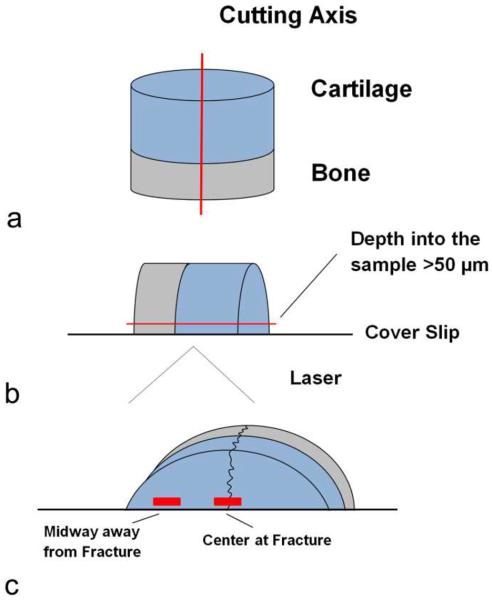
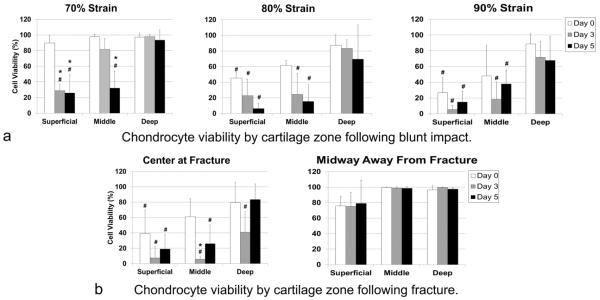
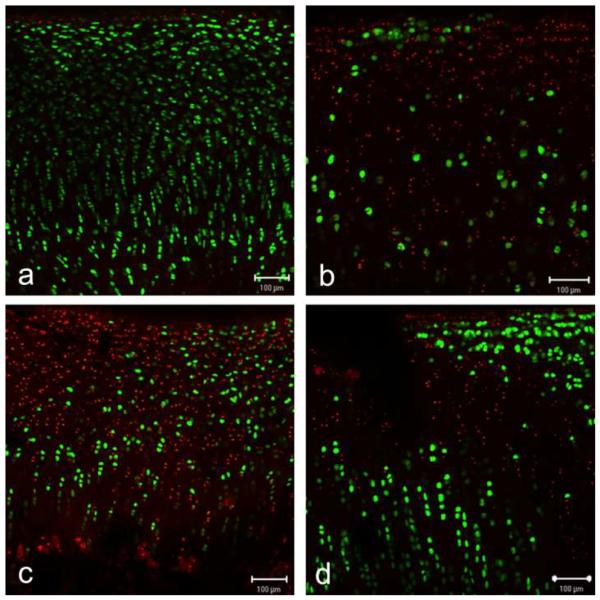
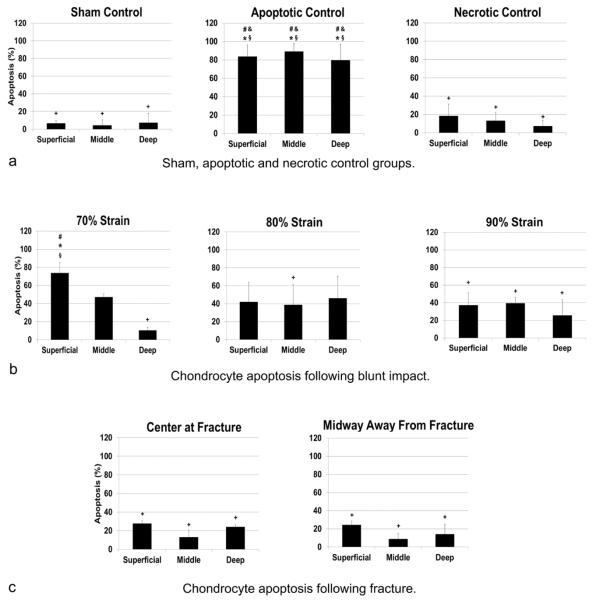
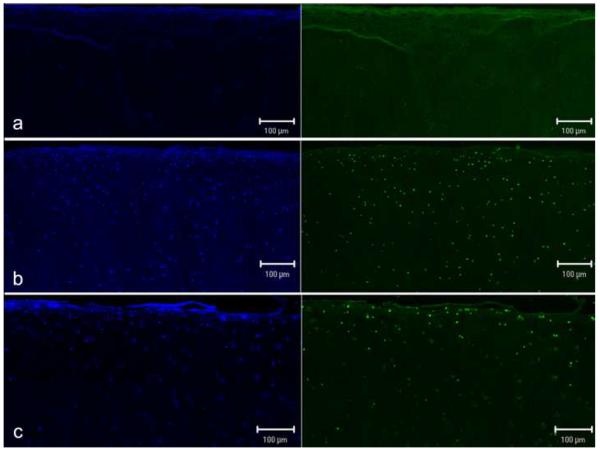
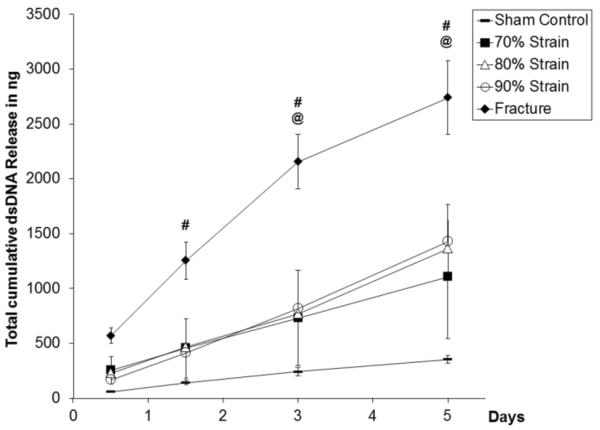
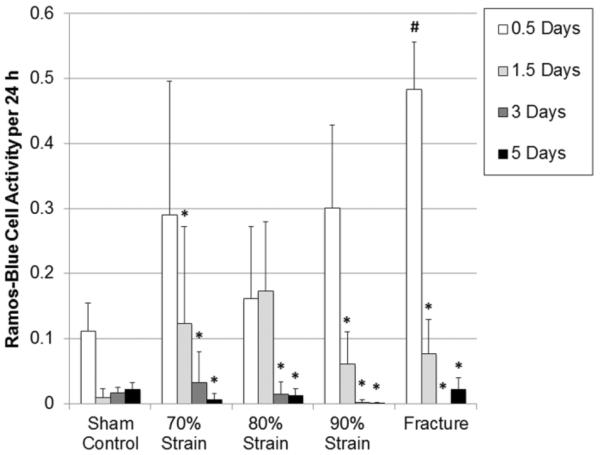
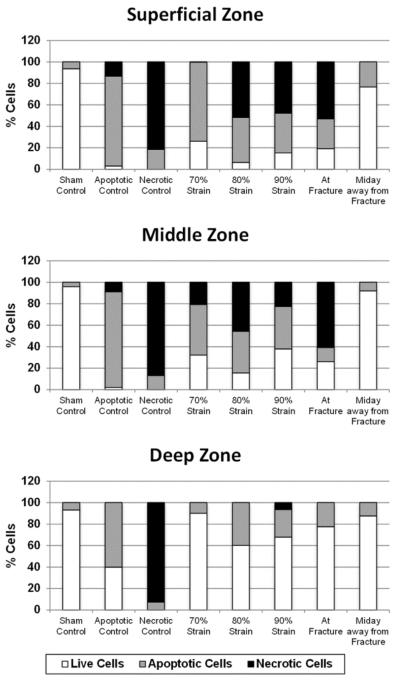
Post-traumatic arthritis (PTA) frequently develops after intra-articular fracture of weight bearing joints. Loss of cartilage viability and post-injury inflammation have both been implicated as possible contributing factors to PTA progression. To further investigate chondrocyte response to impact and fracture, we developed a blunt impact model applying 70%, 80%, or 90% surface-to-surface compressive strain with or without induction of an articular fracture in a cartilage explant model. Following mechanical loading, chondrocyte viability, and apoptosis were assessed. Culture media were evaluated for the release of double-stranded DNA (dsDNA) and immunostimulatory activity via nuclear factor kappa B (NF-κB) activity in Toll-like receptor (TLR) -expressing Ramos-Blue reporter cells. High compressive strains, with or without articular fracture, resulted in significantly reduced chondrocyte viability. Blunt impact at 70% strain induced a loss in viability over time through a combination of apoptosis and necrosis, whereas blunt impact above 80% strain caused predominantly necrosis. In the fracture model, a high level of primarily necrotic chondrocyte death occurred along the fracture edges. At sites away from the fracture, viability was not significantly different than controls. Interestingly, both dsDNA release and NF-κB activity in Ramos-Blue cells increased with blunt impact, but was only significantly increased in the media from fractured cores. This study indicates that the mechanism of trauma determines the type of chondrocyte death and the potential for post-injury inflammation.
Copyright © 2013 Orthopaedic Research Society.
Figures
References
-
- Brown TD, Johnston RC, Saltzman CL, Marsh JL, Buckwalter JA. Posttraumatic osteoarthritis: a first estimate of incidence, prevalence, and burden of disease. J Orthop Trauma. 2006 Nov-Dec;20(10):739–744. - PubMed
-
- Matta JM. Fractures of the acetabulum: accuracy of reduction and clinical results in patients managed operatively within three weeks after the injury. J Bone Joint Surg Am. 1996 Nov;78(11):1632–1645. - PubMed
-
- Stufkens SA, Knupp M, Horisberger M, Lampert C, Hintermann B. Cartilage lesions and the development of osteoarthritis after internal fixation of ankle fractures: a prospective study. J Bone Joint Surg Am. 2010 Feb;92(2):279–286. - PubMed
-
- Olson SA, Guilak F. From articular fracture to posttraumatic arthritis: A black box that needs to be opened. Journal of Orthopaedic Trauma. 2006 Nov-Dec;20(10):661–662. - PubMed
Publication types
MeSH terms
Substances
Grants and funding
LinkOut - more resources
Full Text Sources
Other Literature Sources
Medical
