


Identifying the risks of anticoagulation in patients with substance abuse
- PMID: 23620189
- PMCID: PMC3785645
- DOI: 10.1007/s11606-013-2453-x
Identifying the risks of anticoagulation in patients with substance abuse
Abstract
Background: Warfarin is effective in preventing thromboembolic events, but concerns exist regarding its use in patients with substance abuse.
Objective: Identify which patients with substance abuse who receive warfarin are at risk for poor outcomes.
Design: Retrospective cohort study. Diagnostic codes, lab values, and other factors were examined to identify risk of adverse outcomes.
Patients: Veterans AffaiRs Study to Improve Anticoagulation (VARIA) database of 103,897 patients receiving warfarin across 100 sites.
Main measures: Outcomes included percent time in therapeutic range (TTR), a measure of anticoagulation control, and major hemorrhagic events by ICD-9 codes.
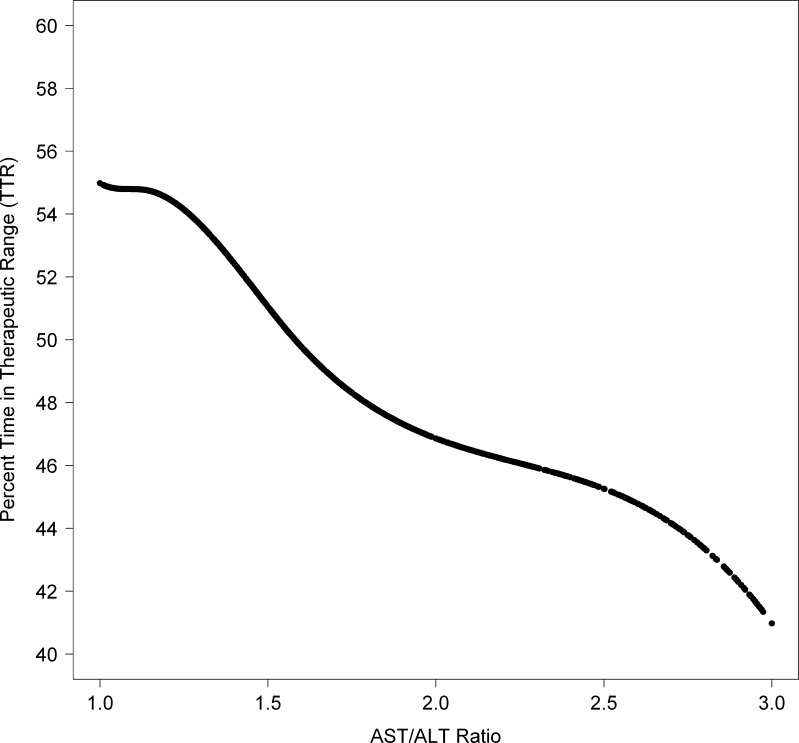
Results: Nonusers had a higher mean TTR (62 %) than those abusing alcohol (53 %), drugs (50 %), or both (44 %, p < 0.001). Among alcohol abusers, an increasing ratio of the serum hepatic transaminases aspartate aminotransferase/alanine aminotransferase (AST:ALT) correlated with inferior anticoagulation control; normal AST:ALT ≤ 1.5 predicted relatively modest decline in TTR (54 %, p < 0.001), while elevated ratios (AST:ALT 1.50-2.0 and > 2.0) predicted progressively poorer anticoagulation control (49 % and 44 %, p < 0.001 compared to nonusers). Age-adjusted hazard ratio for major hemorrhage was 1.93 in drug and 1.37 in alcohol abuse (p < 0.001 compared to nonusers), and remained significant after also controlling for anticoagulation control and other bleeding risk factors (1.69 p < 0.001 and 1.22 p = 0.003). Among alcohol abusers, elevated AST:ALT >2.0 corresponded to more than three times the hemorrhages (HR 3.02, p < 0.001 compared to nonusers), while a normal ratio AST:ALT ≤ 1.5 predicted a rate similar to nonusers (HR 1.19, p < 0.05).
Conclusions: Anticoagulation control is particularly poor in patients with substance abuse. Major hemorrhages are more common in both alcohol and drug users. Among alcohol abusers, the ratio of AST/ALT holds promise for identifying those at highest risk for adverse events.
Figures
Comment in
-
Capsule commentary on Efird et al., identifying the risks of anticoagulation in patients with substance abuse.J Gen Intern Med. 2013 Oct;28(10):1351. doi: 10.1007/s11606-013-2486-1. J Gen Intern Med. 2013. PMID: 23677461 Free PMC article. No abstract available.
References
-
- Compton WM, Thomas YF, Stinson FS, Grant BF. Prevalence, correlates, disability, and comorbidity of DSM-IV drug abuse and dependence in the United States: results from the national epidemiologic survey on alcohol and related conditions. Arch Gen Psychiatry. 2007;64:566–76. doi: 10.1001/archpsyc.64.5.566. - DOI - PubMed
-
- Hasin DS, Stinson FS, Ogburn E, Grant BF. Prevalence, correlates, disability, and comorbidity of DSM-IV alcohol abuse and dependence in the United States: results from the National Epidemiologic Survey on Alcohol and Related Conditions. Arch Gen Psychiatry. 2007;64:830–42. doi: 10.1001/archpsyc.64.7.830. - DOI - PubMed
Publication types
MeSH terms
Substances
LinkOut - more resources
Full Text Sources
Other Literature Sources
Medical
Research Materials
Miscellaneous
