


Restoration of PTEN activity decreases metastases in an orthotopic model of colon cancer
- PMID: 23623571
- PMCID: PMC4096772
- DOI: 10.1016/j.jss.2013.03.035
Restoration of PTEN activity decreases metastases in an orthotopic model of colon cancer
Abstract
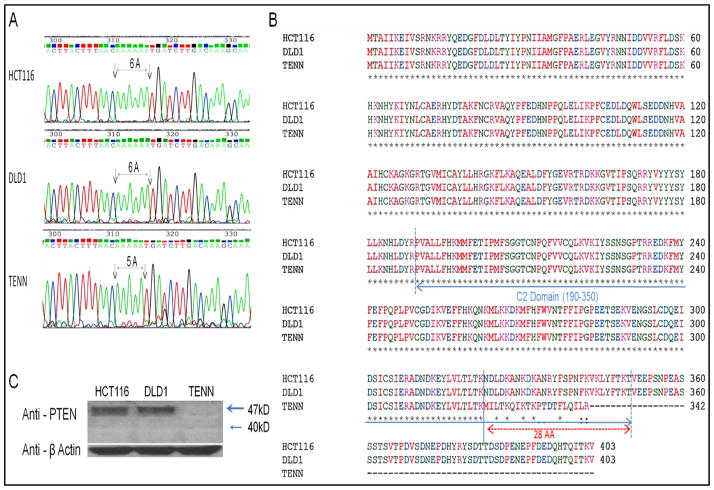
Background: Mutational loss of tumor suppressor phosphatase and tensin homologue deleted on chromosome ten (PTEN) is associated with malignant progression in many cancers, including colorectal cancer (CRC). PTEN is involved in negatively regulating the phosphatidylinositol 3-kinase/AKT oncogenic signaling pathway and has been implicated in the metastatic colonization process. Few in vivo models are available to study CRC metastasis. The purpose of this study was to determine the effect of restoring PTEN activity on metastases in an orthotopic murine model.
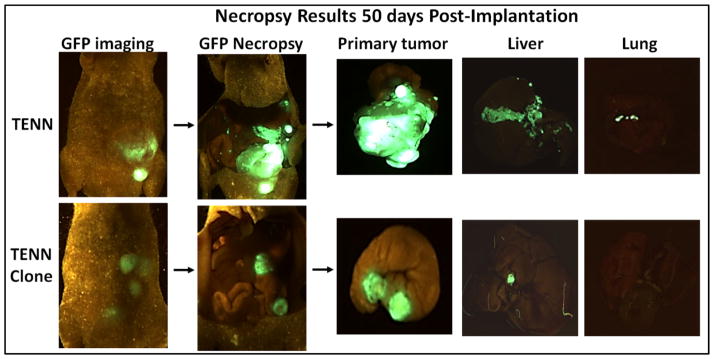
Methods: Green fluorescent protein labeled TENN, a highly metastatic human colon cancer cell line with mutational loss of PTEN gene and TENN clones (with restoration of PTEN gene) tumors were orthotopically implanted onto the colons of BALB/c nude mice and allowed to develop primary and metastatic tumors. Seven weeks post-implantation, mice were euthanized and organs extracted for examination.
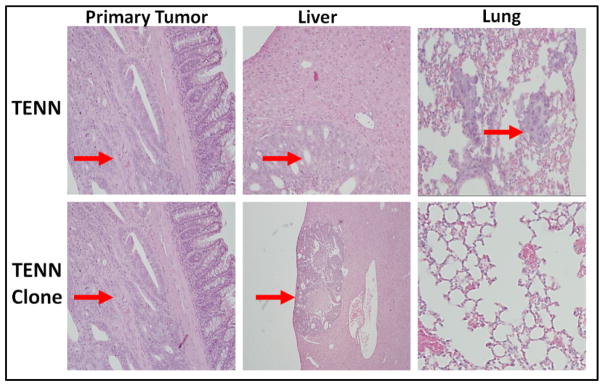
Results: Both TENN and TENN clone cell lines demonstrated 100% primary invasion. However, compared with the parental TENN cells, which demonstrated 62% metastases to both lungs and liver, TENN clone cells showed an approximately 50% reduction in metastasis, with only 31.6% liver metastasis and no metastasis to the lungs (P = 0.02).
Conclusions: Our study shows that reactivation of PTEN tumor suppressor pathway leads to a 50% reduction in CRC metastasis without affecting primary tumor formation. Importantly, PTEN restoration also changed the organotropic homing from liver and lung metastasis to liver metastasis only. This in vivo study demonstrates that PTEN might act specifically as a metastasis suppressor and, thus, efforts to target the phosphatidylinositol 3-kinase/PTEN pathway are legitimate.
Keywords: Colorectal cancer; Metastases; PI3Kinase; PTEN.
Copyright © 2013 Elsevier Inc. All rights reserved.
Figures
References
-
- Howlader NNA, Krapcho M, Neyman N, Aminou R, Altekruse SF, Kosary CL, Ruhl J, Tatalovich Z, Cho H, Mariotto A, Eisner MP, Lewis DR, Chen HS, Feuer EJ, Cronin KA. SEER Cancer Statistics Review, 1975–2009 (Vintage 2009 Populations) SEER web site. http://seercancergov/csr/1975_2009_pops09/2011.
-
- Stein U, Walther W, Arlt F, et al. MACC1, a newly identified key regulator of HGF-MET signaling, predicts colon cancer metastasis. Nat Med. 2009;15:59–67. - PubMed
-
- Vogelstein B, Fearon ER, Hamilton SR, et al. Genetic alterations during colorectal-tumor development. N Engl J Med. 1988;319:525–32. - PubMed
MeSH terms
Substances
Grants and funding
LinkOut - more resources
Full Text Sources
Other Literature Sources
Medical
Research Materials
