


Thymus-derived regulatory T cells contribute to tolerance to commensal microbiota
- PMID: 23624374
- PMCID: PMC3711137
- DOI: 10.1038/nature12079
Thymus-derived regulatory T cells contribute to tolerance to commensal microbiota
Abstract
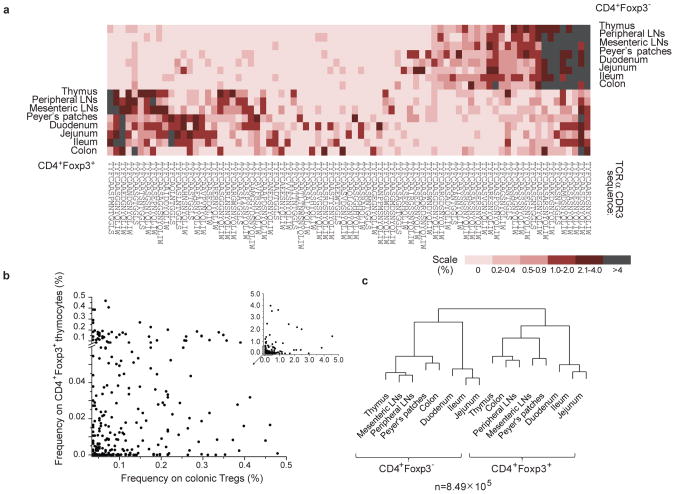
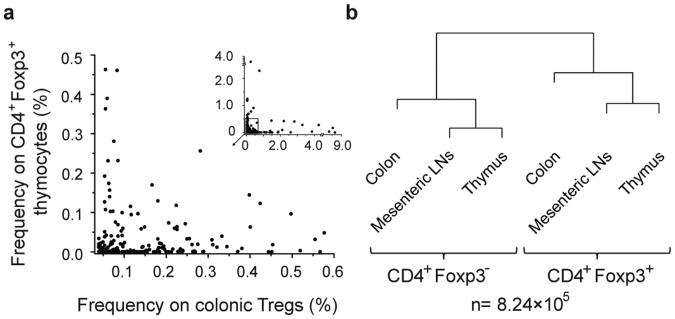
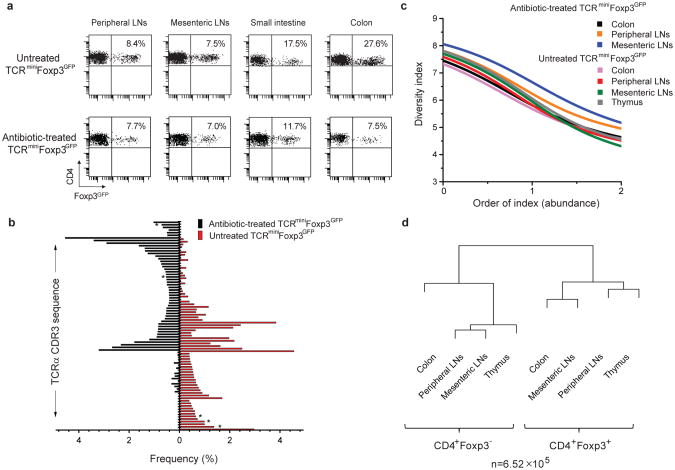
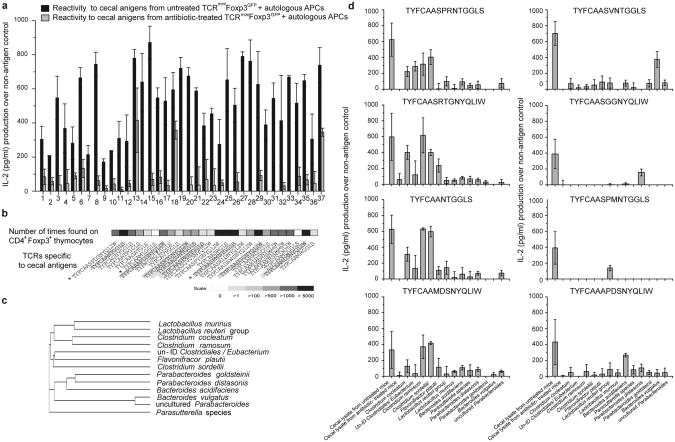
Peripheral mechanisms preventing autoimmunity and maintaining tolerance to commensal microbiota involve CD4(+) Foxp3(+) regulatory T (Treg) cells generated in the thymus or extrathymically by induction of naive CD4(+) Foxp3(-) T cells. Previous studies suggested that the T-cell receptor repertoires of thymic Treg cells and induced Treg cells are biased towards self and non-self antigens, respectively, but their relative contribution in controlling immunopathology, such as colitis and other untoward inflammatory responses triggered by different types of antigens, remains unresolved. The intestine, and especially the colon, is a particularly suitable organ to study this question, given the variety of self-, microbiota- and food-derived antigens to which Treg cells and other T-cell populations are exposed. Intestinal environments can enhance conversion to a regulatory lineage and favour tolerogenic presentation of antigens to naive CD4(+) T cells, suggesting that intestinal homeostasis depends on microbiota-specific induced Treg cells. Here, to identify the origin and antigen-specificity of intestinal Treg cells, we performed single-cell and high-throughput sequencing of the T-cell receptor repertoires of CD4(+) Foxp3(+) and CD4(+) Foxp3(-) T cells, and analysed their reactivity against specific commensal species. We show that thymus-derived Treg cells constitute most Treg cells in all lymphoid and intestinal organs, including the colon, where their repertoire is heavily influenced by the composition of the microbiota. Our results suggest that thymic Treg cells, and not induced Treg cells, dominantly mediate tolerance to antigens produced by intestinal commensals.
Figures
Comment in
-
Tolerance: the origins of colonic TReg cells.Nat Rev Immunol. 2013 Jun;13(6):394. doi: 10.1038/nri3468. Epub 2013 May 17. Nat Rev Immunol. 2013. PMID: 23681099 No abstract available.
References
-
- Belkaid Y, Rouse BT. Natural regulatory T cells in infectious disease. Nat Immunol. 2005;6(4):353. - PubMed
-
- Sakaguchi S, Powrie F, Ransohoff RM. Re-establishing immunological self-tolerance in autoimmune disease. Nat Med. 2012;18(1):54. - PubMed
-
- Jordan MS, et al. Thymic selection of CD4+CD25+ regulatory T cells induced by an agonist self-peptide. Nat Immunol. 2001;2(4):301. - PubMed
-
- Coutinho A, et al. Thymic commitment of regulatory T cells is a pathway of TCR-dependent selection that isolates repertoires undergoing positive or negative selection. Curr Top Microbiol Immunol. 2005;293:43. - PubMed
Publication types
MeSH terms
Substances
Grants and funding
LinkOut - more resources
Full Text Sources
Other Literature Sources
Molecular Biology Databases
Research Materials
